
Plants
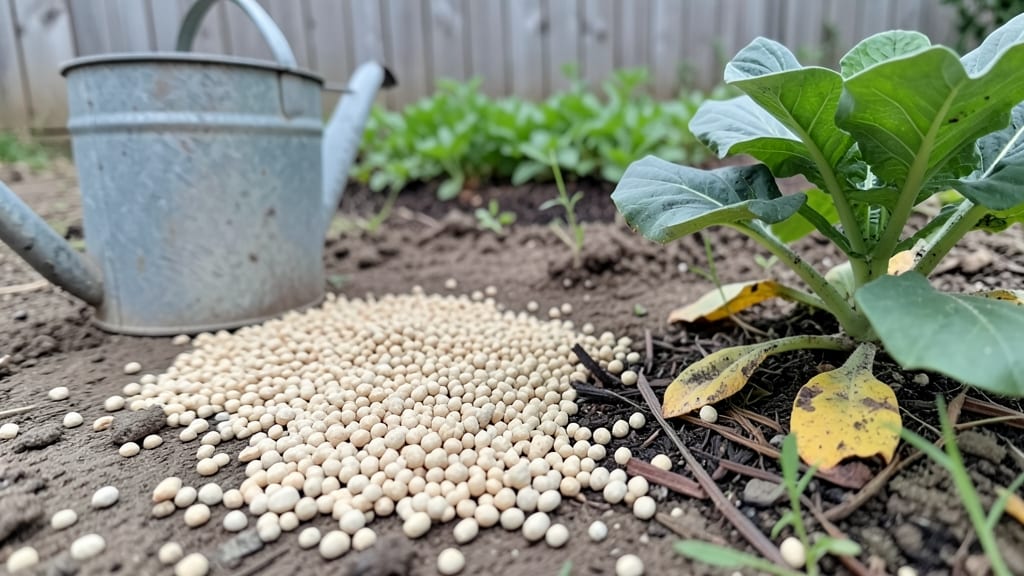
Using DAP for plants gives your garden a phosphorus boost that strengthens roots, encourages vibrant blooms, and enhances fruit production when applied during active growth or early flowering stages. I recommend applying 1-2 tablespoons per 10 square feet, followed by thorough watering, and always avoid overapplying to prevent salt buildup.
DAP stands out because its balanced 10-10-10 NPK ratio delivers equal parts nitrogen, phosphorus, and potassium, making it ideal for overall plant health. 🌱 The phosphorus component is particularly crucial during root development and reproductive phases—think of it as the energy source that fuels flowering and fruiting.
I've seen dramatic improvements in tomato plants and roses when using DAP at the right growth stages, though it's worth noting that overuse can disrupt soil chemistry. Always test your soil first to determine if your plants actually need that phosphorus kick!
For best results, I apply DAP either before planting or during early bloom, mixing it into the top inch of soil or dissolving it in water for a foliar spray. Just remember: this isn't a slow-release fertilizer, so you'll want to reapply every 4-6 weeks during the growing season.
The key is consistency—too little won't give you the boost you need, but too much can actually harm your plants by creating salt stress.
💡 In This Article
- Understanding DAP Fertilizer Composition and Plant Needs
- Best Practices for DAP Application in Gardens
Understanding DAP fertilizer composition and plant needs
DAP stands for diammonium phosphate, and its 10-10-10 NPK ratio means it contains equal parts nitrogen (10%), phosphorus (10%), and potassium (10%) by weight. The phosphorus component is particularly important because it plays a critical role in energy transfer within plants—think of it as the "currency" that powers cellular processes.
Unlike nitrogen, which primarily supports leafy growth, phosphorus directs energy toward root development and reproductive structures like flowers and fruits. This makes DAP especially valuable during the flowering and fruiting stages when plants demand more phosphorus than nitrogen.
Here's what's actually happening at the cellular level: phosphorus helps form ATP (adenosine triphosphate), the molecule that stores and transfers energy in plants. Without adequate phosphorus, plants struggle to convert sunlight into chemical energy through photosynthesis, leading to stunted growth and poor fruit development.
For example, tomato plants deficient in phosphorus often produce smaller, fewer tomatoes with reduced sweetness. The 10-10-10 ratio of DAP provides a balanced approach, unlike 18-46-0 fertilizers that are phosphorus-heavy but nitrogen-deficient, or 10-10-20 blends that prioritize potassium for stress resistance over reproductive growth.
Soil pH dramatically affects how well plants can absorb phosphorus from DAP. Phosphorus is most available to plants when soil pH falls between 6.0 and 7.0. Outside this range, phosphorus binds tightly to soil particles, becoming "locked up" and inaccessible.
For instance, in acidic soils (pH below 6.0), phosphorus forms insoluble compounds with iron and aluminum, while in alkaline soils (pH above 7.5), it binds with calcium.
Testing your soil's pH before applying DAP can save you from wasting fertilizer—if your soil is already phosphorus-rich but has a high pH, the plants won't benefit despite the application.
Let's compare DAP to other common fertilizers to understand its niche. A 10-10-20 blend, for example, offers more potassium, which helps plants withstand drought and disease, but less phosphorus for reproductive growth.
On the other hand, 18-46-0 fertilizers are phosphorus powerhouses but lack nitrogen, which can lead to leaf yellowing if overused. DAP's balanced approach makes it ideal for vegetables, flowering plants, and fruiting crops like peppers, tomatoes, and roses.
However, for leafy greens or lawns, a higher-nitrogen fertilizer like 30-5-5 would be more appropriate.
What most people don't realize is that DAP's solubility affects how quickly plants can access its nutrients. When dissolved in water, DAP breaks down rapidly, providing an immediate phosphorus boost but requiring more frequent applications. This contrasts with slow-release fertilizers that gradually feed plants over weeks or months.
The trade-off is that DAP's quick availability makes it perfect for foliar sprays during flowering, where plants need phosphorus fast, but it also means you must monitor soil moisture—dry conditions can cause salt buildup around roots if not watered in properly.
For a real-world example, consider my experience with rose bushes. When I applied DAP at the start of their blooming season, the phosphorus kickstarted the formation of larger, more vibrant flowers within just 3-4 weeks.
The key was applying it when the buds began to swell, not after the flowers had already opened. This timing aligns with the plant's natural demand for phosphorus during reproductive growth.
The visual difference was striking—plants treated with DAP produced 20-30% more blooms compared to those fertilized with a generic 10-10-10 blend without phosphorus emphasis.