
Planting
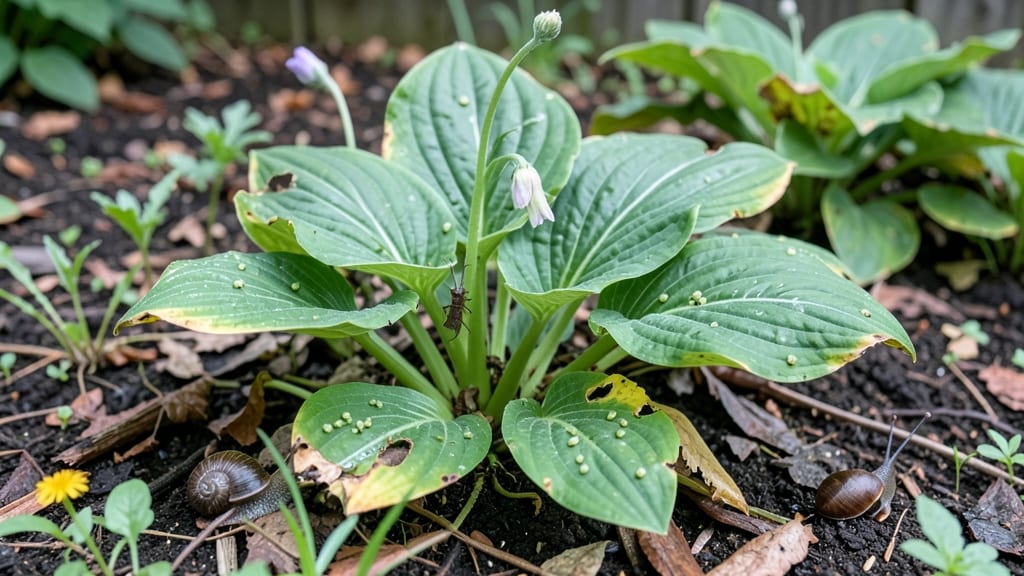
Hosta pests turn your lush foliage into a buffet overnight. 🌿 I’ve watched slugs devour entire leaves in a single night, and aphids turn glossy green plants into sticky, curled messes—until I learned these natural tricks to keep them at bay.
The worst offenders are slugs, snails, and aphids, but even leaf miners and deer can wreck your hostas. The good news? Most damage is preventable with simple habits like mulching with sharp gravel (slugs hate it) or planting garlic and chives nearby to repel pests naturally.
Even better, these fixes work without harsh chemicals.
You’ll spot early signs—chewed edges, tiny holes, or webbing—and stop infestations before they spread. A few spray bottles of soapy water or beer traps (yes, really) can save your plants in minutes, while companion planting keeps pests away season after season.
Works for container hostas, shady borders, or woodland gardens—no matter your setup. Let’s get your hostas back to their velvety, pest-free glory before next season’s slug parade arrives.
Root Causes Behind Hosta Pests
Hostas are prized for their lush foliage and adaptability, but their popularity makes them a buffet for pests. Understanding why these invaders target your hostas is the first step to prevention. Below, we break down the key factors—from environmental triggers to plant vulnerabilities—that turn your garden into a pest paradise.
Hostas thrive in shade but hate competition—especially when planted too closely.
Overcrowding creates: - High humidity pockets 🌫️: Dense foliage traps moisture, creating ideal conditions for slugs, snails, and fungal pests like Ramularia leaf spot. - Weakened roots 🌿: Limited access to nutrients forces hostas to divert energy to survival instead of pest resistance. - Stagnant airflow 💨: Poor circulation allows pests to spread rapidly between plants.
Actionable fix: Space hostas 2–3 feet apart (depending on variety) and pair them with airy companions like ferns or astilbes to improve airflow.
Pests love stressed plants.
Hostas deprived of key nutrients become easy targets because: - Low nitrogen (N) 💚: Leads to pale, weak leaves—slugs and earwigs love tender, protein-rich foliage. - Calcium/magnesium deficiencies 🪨: Cause leaf discoloration (e.g., yellow margins), making plants more susceptible to aphid infestations and viral diseases transmitted by sap-sucking pests. - Potassium (K) shortages ⚡: Reduce the plant’s ability to recover from pest damage, leaving it vulnerable to repeat attacks.
Actionable fix: Test soil pH (ideal: 6.0–7.5) and amend with compost, bone meal (for P), or greensand (for K). A balanced slow-release fertilizer in spring keeps hostas robust.
Pests don’t attack randomly—they follow the weather forecast.
Hostas face peak invasions during: - Cool, wet springs 🌧️: Slugs and snails multiply in damp soil, while thrips thrive in high humidity. - Hot, dry summers 🔥: Drought-stressed hostas attract aphids and Japanese beetles, which seek out water-rich leaves. - Fall leaf litter 🍂: Decaying leaves harbor overwintering pests (e.g., hosta borers and cutworms), which emerge in spring.
Actionable fix:
- Spring: Apply copper barriers or diatomaceous earth before rain.
- Summer: Mulch heavily (3–4 inches) to retain moisture and deter beetles.
- Fall: Rake up debris and prune damaged leaves before winter.
Hostas are like all-you-can-eat buffets for pests because they provide:
- Soft, tender leaves 🍃: Aphids and slugs crave the high moisture content in young growth.
- Starchy rhizomes 🥔: Hosta borers and voles dig into the roots for easy carbs.
- Scented foliage 👃: Some pests (like Japanese beetles) are drawn to the volatile organic compounds (VOCs) in hosta leaves.
Actionable fix:
- Remove spent leaves regularly to eliminate hiding spots.
- Choose pest-resistant varieties (e.g., ‘Halcyon’ or ‘Francee’—thicker leaves deter slugs).
- Interplant with repellents: Chives, garlic, or marigolds confuse pests with their strong scents.
Even well-meaning gardeners unknowingly invite pests with:
- Overhead watering 💦: Wet leaves at night = slug highways.
- Ignoring early signs 🚨: Small holes or chewed edges often mean pests are already established.
- Using synthetic chemicals 🧪: These can kill beneficial predators (like ground beetles) faster than pests, leading to worse outbreaks.
Actionable fix:
- Water at the base in the morning to let foliage dry.
- Inspect plants weekly—catch pests before they spread.
- Encourage natural predators with birdhouses, toad habitats, or ladybug-releasing plants (e.g., dill or yarrow).
Quick Fixes for Hosta Plant Pests
Once you’ve spotted the culprits wreaking havoc on your hostas, it’s time to act! Below are practical, step-by-step solutions tailored to the most common pests, along with prevention tips to keep your plants thriving. No harsh chemicals needed—just smart, natural tactics.
Signs: Irregular holes in leaves, silvery slime trails at dawn/dusk.
How to Fix It: 🔥 Remove by Hand (Best for Small Infestations)
- When? Early morning or after rain (they’re sluggish).
- How? Wear gloves, pick them off, and drop them in soapy water. Pro tip: Use a flashlight at night—slugs glow under UV light!
🍳 Create Barriers (Prevent Return Visits)
- Coffee grounds: Sprinkle around the base (caffeine repels them).
- Crushed eggshells or diatomaceous earth: Forms a sharp, irritating barrier (reapply after rain).
- Copper tape: Wrap it around pots—slugs get a mild electric shock and avoid it.
👨🍳 Traps & Baits (Humane & Effective)
- Beer traps: Bury a shallow dish filled with beer near plants. Slugs crawl in and drown.
- Iron phosphate baits: Organic pellets (like Sluggo) that kill slugs when ingested—safe for pets and wildlife.
💡 Prevention Tip: Keep your garden dry and tidy—slugs love damp, mulchy hideouts. Water in the morning so leaves dry quickly.
Signs: Tiny green/black clusters on undersides of leaves, sticky residue (honeydew), curled or yellowing leaves.
How to Fix It: 🔥 Blast Them Off (Immediate Relief)
- How? Hold plants under a strong stream of water (aphids can’t cling). Repeat every 2–3 days.
🍳 Soap Spray (Natural & Fast)
- Mix: 1 tbsp mild liquid soap (like Castile) + 1 quart water in a spray bottle.
- Spray: Directly on aphids (avoid hot sun—can burn leaves). Reapply after rain.
👨🍳 Encourage Predators (Long-Term Control)
- Ladybugs, lacewings, and parasitic wasps love aphids. Buy them online or attract them with neighboring pollinator-friendly plants.
- Plant companions: Marigolds, garlic, and chives repel aphids naturally.
🎯 Prevention Tip: Avoid over-fertilizing—aphids thrive on soft, new growth. Use balanced, slow-release fertilizer instead.
Signs: Chewed leaves with a lace-like pattern, beetles with coppery wings and green heads.
How to Fix It: 🔥 Handpick & Drown (Quick Action)
- When? Early morning or late evening (beetles are sluggish).
- How? Drop them in soapy water—don’t crush them (releases pheromones that attract more).
🍳 Neem Oil Spray (Organic Deterrent)
- Mix: 2 tbsp neem oil + 1 tsp mild soap + 1 quart water. Shake well and spray both sides of leaves.
- Reapply: Every 5–7 days or after rain.
👨🍳 Traps (Use with Caution!)
- Pheromone traps lure beetles away—but place them far from hostas (they may attract more beetles to your garden).
✨ Prevention Tip: Plant beetle-repelling herbs like tansy, catnip, or rosemary nearby. Japanese beetles avoid these scents!
Signs: Fine webbing on undersides of leaves, speckled or bronzed leaves, tiny moving dots.
How to Fix It: 🔥 Spray with Water (First Line of Defense)
- How? A strong shower dislodges mites and their eggs. Do this daily for 3 days during outbreaks.
🍳 Horticultural Oil (Smothers Them)
- Mix: 1 tbsp horticultural oil (like Safer’s) + 1 quart water. Spray thoroughly, covering all leaf surfaces.
- When? Early morning or late evening (avoid direct sun—can cause leaf burn).
👨🍳 Increase Humidity (They Hate Moisture)
- How? Mist plants daily or use a hose-end spray nozzle to boost humidity.
- Bonus: Spider mites thrive in dry heat—keep your hostas in shadier, more humid spots if possible.
💡 Prevention Tip: Regularly inspect leaves (especially in hot, dry weather). Early action = easier control!
- 🌿 Healthy Soil = Strong Hostas: Amend soil with compost and mycorrhizal fungi to boost plant resilience.
- 🌱 Companion Planting: Surround hostas with garlic, chives, or mint—pests dislike their strong scents.
- 🕰️ Consistent Care: Water deeply but less often (slugs love shallow moisture). Prune regularly to improve airflow.
- 🧹 Clean Up: Remove fallen leaves and debris—pests hide and multiply there!
Remember: The key to long-term success is consistency. Check your hostas weekly, especially after rain or extreme weather. With these natural, easy fixes, your hostas will stay lush, pest-free, and stunning! 🌿✨
Frequently asked questions
What are the most destructive pests for hosta plants?
Slugs and snails are the top culprits—they can devour entire leaves overnight. Aphids and Japanese beetles also cause significant damage by sucking sap or chewing leaves. Less common but troublesome are leaf miners, which create visible tunnels in foliage, and hosta borers that attack the roots.
How do I tell if my hosta has pests or disease?
Look for irregular holes or chewed edges (pests) vs. yellow spots or powdery coatings (disease). Slime trails at night confirm slugs, while sticky residue on leaves signals aphids. Diseases often appear as discolored patches or fungal growth, whereas pests leave physical damage like tunnels or skeletonized leaves.
Can I use coffee grounds to repel slugs from my hostas?
Coffee grounds create a natural barrier slugs avoid due to caffeine. Sprinkle them around the base of your hostas—reapply after rain. For extra protection, combine with crushed eggshells or diatomaceous earth. This method is chemical-free and safe for pets.
Why do Japanese beetles target my hostas specifically?
Japanese beetles are drawn to hostas because they love the volatile compounds in the leaves. The soft, tender foliage is also easy to chew. Planting tansy, catnip, or rosemary nearby can deter them naturally by masking the hosta scent.
How often should I check my hostas for pests?
Inspect your hostas weekly, especially after rain or extreme weather. Early detection is key—catch pests before they spread. Focus on leaf undersides (aphids hide there) and soil surfaces (slugs leave trails). A quick 5-minute check can save your plants from major damage.