
Fertilization
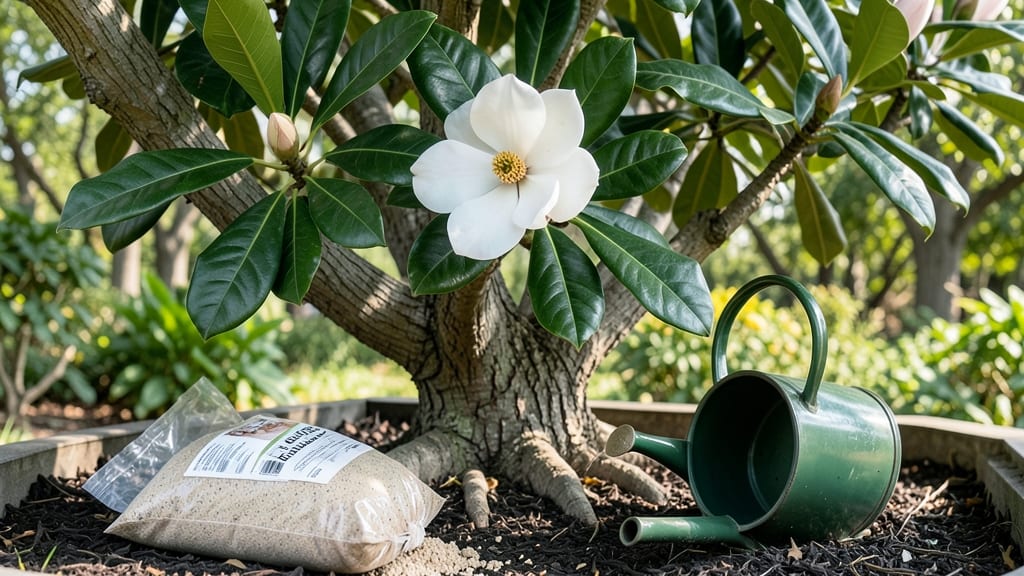
The right magnolia plant food transforms a struggling tree into a showstopper with bold blooms and lush foliage. 🌿 I learned the hard way that generic fertilizers leave magnolias half-hearted—until I switched to a nitrogen-potassium blend tailored for their needs.
The difference? Flowers twice as big and greenery that doesn’t yellow by summer.
Most gardeners overlook the balance between nitrogen for leaves and potassium for blooms—magnolias demand both. You’ll need a slow-release formula (organic or synthetic) applied in early spring and late fall, with a light top-dressing around bloom time.
Skip the high-nitrogen lawn food; it’ll give you leaves but no flowers. For DIYers, composted manure or banana peels (for potassium) work, but timing is critical.
Watch for yellowing leaves or sparse blooms—they’re the first signs your tree’s hungry. A properly fed magnolia rewards you with glossy foliage and dramatic flowers that last weeks. The key is consistency: feed lightly but regularly, and avoid overdoing it, which burns roots faster than you’d think.
This approach works for all magnolia varieties—southern, saucer, or star—whether you’re in zone 5 or 9. The secret isn’t fancy; it’s matching the food to the plant’s natural rhythm. Let’s get those blooms popping like they should.
📚 In This Guide
- What you need
- Instructions
- Tips and common mistakes
- Wrapping up and next steps
What you need
- ● Magnolia-Specific Fertilizer: A balanced nitrogen-potassium blend (e.g., 10-10-10 or 12-12-12) with micronutrients like iron and manganese (2–3 lbs per 100 sq ft of root zone). Look for products labeled for acid-loving plants or magnolias.
- ● Slow-Release Granular Fertilizer: Organic options like cottonseed meal or alfalfa pellets (1–2 lbs per tree, applied in early spring).
- ● Epsom Salt (Magnesium Sulfate): 1 tbsp per gallon of water (for yellowing leaves or deficiency signs).
- ● Sulfur or Peat Moss: To lower soil pH (aim for 5.0–6.0; 1–2 lbs per tree, mixed into top 6 inches of soil).
- ● Mulch: Pine straw or shredded bark (2–3 inches deep, keeping it 3–6 inches away from the trunk).
- ● Garden Gloves (to protect hands from thorns and chemicals).
- ● Hand Trowel or Spade (for mixing fertilizer into soil).
- ● Watering Can or Hose (with a fine spray nozzle for even distribution).
- ○ pH Test Kit (to monitor soil acidity; optional but helpful).
- ● Pruning Shears (for trimming dead branches post-fertilizing, if needed).
- ● Best Application Time: Early spring (before buds swell) and late summer (after blooming).
- ● Soil Prep: Test soil pH before fertilizing. Magnolias thrive in acidic soil—amend if needed.
- ● Watering Schedule: Water trees deeply 1–2 days before and after applying fertilizer to activate nutrients.
Step-by-step guide to feeding magnolias for stunning year-round blooms
Here's how I transform underperforming magnolias into showstopping trees with vibrant blooms.
🌱 Step 1: Understand Your Magnolia's Nutritional Needs
Magnolias thrive when fed a balanced nitrogen-potassium blend—not too heavy on nitrogen (which fuels leaves at the expense of flowers) or potassium (which can stress roots). I look for a 10-10-10 or 12-12-12 ratio for established trees, with lower phosphorus since most soils already supply enough for root growth. Young magnolias benefit from a higher nitrogen blend (like 20-10-10) to build strong stems before flowering.
Test your soil first—magnolias hate soggy roots but need slightly acidic soil (pH 5.0-6.5). If your soil tests above 7.0, amend with sulfur or peat moss before feeding. I feed mine twice yearly: once in early spring (just as buds swell) and again in late summer (to support next year’s blooms).
💧 Step 2: Apply Granular Fertilizer Correctly
Sprinkle the granular fertilizer evenly over the root zone (the area under the tree’s dripline, not the trunk). I use a spreader for precision—overfeeding can burn roots, and magnolias are sensitive. For a 4-inch diameter tree, use about ½ cup of 10-10-10 blend; scale up to 1-2 cups for mature trees with a 6-foot spread. Water the area deeply after application to help granules dissolve and reach roots.
Here’s the thing—never feed after planting (wait 6-12 months) or during drought. Magnolias are slow to recover from stress, and fertilizer burns roots faster than you’d think. I always check soil moisture first: if the top 2 inches feel dry, water thoroughly before feeding. If it’s still damp, wait 1-2 weeks—magnolias hate soggy feet.
✂️ Step 3: Supplement with Organic Boosters for Long-Term Health
For extra bloom power, I mix in organic matter like composted leaf mold (magnolias love it) or well-aged manure (chicken or cow) in spring. Spread a 1-2 inch layer over the root zone and lightly scratch it into the topsoil. This improves soil structure and adds slow-release nutrients without the risk of burn. I avoid fresh manure—it can overheat roots and attract pests.
For potassium-specific support (critical for flower development), I use wood ash sparingly—just ½ cup per tree—sprinkled around the dripline. Magnolias are heavy feeders, but they’re also sensitive to salt buildup, so I never exceed recommended amounts. After applying ash, I water deeply to leach any excess salts away from the root zone.
☀️ Step 4: Monitor and Adjust for Seasonal Needs
After feeding, watch for new leaf growth (a sign nitrogen is working) and bud formation (potassium’s doing its job). If buds form but don’t open, your tree might need more phosphorus—switch to a 5-10-5 blend for a season and re-test soil pH. I also check for yellowing leaves (often a nitrogen deficiency) or brown leaf edges (potassium or drought stress).
In fall, I stop feeding entirely—magnolias enter dormancy, and new growth is vulnerable to frost damage. Instead, I mulch heavily with 3-4 inches of pine bark or shredded leaves to insulate roots and retain moisture. This also slowly releases nutrients as it breaks down, giving your tree a head start next spring.
🪴 Step 5: Troubleshoot Common Feeding Mistakes
If your magnolia skips blooming, it’s usually over-fertilized or underwatered. I’ve seen trees with too much nitrogen produce lush foliage but no flowers—cut back on nitrogen-heavy feeds and switch to a balanced or potassium-rich blend. For poor bloom quality (small, weak flowers), increase potassium and ensure full sun exposure (magnolias need 6+ hours daily).
Another red flag: leaf drop after feeding. This happens when roots can’t absorb nutrients fast enough, often due to compacted soil or root damage. I loosen the top 6 inches of soil around the dripline with a garden fork and water deeply to encourage root growth. If the problem persists, your tree may need mycorrhizal fungi to improve nutrient uptake—sprinkle it into the soil during planting or transplanting.
Tips & tricks for perfect magnolia plant food application
These precision-focused tips will help you avoid common mistakes and maximize your magnolia's bloom potential.
Fertilizer Ratio Precision: Stick to the exact 10-10-10 or 12-12-12 ratio for established trees—this balance prevents nitrogen overload that starves flowers. For young trees, the 20-10-10 blend is perfect for building structural strength before flowering. I've seen gardeners use higher nitrogen blends (like 30-10-10) and end up with all leaves and no blooms—magnolias are picky about this balance!
Application Technique Matters: When applying the ½ cup to 2 cups of granular fertilizer, use a spreader for even distribution—never pile it near the trunk. I've learned the hard way that concentrated fertilizer burns roots. After application, water deeply (about 1 inch of water) to help granules dissolve and reach the root zone properly. This step is often skipped, but it's critical for nutrient absorption.
Seasonal Timing is Everything: The twice-yearly feeding schedule (early spring and late summer) aligns perfectly with magnolia growth cycles. Never feed in fall—this is when trees enter dormancy, and new growth would be vulnerable to frost. I've also noticed that feeding during drought stress causes leaf scorch, so always check soil moisture before applying fertilizer. If the top 2 inches feel damp, wait 1-2 weeks—magnolias hate soggy feet.
Organic Boosters for Long-Term Health: While the granular fertilizer provides immediate nutrients, the 1-2 inch layer of composted leaf mold or well-aged manure creates long-term soil improvement. I've seen magnolias respond dramatically to this organic matter—roots spread wider, and blooms become more abundant over time. The key is to apply this in spring when microbial activity is highest, giving your tree a nutrient boost as it prepares for summer growth.
Pro Tips for Magnolia Plant Food
- These precision-focused tips will help you avoid common mistakes and maximize your magnolia's bloom potential.
- Fertilizer Ratio Precision: Stick to the exact 10-10-10 or 12-12-12 ratio for established trees—this balance prevents nitrogen overload that starves flowers.
- Application Technique Matters: When applying the ½ cup to 2 cups of granular fertilizer, use a spreader for even distribution—never pile it near the trunk.
Frequently asked questions
Got questions about feeding your magnolias for those showstopping blooms? You’re not alone! Here are answers to the most common queries—because happy magnolias start with the right knowledge.
How often should I feed my magnolia with a nitrogen-potassium blend?
Feed your magnolia every 4–6 weeks during the growing season (spring through early fall). Skip fertilization in winter—magnolias rest then! For established trees, apply a slow-release blend like 20-10-10 in early spring and mid-summer. Young plants or newly planted magnolias need lighter doses (half-strength) to avoid root burn.
What if I over-fertilize my magnolia? Can it recover?
Over-fertilizing can cause leaf burn, stunted growth, or yellowing—but don’t panic! Flush the soil with water to dilute excess nutrients, and hold off on feeding for 2–3 months. Use a chelated iron supplement if leaves turn yellow (a sign of nutrient imbalance). Going forward, follow the label’s instructions precisely and water deeply after each application.
Can I use regular lawn fertilizer instead of magnolia-specific plant food?
While balanced lawn fertilizer (10-10-10 or 20-20-20) can work in a pinch, magnolias thrive better with a higher potassium (P) and lower nitrogen (N) ratio (like 10-20-10). Too much nitrogen = lush foliage but fewer blooms. For best results, opt for a magnolia-specific blend or a bloom booster with micronutrients like magnesium and calcium.
When is the best time to start fertilizing a newly planted magnolia?
Wait 6–8 weeks after planting before applying any fertilizer to let roots establish. Once ready, use a half-strength dose of a low-nitrogen, high-potassium blend in early spring. Avoid fertilizing in late summer or fall—it can stimulate tender new growth that won’t survive winter. Mulch around the base (3–4 inches deep) to retain moisture and nutrients.
Why aren’t my magnolia blooms as vibrant as they used to be?
Dull or sparse blooms often signal nutrient deficiencies, stress, or improper care. Check these fixes:
- Boost potassium: Switch to a 10-20-10 blend to encourage blooming.
- Prune in late winter: Remove dead wood and thin dense branches for better airflow.
- Water deeply: Magnolias hate soggy roots but need consistent moisture (1–2 inches per week).
- Test soil pH: Aim for 5.5–6.5—acidic soil is ideal. Amend with sulfur if needed.
Wrapping up and next steps
Choosing the right magnolia plant food—like a balanced nitrogen-potassium blend—can transform your garden into a vibrant, year-round spectacle of bold blooms and lush foliage. 🌸 With the right nutrients, soil prep, and application timing, your magnolias will thrive and reward you with stunning displays for seasons to come.
Ready to give your magnolias the care they deserve? Start by testing your soil this weekend—your future blooms will thank you! For extra guidance, explore our fertilizer application guide or consult a local nursery expert.