
Watering
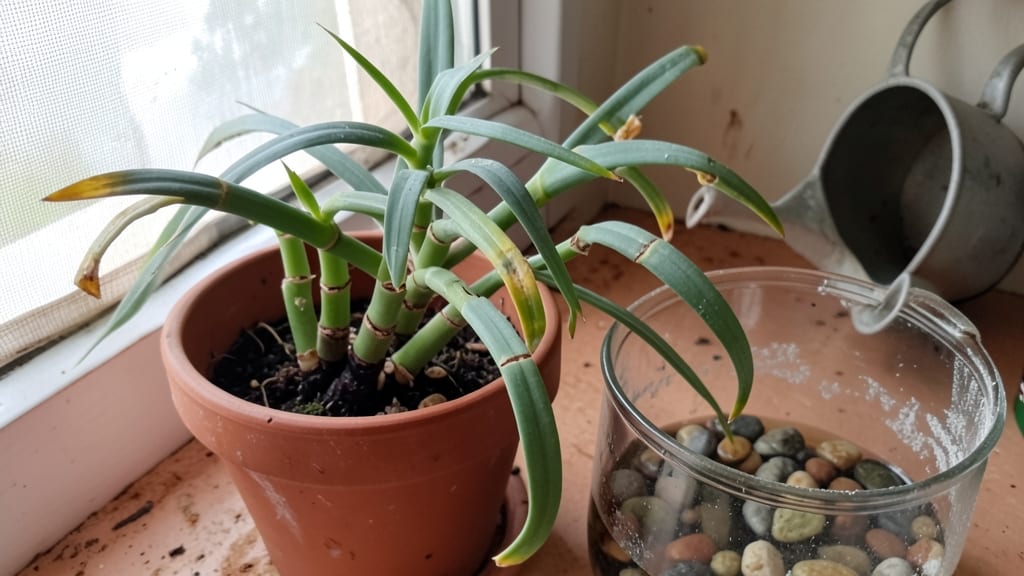
An overwatered bamboo plant turns your green thumb into a soggy mess—yellowing leaves, mushy stems, and roots that smell like a swamp. I’ve nursed more than a few back from the brink, and the first step is always the same: stop drowning it.
The second? Getting those roots breathing again before the rot spreads. Between you and me, I’ve lost count of the bamboo plants I’ve killed by treating them like houseplants instead of the tropical survivors they are.
Here’s the thing—bamboo thrives on moisture, but not on soggy feet. The moment you see yellowing leaves or stems that feel soft to the touch, it’s time to act.
Drainage is your best friend: repot into a container with holes, mix in perlite or orchid bark, and let the soil dry out between waterings. My bamboo now lives in a cache pot with a gravel tray underneath—no more guesswork, just consistent drainage.
The key is patience; it takes about 2-3 weeks to see new growth after you fix the watering.
What you’ll end up with is a plant that’s not just alive, but lush and productive again. The leaves go from sad and droopy to vibrant green, and those new shoots start popping up like they’re racing to make up for lost time.
The best part? Once you adjust your routine, you’ll spot the warning signs early—no more panicked rescues. It’s all about giving the roots room to breathe and the soil time to dry out between drinks.
Works for both indoor pots and outdoor clumps, though container bamboo recovers faster. The same rules apply whether you’re dealing with a 5-gallon pot or a 10-foot grove—just scale the drainage fixes. Let’s get that bamboo back in fighting shape before the next watering mistake happens.
Root Zone Overload Explained
When your bamboo’s leaves start yellowing or wilting, the culprit is often too much water—especially if it’s sitting in soggy soil for days. But why does this happen?
Overwatering isn’t just about "too much H2O"—it’s a chain reaction in the plant’s roots, soil, and even the air around it. Let’s break down the science behind the sog.
Bamboo thrives in moist but well-draining soil. If your pot lacks drainage holes or the soil is compacted (like clay or heavy loam), water pools at the roots instead of draining away.
This creates anaerobic conditions—meaning oxygen can’t reach the roots. Without oxygen, root cells suffocate, starving the plant of the nutrients and energy it needs to stay green.
Key signs:
- Mushy, black roots (a sign of root rot)
- Waterlogged soil that stays damp for >48 hours
- Leaves yellowing from the bottom up
💡 Pro Tip: Test your soil’s drainage by filling a pot with water, then timing how long it takes to drain. If it’s slower than 30 minutes, your bamboo is at risk.
Bamboo’s roots are not like a cactus’s—they need consistent moisture, but not drowning. Common mistakes include:
- Watering on a schedule (instead of checking soil moisture). Even if it’s "Monday watering day," bamboo may not need it if the soil is still damp.
- Using ice cubes or excessive ice packs to "chill" the roots. This can create localized flooding, confusing the plant’s hydration signals.
- Ignoring humidity levels. High humidity (like in bathrooms or greenhouses) means the soil stays wet longer, increasing rot risk.
When roots sit in water too long, they drown. This triggers ethylene gas production, a plant stress hormone that accelerates leaf yellowing and drop.
🔥 Quick Fix: Stick your finger 2 inches into the soil—if it’s damp, wait. If it’s bone-dry, water deeply until it runs out the drainage holes.
Bamboo is tropical, but that doesn’t mean it loves steamy conditions 24/7. If your home is cold (below 60°F) or humid (above 70%), the soil stays wet longer, slowing evaporation. Cold roots also metabolize slower, meaning they can’t process excess water efficiently.
Red flags:
- Yellowing leaves paired with cold drafts near the plant
- Condensation on leaves (a sign of high humidity)
- Slow growth despite "plenty of water"
✨ Solution: Move your bamboo to a warm (65–85°F), bright (but indirect) spot with moderate humidity (40–60%). A small fan nearby can improve airflow and evaporation.
Bamboo roots need aeration—meaning soil that’s 60% air and only 40% water at saturation. Heavy, nutrient-rich potting mixes (like those for ferns or African violets) compact easily, trapping water. Even "bamboo soil" can go bad if it’s not perlite-heavy or amended with orchid bark.
Common offenders:
- Pure garden soil (compacts and suffocates roots)
- Peat moss without additives (holds water like a sponge)
- Old, decomposed soil (lacks structure for drainage)
📊 Soil Swap Guide:
Problem Soil
Fix It With
Clay or loam
50% soil + 30% perlite + 20% coconut coir
Peat moss
50% peat + 30% orchid bark + 20% sand
Store-bought "bamboo mix"
Add 20% pumice or vermiculite
Once you identify why your bamboo is drowning, the next step is reviving those roots—but that’s a whole other story. 🌿
Revive Your Bamboo’s Roots Now
An overwatered bamboo plant is like a soggy sponge—too much moisture suffocates its roots, turning vibrant green leaves into sad, yellowing messes. But don’t toss it! With the right fixes, you can nurse it back to health. Below, we’ll tackle the most common causes of overwatering and show you how to reverse the damage—plus keep it thriving long-term.
If your bamboo’s leaves are drooping or yellowing, the roots are likely drowning. Here’s how to dry them out safely:
1️⃣ Stop Watering Immediately
- 🚰 Action: Pause all watering for 3–5 days to let the soil dry out.
- ⚠️ Warning: Don’t skip this—continuing to water will worsen root rot.
- 💡 Pro Tip: Check soil moisture with your finger.
If the top 2–3 inches are damp, wait longer.
2️⃣ Repot in Well-Draining Soil
- 🪴 Action: Gently remove the plant from its pot and inspect the roots.
Trim any mushy, black, or smelly roots with sterilized scissors. - 🌿 Soil Swap: Use a fast-draining mix (60% potting soil, 30% perlite, 10% sand or orchid bark). - 📏 Pot Upgrade: Choose a pot with drainage holes (terracotta works best) and avoid saucers that trap water.
3️⃣ Improve Airflow Around Roots
- 🌬️ Action: After repotting, avoid placing the plant in a humid or enclosed space (like a bathroom).
- 💨 Ventilation Boost: Place it near an open window or use a small fan on low to encourage airflow.
If the roots are mushy or the stem is soft at the base, root rot has set in. Act fast:
1️⃣ Root Pruning & Hydrogen Peroxide Soak
- ✂️ Trim the Damage: Cut away all black, slimy roots—keep only firm, white roots.
- 🧴 Soak in Fungicide: Mix 1 part 3% hydrogen peroxide with 4 parts water and soak the roots for 10 minutes to kill fungus.
- 🌱 Replant: Use sterilized soil and a clean pot to prevent reinfection.
2️⃣ Apply Fungicide (If Needed)
- 💊 Chemical Fix: Spray the roots and soil with a fungicide like Mycorrhiza or copper fungicide to stop rot spread.
- 🌿 Organic Option: Dust the soil with cinnamon powder (natural antifungal) before replanting.
3️⃣ Adjust Watering Habits Forever
- 💧 Watering Rule: Only water when the top 2 inches of soil are bone-dry (stick your finger in to test).
- 📅 Schedule: Water once every 7–10 days in warm months, every 2–3 weeks in winter.
- 💡 Pro Tip: Use a moisture meter to avoid guesswork—bamboo hates soggy feet!
Once your bamboo is back on track, keep it happy with these long-term fixes:
| Problem | Solution | Prevention Tip |
|---|---|---|
| No drainage holes | Repot in a pot with holes | Always check pots before buying! |
| Compacted soil | Add perlite or orchid bark | Mix in 20% perlite to existing soil. |
| Overzealous watering | Use a self-watering pot (sparingly) | Set reminders—bamboo hates wet feet! |
| Low humidity | Mist leaves lightly (morning only) | Avoid soggy leaves—opt for humidity trays instead. |
- Mild cases (yellowing only): 2–4 weeks with proper care.
- Severe root rot: 4–8 weeks—be patient and consistent.
- 💡 Sign of Success: New green growth at the top of the plant means roots are healing!
An overwatered bamboo isn’t a death sentence—it’s just a wake-up call to treat its roots with respect. Follow these steps, and your bamboo will bounce back stronger than ever. 🌿✨
Frequently asked questions
How do I know if my bamboo plant is truly overwatered?
Check for these key signs: yellowing leaves starting at the bottom, stems that feel soft or mushy when pressed, and roots that smell foul or appear black and slimy. Also, if the soil stays damp for more than 48 hours after watering, that’s a red flag. Bamboo roots need air—if they’re constantly soggy, they can’t breathe properly.
Can I save bamboo with root rot?
Yes, but you’ll need to act fast! Trim away all black, mushy roots, then soak the remaining healthy roots in a 1:4 mix of 3% hydrogen peroxide and water for 10 minutes to kill fungus. Repot in fresh, fast-draining soil with perlite and avoid watering for 5 days to let roots recover. With patience, new growth should appear in 4-8 weeks.
What’s the best soil mix to prevent future overwatering?
Use a blend of 60% potting soil, 30% perlite, and 10% orchid bark or sand. This creates air pockets so water drains quickly. Avoid peat-heavy mixes—they hold too much moisture. For containers, terracotta pots with drainage holes work best, as they allow excess water to evaporate faster.
How often should I water bamboo in winter?
Cut back dramatically! Water only when the top 2 inches of soil are completely dry, which could mean every 2-3 weeks in winter. Cold temperatures slow root activity, so bamboo needs far less moisture. Place the pot near a sunny window to help soil dry out faster—just avoid direct sunlight, which can scorch leaves.
Will misting my bamboo’s leaves help with overwatering?
Misting alone won’t fix the problem—it actually makes soil stay wet longer, worsening root rot. Instead, focus on improving drainage and airflow around the roots. If you need humidity (especially for indoor bamboo), use a pebble tray with water underneath the pot, keeping the pot itself elevated to prevent soggy soil.