
Watering
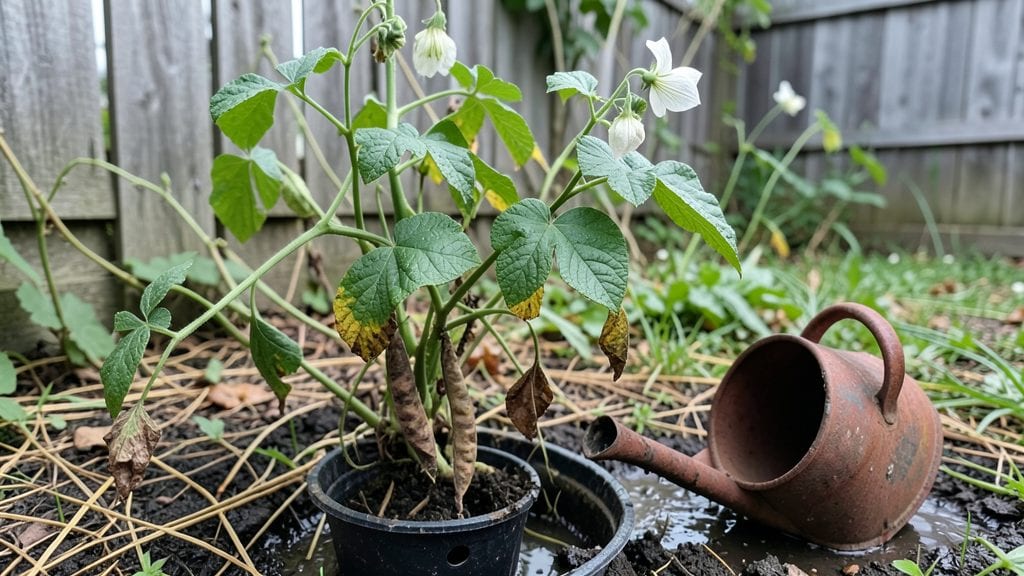
Overwatered bean plants turn your garden into a sad, soggy mess—yellow leaves, mushy stems, and roots that can’t breathe. 🌱 I’ve nursed back plants that looked doomed in just days by cutting back on water and giving roots room to recover.
The fix isn’t complicated, but it does require acting fast before root rot sets in.
First, check the soil: if it’s damp more than an inch down, you’re overdoing it. Beans need consistent moisture, not a swamp. Drainage is key—raise containers slightly or add perlite to heavy soil.
Prune any yellow or mushy leaves immediately to redirect energy to healthy growth. Within 3-5 days, you’ll see new green leaves pushing through.
Once the crisis is over, adjust your watering to once every 2-3 days unless it’s scorching hot. Stick your finger in the soil first—if it’s dry at 1 inch down, it’s time to water.
The goal is to keep roots happy without smothering them. With the right balance, your beans will bounce back stronger than ever.
Prevention is easier than cleanup: mulch around plants to slow evaporation, and choose well-draining soil mixes. If you’re growing in pots, make sure they have drainage holes—this one simple step saves countless plants every season. Your beans will thank you with bushy vines and plenty of pods.
Common Causes Of Soggy Bean Roots
Overwatering bean plants is like giving them a drink when they’re already drowning—it’s a classic case of too much of a good thing. 🌱💦 When your beans start wilting, yellowing, or developing mushy stems, the root cause (pun intended) is often excess moisture.
But why does this happen? Let’s break down the science and habits behind soggy soil.
Beans need well-draining soil to thrive, but many gardeners overlook this critical factor. If your pots lack drainage holes or your garden bed retains water like a sponge, roots suffocate from lack of oxygen. Here’s how it plays out:
- Clay or compacted soil acts like a water trap, preventing excess moisture from escaping. Solution: Amend soil with compost or perlite to improve aeration.
- Overpacked potting mix (especially in small containers) creates a dense environment where water pools instead of draining. Solution: Use a lightweight, fast-draining mix designed for beans or vegetables.
- No drainage holes in pots turn containers into waterlogged prisons for roots. Solution: Always drill holes in the bottom of pots—even "self-watering" ones.
💡 Pro Tip: Test your soil’s drainage by filling a pot with water, then timing how long it takes to drain completely. If it takes longer than 30 minutes, your soil is too dense.
Beans hate inconsistency—whether you’re neglectful or overzealous. Skipping water one day and drowning them the next confuses their root systems, leading to stress and rot. Here’s how erratic watering backfires:
- Frequent shallow watering keeps the topsoil wet while the roots below remain dry, encouraging roots to grow upward (a sign of desperation). Solution: Water deeply but infrequently, soaking the soil until it drains from the bottom.
- Watering on a schedule (e.g., every day at noon) ignores Mother Nature’s rhythm. Beans need moisture when they need it, not on a clock. Solution: Stick your finger 1–2 inches into the soil—water only if it’s dry.
- Overhead watering (like from a sprinkler) wets leaves, promoting fungal diseases (e.g., rust or powdery mildew) that weaken plants. Solution: Water at the base of the plant, early in the morning.
⏰ Time-Saver Tip: Use a moisture meter or the "squeeze test"—grab a handful of soil. If it crumbles easily, it’s dry; if it sticks together, hold off on watering.
Beans are tropical plants at heart, but they’re not fans of permanent humidity. When rain or poor airflow keeps the environment soggy, roots can’t "breathe," leading to rot and disease. Here’s why:
- Stagnant air (from no airflow or dense foliage) traps moisture around leaves and stems, creating the perfect breeding ground for pathogens like Pythium or Phytophthora. Solution: Space plants 12–18 inches apart and use a fan on low for container gardens.
- Heavy rainfall or mulch overload can smother roots if the soil doesn’t dry between showers. Solution: Adjust mulch depth (2–3 inches max) and avoid watering during forecasted rain.
- Cold, damp soil (below 60°F) slows root activity, making plants more susceptible to rot. Solution: Use black plastic mulch in cool climates to warm the soil or grow beans in warmer seasons.
🌡️ Climate Hack: If you live in a humid area, opt for bush beans (like 'Blue Lake') over pole beans—they’re less prone to fungal issues from trapped moisture.
Too much fertilizer—especially nitrogen-heavy types—can burn roots and disrupt their ability to absorb water properly. Here’s the connection:
- Excess salts from synthetic fertilizers (like 10-10-10) create a hypertonic environment, forcing roots to work harder to take up water, leading to dehydration. Solution: Flush the soil with water if you suspect salt buildup.
- Imbalanced NPK ratios (e.g., too much nitrogen) promote lush foliage at the expense of root health. Solution: Use a balanced fertilizer (like 5-5-5) or organic options like compost tea.
- Fresh manure or compost can also overfeed roots if applied too close to planting. Solution: Mix compost into the soil 2–4 weeks before planting, not at the base.
🎯 Precision Tip: If your beans are yellowing with dark green veins, it’s a classic sign of over-fertilization. Cut back and focus on drainage first.
Reviving Overwatered Bean Plants
If your bean plants are suffering from too much water, don’t panic—there’s still hope! The key is acting quickly to drain excess moisture, improve soil aeration, and restore balance before root rot or leaf damage becomes irreversible.
Below, we break down the best fixes based on the most common causes of overwatering, along with easy prevention tips to keep your plants thriving.
When leaves turn yellow or wilt due to overwatering, the roots are drowning in moisture. Here’s how to rescue them:
🍳 Step 1: Stop Watering Immediately
- Let the soil dry out completely before watering again. Stick your finger 1–2 inches into the soil—if it’s damp, wait.
- Move pots to a drier spot (like a sunny windowsill or under a shade cloth) to speed up evaporation.
👨🍳 Step 2: Improve Drainage Fast
- For potted beans: Place pots on elevated trays or gravel beds to prevent waterlogging.
- For in-ground plants: Loosen compacted soil around the base with a fork or trowel to help roots breathe.
- Pro tip: 💡 Add perlite or coarse sand to the top 2–3 inches of soil to create air pockets.
🥘 Step 3: Flush Out Excess Salts & Chemicals
- Water the plant deeply but infrequently (once every 5–7 days) to leach out built-up salts.
- Use rainwater or distilled water if your tap water is hard or chlorinated.
⏰ Step 4: Trim Damaged Foliage
- Snip off yellow or mushy leaves with clean scissors to redirect energy to healthy growth.
- Avoid pruning more than 20–30% of the plant at once to prevent stress.
If roots are mushy, black, or smell foul, you’re dealing with root rot—a serious but treatable issue.
🔪 Step 1: Remove the Plant Gently
- Carefully dig up the plant and shake off excess soil to inspect roots.
- Trim away rotted roots (they’ll be slimy and dark) with sterilized pruners.
🌡️ Step 2: Disinfect & Repot (If Needed)
- Soak healthy roots in a 1:10 hydrogen peroxide solution (3% strength) for 10 minutes to kill fungus.
- For pots: Replace soil with a well-draining mix (60% potting soil, 30% perlite, 10% compost).
- For garden beds: Solarize the soil by covering it with clear plastic for 4–6 weeks to kill pathogens.
✨ Step 3: Adjust Watering Habits
- Water only when the top 1–2 inches of soil are dry—use the finger test daily.
- Pro tip: 🎯 Try the “sponge test”: Press your finger into the soil. If it springs back slowly, it’s too wet.
Once your beans are back on track, keep them happy with these long-term strategies:
- ✅ Use self-watering pots with drainage holes—never reuse containers without holes.
- ✅ Mulch around plants (with straw or wood chips) to regulate moisture without suffocating roots.
- ✅ Water in the morning so leaves dry quickly, reducing fungal risks.
- ✅ Monitor soil moisture with a moisture meter or stick—don’t rely on guesswork!
- ✅ Choose fast-draining soil mixes for beans (they hate soggy feet!).
With these fixes, your bean plants should bounce back in 1–2 weeks. If yellowing persists after 10 days, check for nutrient deficiencies (like nitrogen) or pests—but in most cases, proper drainage is the #1 game-changer! 🌱
Frequently asked questions about bean plant watering
Why do my bean plant leaves turn yellow when I water them regularly?
Yellow leaves often signal overwatering because roots can't get enough oxygen in soggy soil. Check if the soil stays damp for more than 24 hours—this suffocates roots. Try the "finger test": if the top 1-2 inches feel moist, wait before watering again.
How can I tell if my bean plants have root rot from too much water?
Root rot shows as mushy, black roots that smell foul when pulled. If leaves wilt even when soil is wet, or stems feel soft, you're likely dealing with rot. Act fast by trimming damaged roots and repotting in fresh, dry soil with perlite.
Can I save my beans if the soil is completely waterlogged?
Yes, but act immediately! Remove the plant, gently rinse off soil, and trim any black/mushy roots. Let the roots dry for 1-2 hours before repotting in fresh, well-draining soil. Keep it in bright light (not direct sun) and water only when soil is bone-dry.
What's the best soil mix to prevent overwatering beans?
Use a blend of 60% potting soil, 30% perlite, and 10% compost for perfect drainage. For containers, always include drainage holes—this prevents water from pooling at the roots. Test your mix: fill a pot, water it, and time drainage—it should empty in under 30 minutes.
How often should I water bean plants in hot vs. cool weather?
In hot weather, water every 2-3 days (morning only), while cool weather needs every 5-7 days. Always check soil moisture first—beans prefer slightly dry soil between waterings. Pro tip: Group pots together to create a microclimate that retains moisture longer.