Plants
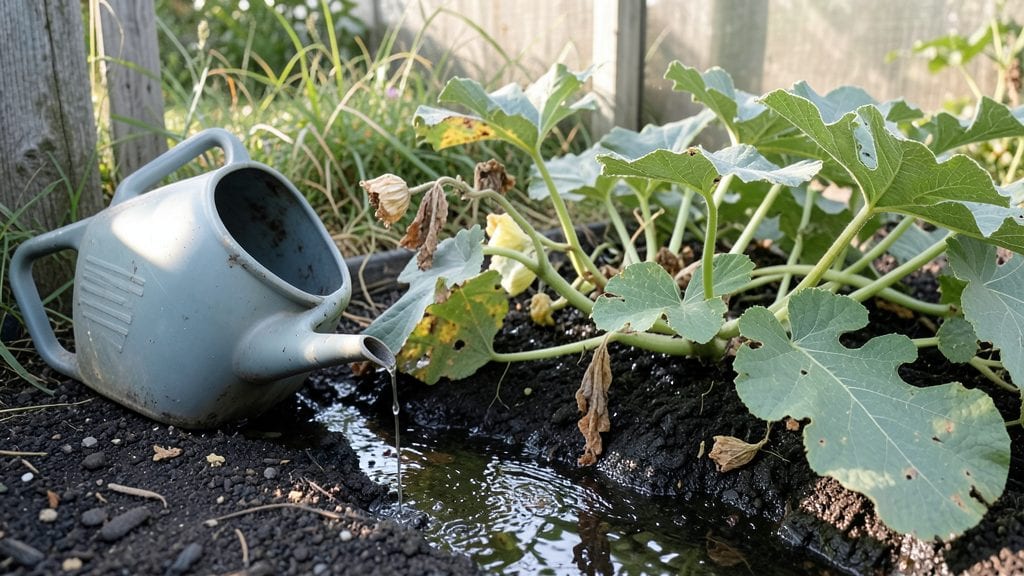
Your watermelon vines are drooping because they're drowning—not thriving. 🌱 I've pulled overwatered plants back from the brink, and the fix starts with cutting back on water and giving roots room to breathe. The good news? Watermelons bounce back faster than you'd expect once you adjust their care.
Yellowing leaves and mushy stems are the plant's SOS signals. Most gardeners overdo it because watermelons need consistent moisture, not constant puddles. I started with a simple test: stick your finger 2 inches deep—if it's damp, wait.
Then I swapped out heavy clay soil for a mix with perlite to prevent compaction.
Within a week, you'll see new growth as the roots recover. The key is balancing water with airflow—mulch helps retain moisture without suffocating the plant. By midsummer, your vines will be sprawling strong again, and those melons will be sweeter than ever.
This works for both in-ground and container plants, though containers dry faster. The same principles apply whether you're dealing with a single vine or a full patch. Let's get those roots breathing again!
Root Causes Of Excess Moisture
Understanding why your watermelon plant is drowning—literally—starts with the soil, environment, and even your watering habits. Overwatering isn’t just about giving too much H₂O; it’s about disrupting the delicate balance of oxygen, nutrients, and drainage that roots need to thrive. Let’s break down the science behind the soggy soil.
Watermelon plants (Citrullus lanatus) hate "wet feet"—a term gardeners use for roots sitting in stagnant water. When soil lacks proper drainage (often due to clay-heavy or compacted soil), excess water pools around roots instead of draining away.
This creates anaerobic conditions, where oxygen levels drop to dangerous levels.
- Why it’s deadly: Roots require oxygen to respire and absorb nutrients. Without it, they suffocate, leading to root rot (often caused by fungi like Pythium or Phytophthora). - Actionable fix: Amend soil with perlite, coarse sand, or compost to improve aeration.
Raised beds or containers with drainage holes can also help.
Skipping a day here and there might seem harmless, but frequent shallow watering tricks plants into thinking they’re in a swamp. Watermelons need deep, infrequent hydration—about 1–2 inches per week (adjust for climate).
When you water lightly daily, the topsoil stays soggy while deeper roots dry out, creating a moisture imbalance.
- Why it backfires: Plants develop shallow root systems that can’t reach deeper water reserves.
Over time, this leads to wilting, yellowing leaves (chlorosis), and stunted growth. - Actionable fix: Water deeply 2–3 times per week (early morning) and monitor soil moisture with your finger—top 1–2 inches should dry out between waterings.
Mulch is a gardener’s best friend—until it’s smothering your plants. Organic mulch (like straw or wood chips) helps retain moisture, but too much or improper placement can trap humidity against the soil, encouraging fungal growth. In hot climates, mulch can also block airflow, worsening the problem.
- Why it’s risky: Excess mulch near the stem creates a microclimate where pathogens thrive. Watermelons are particularly sensitive to southern blight (Sclerotium rolfsii) in damp conditions. - Actionable fix: Keep mulch 2–3 inches away from the stem and no thicker than 2–3 inches.
Use straw or pine needles (less prone to compacting than wood chips).
Potted watermelons are tricky—they dry out faster but fill up with water just as quickly. Small containers (under 5 gallons) lack root space, so water evaporates slowly, leaving roots constantly saturated. Even "self-watering" pots can fail if drainage is poor.
- Why it’s a trap: Roots circle the pot in search of moisture, becoming root-bound and prone to rot. Poor airflow in containers accelerates fungal growth. - Actionable fix: Use large pots (15+ gallons) with multiple drainage holes.
Elevate pots to improve airflow, and never let them sit in saucers of water.
Rainfall can be the ultimate overwatering culprit. If you’re watering on schedule and it rains heavily, your plant may be getting double the moisture it needs. Watermelons in humid climates (like the Southeast U.S.) are especially vulnerable because high humidity slows evaporation, keeping soil damp longer.
- Why it’s sneaky: You might think you’re helping by skipping a watering day, but the soil stays chronically wet, stressing the plant. - Actionable fix: Adjust your watering based on rainfall—skip watering if the ground is already moist.
Use a rain gauge to track weekly totals.
Too much nitrogen-rich fertilizer (like blood meal) can overstimulate leafy growth while weakening roots. When roots are stressed, they can’t handle excess water, leading to osmotic shock—where cells absorb too much water and burst.
- Why it’s counterintuitive: Fertilizer burns don’t just happen from over-application; poor root health from overwatering makes plants more susceptible to nutrient toxicity.
- Actionable fix: Use a balanced fertilizer (10-10-10 or 5-5-5) and flush soil every 4–6 weeks with plain water to prevent salt buildup.
Fungal diseases like powdery mildew or downy mildew thrive in wet foliage. When leaves stay damp (from overhead watering or poor airflow), spores spread rapidly, weakening the plant’s ability to regulate moisture. Aphids and spider mites also stress plants, making them more prone to overwatering damage.
- Why it’s a vicious cycle: A stressed plant can’t transpire efficiently, so excess water lingers in the soil.
- Actionable fix: Water at soil level (not overhead), prune for airflow, and remove infected leaves immediately. Neem oil can help manage pests naturally.
Revive Your Watermelon Plant Now
If your watermelon vines are drooping like a soggy towel, don’t panic—your plant can bounce back with the right care! Overwatering is a common but reversible issue, and with a few targeted fixes, you’ll have lush, productive vines in no time. Below, we’ll break down the most likely causes of your plant’s woes and match them with practical solutions. Think of this as your emergency repair kit for overwatered watermelons! 🚑💧
Cause: Too much water has suffocated the roots, cutting off oxygen and nutrients. Solution:
Your first mission is to drain the excess moisture and give the roots a chance to recover.
- 🔥 Pause Watering Immediately
- Stop adding water until the soil dries out. Watermelons are drought-tolerant once established—let the roots “breathe” for 2–3 days.
- 🍳 Improve Drainage Fast - Dig a shallow trench around the base of the plant (about 6 inches deep) to redirect water away from the roots. - Mix in coarse sand, perlite, or compost (1 part to 3 parts soil) to loosen compacted earth.
This helps water drain faster next time.
- 👨🍳 Test Soil Moisture Like a Pro
- Stick your finger 2–3 inches deep into the soil. If it’s damp, wait another day. If it’s bone-dry, give a light watering—just enough to moisten the top inch.
- ⏰ Monitor for 5–7 Days
- Watch for new growth or perked-up leaves. If yellowing persists, the roots may be damaged—see the next section.
Cause: Root rot has set in, often from prolonged soggy conditions or poor drainage. Solution:
Root rot is serious, but you can still rescue your plant with aggressive action.
- 🔪 Trim the Damage
- Use sterilized scissors to cut away any black, mushy stems or leaves. Healthy tissue should be firm and green.
- 🌡️ Disinfect the Plant
- Spritz the remaining plant with a 1:10 hydrogen peroxide-water mix (or neem oil) to kill fungal spores. Repeat every 3 days for a week.
- 💡 Repot or Refresh the Soil (If Needed)
- If the soil smells foul or looks like mud, repot the plant into fresh, well-draining soil mixed with vermiculite or coconut coir.
- Pro Tip: Add a handful of mycorrhizal fungi (available at garden centers) to help roots recover faster.
- ✨ Adjust Your Watering Routine
- Switch to the "finger test" method: Water only when the top 1–2 inches of soil are dry. Use a drip irrigation system or soaker hose to deliver water slowly at the base.
Cause: You’re either watering on a schedule (without checking soil) or using containers without drainage holes. Solution:
Break the overwatering habit with these easy habits:
| Problem | Fix It Now | Prevent It Later |
|---|---|---|
| No drainage holes | Repot in containers with holes or add a gravel layer at the bottom. | Always use pots with drainage! |
| Inconsistent watering | Stick to the finger test (see above). | Set a reminder for every 3–4 days in dry climates. |
| Heavy clay soil | Amend with compost or sand. | Plant in raised beds for better airflow. |
| Weak or no mulch | Add straw or wood chips (2 inches thick) to retain moisture without drowning roots. | Mulch after watering to lock in moisture. |
- 🌿 Fertilize Lightly: Once new growth appears, use a balanced fertilizer (10-10-10) or fish emulsion to rebuild strength. - ☀️ Give It Sun: Watermelons need 6–8 hours of sunlight daily.
Move potted plants to a sunnier spot if needed. - 🌡️ Humidity Help: If your air is dry, mist the leaves early in the morning to reduce stress (avoid evening misting to prevent fungal issues).
With these steps, your watermelon plant should perk up within 7–14 days. Keep an eye on the soil, adjust your watering, and soon you’ll be harvesting sweet, juicy melons instead of droopy vines! 🍉💦
Frequently asked questions
Why do my watermelon leaves turn yellow when I water them regularly?
Yellowing leaves (chlorosis) often signal overwatering or poor drainage. When roots sit in soggy soil, they can't absorb nutrients properly. Check if the soil stays damp for more than 24 hours—this suffocates roots. Try the finger test: if the top 2 inches are still wet, hold off on watering.
Can I save a watermelon plant with root rot?
Yes, but act fast! Trim away black, mushy roots with sterilized scissors, then repot in fresh, well-draining soil mixed with perlite. Disinfect the remaining plant with a 1:10 hydrogen peroxide-water mix and reduce watering to once every 5–7 days until new growth appears.
How often should I water a watermelon plant in containers?
Containers dry faster, but overwatering is still common. Water deeply 2–3 times per week (early morning) and ensure pots have multiple drainage holes. Use your finger to check moisture—if the top 1–2 inches are dry, it’s time to water.
Will mulch help or hurt an overwatered watermelon plant?
Mulch can help if used correctly—keep it 2–3 inches thick and 2–3 inches away from the stem. Too much mulch traps moisture, worsening rot. Use straw or pine needles (they decompose slower than wood chips) and apply after watering to lock in moisture without suffocating roots.
How do I know if my watermelon plant is getting too much rain?
If rainfall exceeds 1–2 inches per week, skip scheduled waterings. Watch for yellowing leaves, wilting, or moldy soil—these are red flags. Use a rain gauge to track weekly totals and adjust care accordingly.