Trees
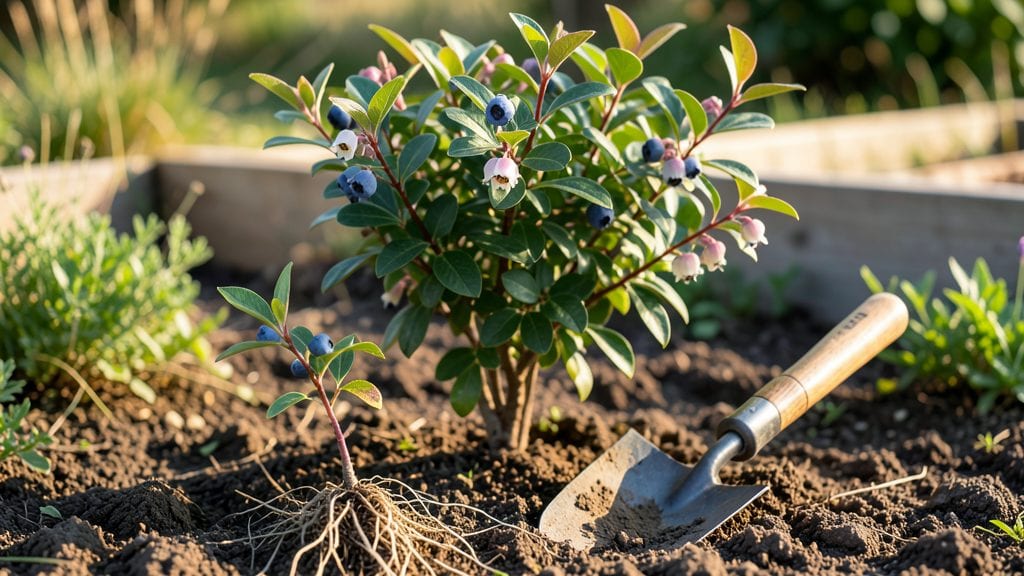
Planting blueberry trees starts with the right soil—too alkaline, and you’ll never get those sweet, deep-blue berries. 🌿 I learned this the hard way after my first two trees produced tiny, tart fruits.
The secret isn’t just acid-loving soil; it’s creating the perfect mix of organic matter, drainage, and pH balance that keeps roots happy and hungry for nutrients.
You’ll need sulfur or peat moss to lower pH, a sunny spot with 6+ hours of light, and well-draining soil that mimics their natural boggy habitats. Southern highbush varieties thrive in warmer climates, while northern highbush handle frost better—pick the right type for your zone.
Spacing matters too: 10 feet apart for full-sized trees, but closer for dwarf varieties in containers.
Once planted, water deeply twice a week for the first month, then taper off as roots establish. Mulch with pine needles or oak leaves to keep acidity steady and weeds at bay. Within 2-3 years, you’ll see your first harvest—plump, juicy berries that taste nothing like store-bought.
Container growers can still succeed with 5-gallon pots and acid-loving potting mix, though dwarf varieties work best. The key is patience—blueberries take time, but the payoff is worth every drop of sweat. Ready to get started?
📚 In This Guide
- What you need
- Instructions
- Tips and common mistakes
- Wrapping up and next steps
What you need
- ● Blueberry tree seedlings or bare-root plants: 1–3 (depending on desired yield; choose Northern Highbush, Southern Highbush, or Rabbiteye varieties based on your climate zone).
- ● Acid-loving soil amendments: Peat moss or coconut coir: 2–3 cubic feet per planting hole
- ● Sulfur or aluminum sulfate: 1–2 lbs (for soil acidification, if needed)
- ● Compost or well-rotted manure: 1–2 gallons per tree
- ● Organic mulch: Pine needles, wood chips, or shredded bark: 2–3 inches (helps retain moisture and acidity).
- ● Slow-release fertilizer: 10-10-10 or 8-3-9 (acid-forming blend): 2–3 lbs per tree (sprinkle around roots, not directly on them).
- ● Watering supplies: Garden hose with adjustable nozzle or drip irrigation system.
- ● Shovel or spade (for digging holes)
- ● Garden trowel (for delicate root adjustments)
- ● Measuring tape or ruler (to ensure proper spacing)
- ● Gloves (to protect your hands)
- ● Pruning shears (for trimming dead branches post-planting)
- ○ Optional but helpful: Soil pH test kit (to confirm acidity levels, ideal: 4.5–5.5)
- ● Mulching fabric (to prevent weeds and retain moisture)
- ● Tree stakes and ties (for young, unstable trees)
- ● Sunlight: Full sun (6+ hours/day) or partial shade (for hotter climates).
- ● Space: 4–6 feet apart for bushes, 15–20 feet for trees (account for mature size!).
- ● Well-draining soil: Blueberries hate soggy roots—raise beds if needed.
- ● Patience: Blueberries take 2–3 years to bear fruit (but oh, are they worth it!).
Step-by-Step instructions for planting blueberry trees
Here's how to plant blueberry trees for a thriving, berry-producing shrub—no guesswork involved.
🌱 Step 1: Prepare the Planting Site with Acidic Soil
Blueberries demand soil with a pH between 4.5 and 5.5—any higher, and they refuse to produce berries. Test your soil first using a soil pH test kit (available at garden centers). If your soil tests above 5.5, amend it with sulfur or peat moss at a rate of 2 pounds per 100 square feet. Work the amendment into the top 12 inches of soil.
Choose a location with full sun exposure (at least 6-8 hours daily) and well-draining soil. Blueberries hate soggy roots, so avoid low spots where water pools. If your soil drains poorly, mix in coarse sand or perlite to improve aeration. Dig a hole twice as wide as the root ball but no deeper—this encourages roots to spread horizontally rather than settling too low.
🪴 Step 2: Plant Bare-Root or Container-Grown Trees Correctly
If planting a bare-root tree, soak the roots in lukewarm water for 2-3 hours before handling. This revives dormant roots and prevents transplant shock. For container-grown trees, remove the plant from its pot and gently loosen the root ball if it’s tightly bound.
Place the tree in the hole so the top of the root ball sits 1-2 inches above ground level. This prevents soil from settling and burying the stem, which can cause rot. Backfill with the amended soil, tamping lightly as you go to eliminate air pockets. Water deeply to settle the soil around the roots—1-2 gallons should be enough for each tree.
💧 Step 3: Mulch and Water for Establishment
Spread 3-4 inches of pine bark mulch (not wood chips) around the base of the tree, keeping it 3 inches away from the trunk to prevent rot. Mulch retains moisture, regulates soil temperature, and slowly acidifies the soil over time. Avoid fresh wood mulch, which can raise pH as it decomposes.
Water the tree twice weekly for the first month, providing 1-2 gallons per watering to encourage deep root growth. After establishment, reduce to once weekly during dry spells, but always check top 2 inches of soil—water when it feels dry. Overwatering is a common mistake; blueberries tolerate drought better than soggy conditions.
☀️ Step 4: Fertilize and Monitor Soil pH Annually
Blueberries are light feeders—too much fertilizer burns roots and reduces berry quality. In early spring, apply ¼ pound of ammonium sulfate per year of tree age (e.g., ¼ pound for a 1-year-old tree). Scatter it 6 inches from the trunk and water it in. Avoid high-phosphorus fertilizers, which can raise soil pH over time.
Retest soil pH every spring and re-amend if needed. If pH drifts above 5.5, repeat the sulfur or peat moss treatment. You’ll know your soil is ideal when your tree produces bright green leaves (not yellow or purple) and plentiful flowers—the first sign of a bountiful harvest.
Tips & tricks for planting blueberry trees
Between us, the difference between a struggling blueberry bush and one that produces buckets of berries often comes down to these key details you might overlook. Here's what nobody tells you—
Soil pH Precision: That 4.5-5.5 pH range in Step 1 isn't just a suggestion—it's non-negotiable for berry production. I've seen gardeners add sulfur or peat moss but forget to test again after 6-8 weeks. The pH can shift unexpectedly, especially in clay soils. Grab a second test kit and verify the pH again after amending. The goal is consistent acidity, not just initial correction.
Root Ball Positioning: In Step 2, that 1-2 inch elevation above ground level is critical for preventing stem rot. I learned this the hard way after burying a container-grown tree too deeply—it took two seasons to recover. Use a level to verify positioning, and if your soil settles after watering, add more soil to maintain that elevation. The root flare should be clearly visible above the soil line.
Watering Strategy: Those first two weeks after planting are make-or-break. I recommend installing a drip irrigation system that delivers 1-2 gallons twice weekly automatically. The key is deep watering—water should penetrate at least 12 inches into the soil. Shallow watering encourages shallow roots, which struggle during dry spells. A moisture meter is worth the investment for this critical phase.
Mulch Selection: Pine bark mulch isn't just about aesthetics—it's the secret weapon for maintaining that perfect acid environment. Avoid cedar or cypress mulches, which can raise pH as they decompose. I spread mine in a 3-inch ring around the tree, keeping it 3 inches from the trunk. Refresh it annually to maintain its acidifying properties and moisture-retaining benefits.
Pro Tips for Planting Blueberry Trees
- Between us, the difference between a struggling blueberry bush and one that produces buckets of berries often comes down to these key details you might overlook.
- Soil pH Precision: That 4.5-5.5 pH range in Step 1 isn't just a suggestion—it's non-negotiable for berry production.
- Root Ball Positioning: In Step 2, that 1-2 inch elevation above ground level is critical for preventing stem rot.
Frequently asked questions
Got questions about planting blueberry trees? You’re not alone—this acid-loving fruit is a game-changer for home gardens, but it comes with unique needs. Below, we tackle the most common concerns to help you grow like a pro!
How long does it take for blueberry trees to bear fruit after planting?
Patience is key! Dwarf varieties may produce berries in 1–2 years, while standard-sized trees can take 2–3 years or longer. Soil pH, sunlight, and proper care (like mulching and watering) speed up the process. Choose a self-pollinating variety (like ‘Duke’ or ‘Bluecrop’) for faster yields!
What’s the best time of year to plant blueberry trees?
Late fall or early spring (before buds swell) is ideal. Avoid extreme heat or frost—roots need time to establish without stress. If planting in summer, water deeply 2–3 times weekly and use shade cloth to protect young trees. Pro tip: Bare-root trees (sold dormant) can be planted in late winter!
Can I grow blueberries in containers, or do I need a yard?
Containers work great for patios or small spaces. Use a 10–15 gallon pot with acidic pH soil (4.5–5.5) and drainage holes. Dwarf varieties like ‘Top Hat’ thrive in pots. Just repot every 2–3 years and fertilize with acid-loving plant food in spring.
Why are my blueberry leaves turning yellow or purple?
Yellow leaves often signal high pH soil (test with a kit!). Purple tinges mean nutrient deficiency (like phosphorus or potassium). Fix it by:
- Amending soil with peat moss or sulfur to lower pH.
- Applying a balanced acid fertilizer (like 10-10-10) in early spring.
- Mulching with pine needles or oak leaves to maintain acidity.
Do blueberry trees need bees to pollinate?
Most blueberries are self-pollinating, but bees and other pollinators boost yields by 20–30%. Plant two compatible varieties (like ‘Blue Jay’ + ‘Chester’) nearby to attract pollinators. Avoid pesticides during bloom (April–May) to protect them. Bonus: Birds love ripe berries—install netting if squirrels are thieves!
Wrapping up and next steps
Planting blueberry trees is a rewarding journey that starts with understanding their love for acidic soil and patience. With the right preparation—like choosing the perfect location, amending soil with organic matter, and selecting disease-resistant varieties—you’re well on your way to a bountiful harvest of juicy, antioxidant-packed berries. 🌱
Now that you’re armed with the knowledge, roll up your sleeves and get planting! Start by marking your spot, digging those trenches, and watch your blueberry bushes thrive. Before you know it, you’ll be savoring fresh berries straight from your own backyard—what’s not to love?