
Flowers
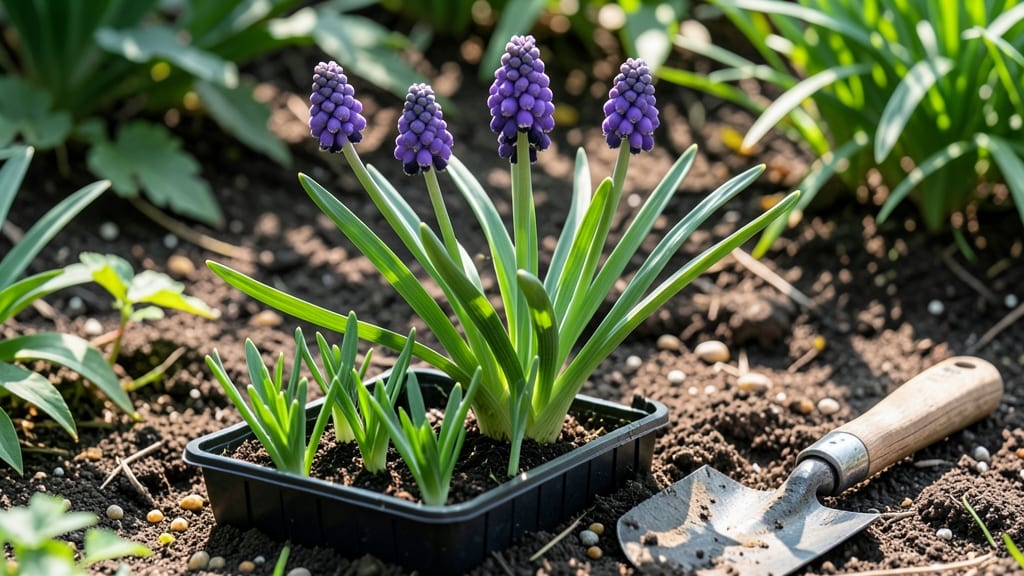
Planting grape hyacinth bulbs in fall guarantees those shockingly lush purple domes popping up in early spring—no fuss, just color. I’ve planted them in every nook of my yard, from sunny borders to dappled shade, and they never disappoint.
The secret lies in timing, depth, and a little patience; these bulbs are tougher than they look.
You’ll need 6-inch-deep soil, well-draining but not sandy, and a spot that gets at least 4 hours of sun—though they’ll tolerate part shade. Bulbs should sit 4 inches deep and 3 inches apart in clusters for that classic grape-like effect.
Overcrowding leads to floppy stems, so space them like you mean it.
Within 6 weeks, you’ll see those first shoots, and by mid-spring, your garden will smell faintly of honey and fresh rain from the blooms. They multiply yearly, so one planting often becomes a self-sustaining carpet. Just avoid cutting back until foliage yellows—it feeds next year’s flowers.
Pair them with daffodils or tulips for height contrast, or let them spill over edges in containers. If slugs are a problem, a light mulch of gravel or grit keeps them at bay. Honestly, once you plant them, they’re impossible to mess up.
📚 In This Guide
- What you need
- Instructions
- Tips and common mistakes
- Wrapping up and next steps
What you need
- ● Grape hyacinth bulbs (Muscari spp.) – 10-20 bulbs (depending on desired coverage). Choose hardy zones 3-9 for best results.
- ● Well-draining potting soil or garden loam – 2-3 bags (50 lbs each) for containers or in-ground planting.
- ○ Compost or organic fertilizer – 1-2 cups (optional but boosts growth). Look for a balanced 10-10-10 formula.
- ○ Mulch (optional but recommended) – 1-2 inches of shredded bark or straw to retain moisture.
- ● Garden trowel or bulb planter – For digging holes 2-3 inches deep.
- ○ Gloves (optional but handy) – To keep hands clean while handling soil.
- ● Watering can or hose with gentle spray – For light, even watering after planting.
- ● Measuring tape or ruler – To space bulbs 2-3 inches apart.
- ● Slow-release fertilizer pellets – Sprinkle 1 tsp per bulb at planting time.
- ● Garden stakes or labels – If you’re mixing varieties (e.g., Muscari armeniacum vs. Muscari botryoides).
- ● Container with drainage holes – For patio planters (6-inch depth minimum).
Step-by-Step instructions for planting grape hyacinth
Here's how to coax vibrant blooms from these hardy bulbs with just a few simple steps.
Prepare the Planting Site
Choose a location with partial shade to full sun—grape hyacinths tolerate both but bloom best with 4-6 hours of morning sunlight. Test the soil by squeezing a handful: if it crumbles easily, it's ready. If it sticks together, amend with 2-3 inches of compost mixed into the top 6 inches of soil to improve drainage. These bulbs rot quickly in soggy conditions.
Loosen the soil to a depth of 8 inches with a garden fork or tiller. Avoid compacting the area further, as grape hyacinths need loose soil to establish roots. If your soil is heavy clay, mix in 1 part perlite or coarse sand to every 3 parts soil to prevent waterlogging. Work the amendments into the soil until it feels light and airy.
Plant the Bulbs at the Right Depth and Spacing
Plant the bulbs 6 weeks before your last frost date—this ensures they establish roots before winter dormancy. Space them 3-4 inches apart in rows 6 inches apart for a dense, carpet-like display. Dig holes 3 inches deep, about twice the height of the bulb. If planting in containers, use a pot with drainage holes and fill it with well-draining potting mix.
Place one bulb in each hole with the pointed end facing upward. Cover lightly with soil, then water gently to settle the soil around the bulbs. Avoid pressing down too firmly, as this can damage tender roots. Mulch the area with 1-2 inches of shredded bark or straw to retain moisture and suppress weeds, but leave a 1-inch gap around the bulbs to prevent rot.
Water and Maintain Through the Growing Season
Water the bulbs deeply once a week after planting, ensuring the soil stays evenly moist but not waterlogged. You’ll know it’s time to water again when the top 1-2 inches of soil feel dry to the touch. Once the foliage appears in early spring, reduce watering to every 10-14 days unless the weather is exceptionally hot or dry. Overwatering at this stage can cause the bulbs to rot before they bloom.
Apply a balanced, slow-release fertilizer (10-10-10) at planting time, then again in early spring when shoots emerge. Use ½ teaspoon per square foot of garden area. Avoid high-nitrogen fertilizers, which encourage leafy growth at the expense of flowers. Instead, focus on phosphorus and potassium to promote blooming. Stop fertilizing once the foliage yellows after flowering.
Encourage Reblooming and Long-Term Care
After the flowers fade, allow the foliage to die back naturally. This process stores energy in the bulbs for next year’s blooms. Once the leaves turn yellow and wither, cut them back to 2 inches above the soil but leave the bulbs undisturbed. In late summer, apply a 2-inch layer of mulch to insulate the bulbs and protect them from temperature fluctuations.
Grape hyacinths multiply quickly, so divide clumps every 3-4 years in early fall. Dig up the bulbs, separate the offsets, and replant them in fresh soil. This prevents overcrowding and ensures vibrant blooms year after year. If you notice fewer flowers or leggy stems, it’s a sign the bulbs need dividing. Replant the offsets at the same depth and spacing as before.
Enjoy and Plan for Next Year
Once the blooms fade, you can deadhead the spent flowers to encourage a second flush of blooms later in the season, though this isn’t always reliable. The real reward comes the following spring when the cycle repeats. Mark your calendar to plant new bulbs or divide existing clumps in early fall, giving them time to establish roots before winter.
To extend the display, interplant grape hyacinths with early-blooming perennials like crocuses or snowdrops, which will fade just as the hyacinths begin to show color. This creates a seamless transition of spring interest. With minimal care, your grape hyacinths will return year after year, offering effortless color and charm.
Tips & tricks for planting grape hyacinth
A few simple strategies can transform your grape hyacinths from ordinary to extraordinary with minimal extra effort.
Soil Preparation is Everything: In Step 1, when amending your soil with compost, consider adding a handful of bone meal to the bottom of each planting hole. This provides a phosphorus boost that encourages stronger root development and more abundant blooms next season. The 2-3 inches of compost should be thoroughly mixed into the top 6 inches—don't just top-dress it, as grape hyacinths need consistent moisture and nutrients throughout their root zone.
Timing Secret for Bulb Planting: The 6-week window before your last frost date is critical, but don't stress about exact timing. If you're in a mild climate where frost is unpredictable, plant your bulbs in early October instead. This gives them enough time to establish roots before winter while avoiding the risk of early frost damage to emerging shoots. For container plantings, use pots with drainage holes and ensure the mix stays lightly moist during this period.
Mulching Matters More Than You Think: After planting in Step 2, that 1-2 inch layer of mulch serves two critical purposes: moisture retention and weed suppression. I recommend using shredded bark rather than straw, as it breaks down more slowly and provides better insulation. Leave that 1-inch gap around the bulbs to prevent rot—this is where most gardeners make mistakes. In late summer, increase your mulch to 2 inches to protect the bulbs from temperature fluctuations that could stress them before dormancy.
Fertilizer Strategy for Maximum Blooms: When applying your 10-10-10 fertilizer in Step 3, focus on the phosphorus and potassium components—they're what promote flowering rather than leafy growth. I've found that adding a second application of phosphorus-heavy fertilizer in early spring, just as the shoots emerge, gives an extra boost to bloom production. Stop fertilizing once the foliage yellows after flowering, as this signals the bulbs to store energy for next year's display.
Pro Tips for Planting Grape Hyacinth
- A few simple strategies can transform your grape hyacinths from ordinary to extraordinary with minimal extra effort.
- Soil Preparation is Everything: In Step 1, when amending your soil with compost, consider adding a handful of bone meal to the bottom of each planting hole.
- Timing Secret for Bulb Planting: The 6-week window before your last frost date is critical, but don't stress about exact timing.
Frequently asked questions
Got questions about planting grape hyacinth? You’re not alone!
Here are answers to the most common ones—so you can dive in with confidence and grow those stunning purple blooms in no time.
When is the best time to plant grape hyacinth bulbs?
Plant them in early fall (6-8 weeks before the first frost) for spring blooms. If you miss that window, you can plant in late winter or early spring (just expect slightly later flowers). Pro tip: Grape hyacinths thrive in cool soil, so avoid planting when the ground is still warm.
How deep and far apart should I plant the bulbs?
Plant bulbs 2-3 inches deep and 2-3 inches apart in well-draining soil. For a lush look, space them 4-6 inches apart in groups of 3-5. Too close? They’ll compete for nutrients and may flop over. Too far? You’ll miss that dense, carpet-like effect!
Can I grow grape hyacinth in containers or hanging baskets?
They’re perfect for containers, window boxes, or hanging baskets—just use well-draining potting mix. For baskets, plant bulbs 1-2 inches apart and let them spill over the edges. Bonus: They’ll bloom earlier in pots since they warm up faster in spring.
Why aren’t my grape hyacinths blooming this year?
Common culprits: too much sunlight (they prefer partial shade), poor drainage (roots rot in soggy soil), or lack of nutrients. Try moving them to a shadier spot, improving drainage, or adding a balanced fertilizer in early spring. Patience tip: First-year bulbs often rest before blooming—give them time!
Are grape hyacinths toxic to pets or kids?
Yes, they’re toxic if ingested due to alkaloids in the bulbs and leaves. Keep them out of reach of curious pets or children. Symptoms of poisoning include drooling, vomiting, or lethargy. If you suspect ingestion, contact your vet or poison control immediately.
Can I divide or replant grape hyacinth bulbs after they bloom?
Not usually! Grape hyacinths don’t multiply well from divisions like daffodils. Instead, let them naturalize—they’ll spread over time via offsets. If you want more, dig up and replant healthy bulbs in fall. Warning: They’re invasive in some areas, so check local guidelines before planting.
Wrapping up and next steps
Planting grape hyacinth is a rewarding way to add vibrant color to your garden with minimal effort—and in just six weeks! These cheerful blooms thrive in tight spaces, making them perfect for containers, borders, or even under trees.
With the right soil, sunlight, and a little patience, you’ll enjoy a burst of purple, blue, or white flowers that brighten any spring landscape.
Ready to transform your space? Grab your bulbs, pick a sunny spot, and get planting! Once your grape hyacinths are flourishing, consider expanding your garden with other low-maintenance perennials for year-round beauty. 🌱✨