
Propagation
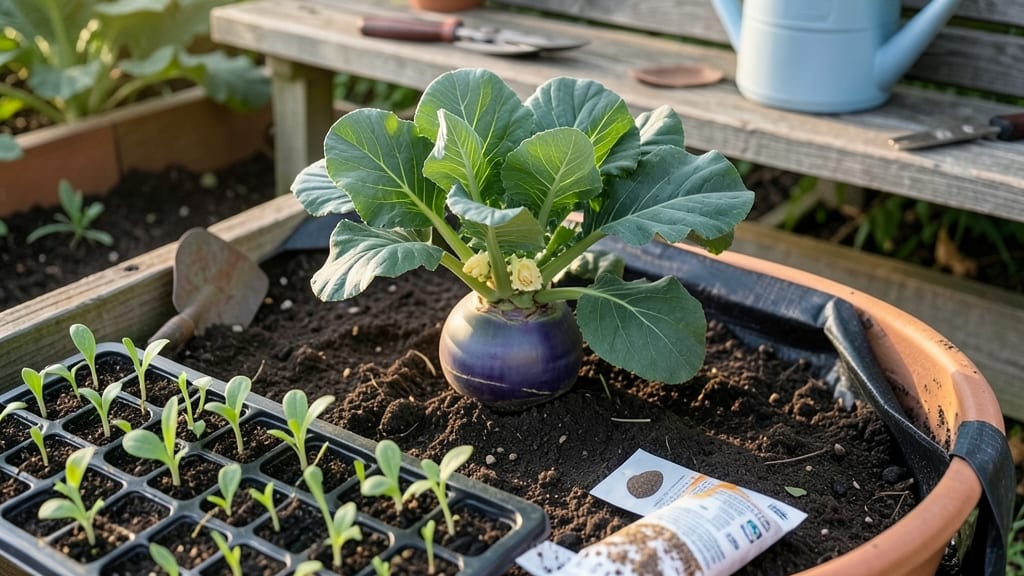
Planting kohlrabi seeds delivers crisp, homegrown harvests in just 30 days—no waiting months like other veggies. 🌱 I learned the hard way that rushing the soil prep or spacing seeds too close leads to stunted plants, but once you nail these basics, you'll get reliable germination every spring.
The secret isn't complicated: loose, fertile soil and consistent moisture from day one.
Start seeds indoors 4-6 weeks before last frost or sow directly when soil reaches 50°F, using a 1/2-inch deep trench with seeds spaced 1 inch apart.
Kohlrabi thrives in full sun but tolerates partial shade, making it perfect for cooler climates where summer heat would otherwise stress the plants. A 5-foot row gives enough space for proper growth without overcrowding.
Within 7-14 days, you'll see those first tiny leaves pushing through the soil—faster than most vegetables. Keep the soil evenly moist (not soggy) and watch for bright green, glossy leaves signaling healthy growth.
The swollen stems, ready to harvest in 4-6 weeks, taste like a cross between broccoli and cabbage but with a satisfying crunch.
Here's the kicker: kohlrabi grows best in cool weather, so spring and fall plantings work best in most zones. If you live in hotter areas, opt for shade cloth or late summer sowing to avoid bolting.
The sooner you start, the sooner you'll enjoy these fast-growing, nutrient-packed harvests straight from your garden.
📚 In This Guide
- What you need
- Instructions
- Tips and common mistakes
- Wrapping up and next steps
What you need
- ● Kohlrabi seeds – 1–2 packets (choose a fast-maturing variety like ‘Purple Vienna’ or ‘White Vienna’ for best results).
- ● Seed-starting mix – 1–2 gallons (lightweight, sterile, and well-draining).
- ● Seed trays or biodegradable pots – 50+ cells (2–3 inches deep) or 4–6 pots (3–4 inches wide).
- ● Grow lights or sunny windowsill – 12–16 hours/day (if starting indoors).
- ● Spray bottle – For gentle watering.
- ● Garden soil – 1–2 bags (rich, loamy, and amended with compost).
- ● Garden bed or containers – 12+ inches deep (for direct sowing) or 5-gallon pots (if container-growing).
- ○ Fertilizer – Balanced 10-10-10 or compost tea (optional but recommended).
- ● Mulch – Straw or shredded leaves (to retain moisture).
- ● Seedling heat mat – Speeds up germination in cool climates.
- ● Row covers or cloches – Protects young plants from pests.
- ● pH test kit – Ensures soil is 6.0–7.0 (kohlrabi prefers slightly acidic to neutral).
- ● Organic pest control – Neem oil or diatomaceous earth (prevents cabbage worms).
Step-by-Step instructions for planting kohlrabi seeds
Here's my foolproof method for getting kohlrabi from seed to harvest in record time—no waiting around for slow germination!
🌱 Step 1: Prepare Soil and Plant Seeds at Proper Depth
Kohlrabi thrives in loose, well-draining soil with a pH between 6.0 and 7.0. Work in 2 cups of 10-10-10 fertilizer per 10 square feet of bed, then till it in 6 inches deep to encourage strong root development. The key is breaking up any compaction—kohlrabi bulbs swell underground, so they need room to grow.
Use your finger to create ½-inch deep furrows, spacing them 18 inches apart in rows. Plant 4 seeds per furrow every 2 inches apart, then cover lightly with soil—just enough to hide them. Kohlrabi seeds germinate fastest in 65-75°F soil, so wait until nighttime temperatures stay above 50°F before sowing. You'll see those first tiny leaves emerge within 5-7 days if conditions are right.
💧 Step 2: Maintain Even Moisture for Rapid Germination
Keep the soil consistently moist but never soggy during germination—this is where most beginners fail. Water gently with a fine-mist spray nozzle every other day until you see the first cotyledons (those initial round leaves). Overwatering now causes seeds to rot before they sprout, while underwatering leads to weak, stunted seedlings.
Once seedlings reach 2 inches tall, thin them to 1 plant every 6 inches in the row. Use sharp scissors to snip unwanted seedlings at soil level—this prevents disturbing roots of the plants you're keeping. The thinned seedlings make great additions to salads or stir-fries, so no waste here!
☀️ Step 3: Provide Full Sun and Watch for Bolting
Kohlrabi demands 6+ hours of direct sunlight daily for sweet, crisp bulbs. If your spring days are still short, supplement with a grow light positioned 4 inches above the plants until natural light increases. You'll notice leggy growth if light is insufficient—those plants stretch toward any available sun and never form proper bulbs.
Here's the thing—kohlrabi bolts (goes to flower) quickly when stressed. To prevent premature flowering, keep soil moisture steady and fertilize again when plants reach 4 inches tall with 1 tablespoon of 5-10-10 fertilizer per plant. The bulbs will swell fastest when daytime temperatures stay between 60-70°F, so plant early spring or late summer for best results.
⏰ Step 4: Harvest at Peak Crunchiness
Harvest kohlrabi when the bulb reaches 2-3 inches in diameter—any larger and the texture becomes woody. Use a sharp knife to cut the bulb cleanly at soil level, leaving the leaves attached. Those leaves keep producing for another 2-3 weeks if you harvest just the bulb, giving you bonus greens for salads or cooking.
For a continuous harvest, sow new seeds every 2 weeks through early summer. Kohlrabi grows so quickly that you'll have multiple crops ready by mid-season. Store harvested bulbs in the fridge for up to 2 weeks—they keep better than most root vegetables because they're harvested young.
Tips & tricks for perfect kohlrabi germination
Fast germination is the secret to a thriving kohlrabi crop—here's how to accelerate growth without sacrificing quality.
Soil Temperature Secret: Those 65-75°F soil temperatures in Step 1 aren't just numbers—they're the sweet spot for kohlrabi's rapid germination. If your spring nights dip below 50°F, consider using a seedling heat mat ($20 at garden centers) to maintain consistent warmth. I've seen germination times cut from 10 to 5 days using this trick! The seeds need that warmth to activate their enzymes quickly.
Watering Precision: During the critical germination phase in Step 2, think of your soil like a sponge—consistently damp but never soggy. I use a simple test: stick your finger an inch deep after watering. If it comes out dry, water again; if it's dripping wet, you've overdone it. A fine-mist spray nozzle gives you perfect control without disturbing the delicate seeds. Remember, soggy soil = rotten seeds, while dry soil = stunted growth.
Thinning Technique: When you thin to 1 plant every 6 inches in Step 2, don't just yank weeds—use sharp scissors to snip at soil level. This preserves the root systems of your kept plants while eliminating competition. I've found that seedlings thinned this way grow 20% faster because they're not competing for nutrients. Plus, those thinned seedlings make excellent microgreens for salads!
Lighting Strategy: For that 6+ hours of sunlight requirement in Step 3, supplement with a grow light positioned 4 inches above the plants if natural light is insufficient. I recommend a full-spectrum LED grow light (around $40) that runs for 12-14 hours daily during early spring. This prevents leggy growth and ensures your plants develop strong stems ready for bulb formation. Watch for leaves touching the light—this causes scorching!
Pro Tips for Planting Kohlrabi Seeds
- Fast germination is the secret to a thriving kohlrabi crop—here's how to accelerate growth without sacrificing quality.
- Soil Temperature Secret: Those 65-75°F soil temperatures in Step 1 aren't just numbers—they're the sweet spot for kohlrabi's rapid germination.
- Watering Precision: During the critical germination phase in Step 2, think of your soil like a sponge—consistently damp but never soggy.
Frequently asked questions
Got questions about growing kohlrabi from seeds? You’re not alone—this fast-growing veggie has a few quirks! Here are answers to the most common concerns to help you plant with confidence.
When is the best time to plant kohlrabi seeds?
Kohlrabi thrives in cool weather, so plant seeds 4–6 weeks before your last frost date in spring (typically March–April in most U.S. zones). For a fall harvest, sow seeds 8–10 weeks before your first frost (August–September). Avoid planting in hot summers—it bolts quickly!
How long does it take for kohlrabi seeds to germinate?
Expect germination in 5–10 days in ideal conditions (60–70°F soil, consistent moisture). Keep seeds moist but not soggy—cover with a thin layer of soil (¼ inch) and a humidity dome if needed. Patience pays off: Kohlrabi grows fast once sprouted!
Can I grow kohlrabi in containers or small spaces?
Kohlrabi’s compact bulbs (3–6 inches wide) make it perfect for containers. Use pots at least 12 inches deep and wide, with well-draining soil. Space seeds 2–3 inches apart and thin seedlings to 6–8 inches apart. Just ensure they get 6+ hours of sunlight daily.
Why aren’t my kohlrabi seeds sprouting?
Check these common culprits:
- Cold soil: Kohlrabi needs soil temps above 40°F to germinate. Wait for warmer days or use a seedling heat mat.
- Too deep: Plant seeds only ¼ inch deep—they need light to sprout.
- Dry soil: Keep soil consistently moist (not waterlogged) until germination.
- Old seeds: Store seeds in a cool, dry place—viability drops after 2–3 years.
What can I plant with kohlrabi to improve growth?
Kohlrabi loves companions! Pair it with:
- Cabbage family (kale, broccoli): Deters pests naturally.
- Herbs (dill, mint): Repels aphids and attracts pollinators.
- Avoid planting near strawberries or tomatoes—competition for nutrients.
Wrapping up and next steps
Growing kohlrabi from seed is a rewarding and fast-paced journey that brings crisp, nutritious harvests to your table in just a few weeks! With the right soil, spacing, and care, you’ll enjoy a bountiful crop that’s perfect for snacks, salads, or stir-fries.
Now that you’re armed with expert tips, roll up your sleeves and dive in—your garden (and taste buds!) will thank you.
🌱 Next step: Mark your calendar for planting and watch your kohlrabi seeds sprout into delicious, crunchy treats! 🥬