Watering
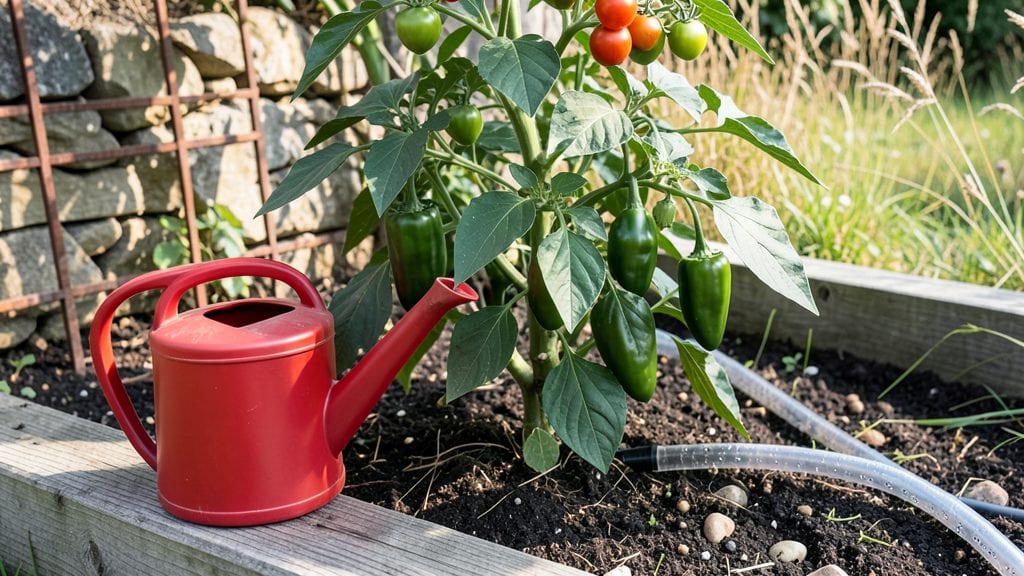
Watering jalapeno plants is where most gardeners stumble—too much and you drown the roots, too little and the peppers turn bitter. 🌱 I learned the hard way when my first batch of plants wilted despite daily watering, only to discover the soil was bone-dry an inch below the surface.
Jalapeños hate soggy feet but demand consistent moisture deeper down.
The key is deep watering—soak the soil until water runs out the bottom of containers or reaches 6 inches down in-ground. In summer, that means every 2-3 days, while winter slows things to once a week.
Check with your finger: if the top inch feels dry, it's time. Overwatering shows up as yellow leaves; underwatering means crispy edges and stunted growth.
You'll know you're doing it right when plants stay firm to the touch and the soil smells fresh, not musty. Container plants dry faster, so they need more frequent checks—especially in black pots that absorb heat. The payoff? Peppers that blister with heat instead of shriveling up.
Seasonal tweaks matter: mulch helps retain moisture in summer, while winter's chill means watering only when the soil is truly dry. Even experienced gardeners mess this up—don't let it be you. Let's get those jalapeños thriving with the right rhythm.
📚 In This Guide
- What you need
- Instructions
- Tips and common mistakes
- Wrapping up and next steps
What you need
- ● Jalapeno seeds or seedlings: Start with high-quality, disease-resistant seeds (e.g., Early Jalapeño, Carolina Reaper, or your preferred variety). If using seedlings, opt for healthy, 4-6 week-old plants with no signs of stress.
- ● Containers or garden bed: Containers: 5-gallon pots or larger (minimum 12" deep) with drainage holes. Fabric grow bags (5+ gallons) are also great for airflow.
- ● Garden bed: Well-draining soil in a sunny spot (6-8 hours of sunlight daily). Avoid soggy or compacted soil.
- ○ High-quality potting mix: A lightweight, well-draining blend (e.g., 60% potting soil + 40% perlite or coconut coir). Optional: Add 10-20% compost for nutrients.
- ● Watering can or drip irrigation system: Watering can: 1-2 gallon capacity with a rose attachment for gentle watering.
- ● Drip irrigation: Low-flow emitters (0.5-1 GPH) to avoid overwatering.
- ○ Moisture meter (optional but helpful): A digital soil moisture sensor to monitor root-zone humidity (aim for 40-60% moisture).
- ● Mulch: 2-3 inches of organic mulch (e.g., straw or shredded leaves) to retain moisture and suppress weeds.
- ● Fertilizer: Balanced liquid fertilizer (10-10-10 or 20-20-20) for seedlings.
- ● High-potassium fertilizer (5-10-10 or 0-0-52) for flowering/fruiting stages.
- ● Self-watering planters: Reduce manual watering with reservoir-based systems (e.g., 7-gallon self-watering pots).
- ● pH testing kit: Keep soil pH between 6.0-7.0 for optimal nutrient uptake.
- ● Shade cloth: 30-50% shade fabric for seedlings or hot climates (prevents stress).
- ● Pruning shears: Bypass pruners for trimming leggy growth or removing lower leaves.
- ● Grow lights (indoor setups):strong> LED full-spectrum lights (12-16 hours/day) if growing indoors.
Step-by-Step instructions for watering jalapeno plants
Mastering watering is the secret to hot, healthy peppers. Too much or too little throws off flavor and growth.
💧 Step 1: Water Deeply at Planting to Settle Soil
After transplanting your jalapenos, give them a thorough soaking with 1 gallon of water per plant. This settles the soil around the roots and eliminates air pockets that can stress young plants. You'll know it's done when water flows freely from the drainage holes at the bottom of the pot or garden bed.
I like to water in the morning so the soil has all day to dry slightly before nightfall. This prevents fungal diseases that thrive in damp conditions. Avoid wetting the leaves—direct the water stream at the base of the plant instead. Wet foliage invites pests and diseases, which can ruin your harvest.
💧 Step 2: Maintain Consistent Moisture (Not Soggy Soil)
Jalapenos need 1-1.5 inches of water per week, but consistency matters more than strict measurements. Check soil moisture by sticking your finger 1-2 inches deep—if it feels dry, it's time to water. The surface can dry out between waterings, but deeper soil should stay evenly moist.
I use a drip irrigation system or soaker hose for containers to deliver water slowly at the base. This prevents runoff and ensures roots get what they need. If you water by hand, let the water soak in for 10-15 minutes before stopping. You'll see the soil darken and absorb water—this is your cue that it's had enough.
🌿 Step 3: Adjust for Growth Stages (Seedlings vs. Fruiting)
Young seedlings need less water—about ½ inch per week—because their roots are small and can't handle excess moisture. Once plants reach 12 inches tall, increase to 1-1.5 inches weekly. During fruiting, when peppers form and swell, they'll drink more water, so monitor soil closely.
Here's the thing—jalapenos hate uneven moisture. If the topsoil dries out while roots stay wet, plants develop blossom-end rot, causing black, mushy spots on peppers. To prevent this, mulch around plants with 2-3 inches of organic mulch to retain even moisture and regulate soil temperature.
⏰ Step 4: Time Watering for Peak Performance
Water in the early morning between 6-10 AM to give foliage time to dry before evening. This reduces fungal risks and ensures roots absorb water efficiently. Avoid watering late in the day—wet leaves overnight create the perfect conditions for powdery mildew or bacterial spot diseases.
During heatwaves, you may need to water every other day instead of weekly. Watch for wilting leaves or dry, crispy edges—these are signs of thirst. If you see yellowing lower leaves, you might be overwatering. Jalapenos are drought-tolerant once established, but they won't forgive soggy roots for long.
🌱 Step 5: Taper Off Before Harvest
Two weeks before picking peppers, reduce watering slightly to ½ inch per week. This concentrates flavors and thickens pepper walls, making them hotter and more robust. You'll notice peppers firm up and develop deeper color as they near ripeness.
Harvest when peppers reach 3-4 inches long and turn a vibrant green (or red/yellow if you prefer ripe ones). Cut stems with pruning shears to avoid damaging the plant. After picking, resume normal watering for any remaining peppers. This final adjustment ensures your last harvest is just as spicy as the first.
Tips & tricks for precision jalapeno watering
Here's what I've learned after years of growing jalapenos—these small tweaks make all the difference between healthy plants and wasted effort.
Soil Test First: Before watering, always check soil moisture by pushing your finger 1-2 inches deep. In Step 2, when you're aiming for 1-1.5 inches of water weekly, the soil should feel like a damp sponge—not bone dry or soggy. I've seen beginners overwater because they only check surface moisture, which can lead to root rot. The key is that deeper soil should stay consistently moist while the surface can dry slightly between waterings.
Watering Technique Matters: In Step 1, when you're giving that initial 1-gallon soaking, use a gentle stream focused at the base—not a forceful jet that can displace soil. For containers, let the water soak in for those critical 10-15 minutes mentioned in Step 2. You'll know it's enough when water begins flowing from drainage holes. This prevents runoff and ensures roots get properly hydrated.
Mulch is Non-Negotiable: The 2-3 inches of organic mulch mentioned in Step 3 isn't optional—it's essential. I've seen plants develop blossom-end rot because of uneven moisture, and mulch solves this by creating a moisture barrier. Apply it right after transplanting and refresh it as it breaks down. This helps maintain that perfect balance of 1-1.5 inches of water per week without the guesswork.
Heatwave Adjustments: During those scorching days when you might need to water every other day instead of weekly, monitor plants closely. Look for wilting leaves or crispy edges by mid-morning—those are signs to water immediately. But be careful: yellowing lower leaves mean you're overwatering. Jalapenos are surprisingly drought-tolerant once established, but they won't recover from waterlogged roots.
Pro Tips for Water Jalapeno Plants
- Here's what I've learned after years of growing jalapenos—these small tweaks make all the difference between healthy plants and wasted effort.
- Soil Test First: Before watering, always check soil moisture by pushing your finger 1-2 inches deep.
- Watering Technique Matters: In Step 1, when you're giving that initial 1-gallon soaking, use a gentle stream focused at the base—not a forceful jet that can displace soil.
Frequently asked questions
Got questions about keeping your jalapeño plants thriving with the perfect watering routine? Here are some of the most common concerns—and their answers—to help you grow fiery, flavorful peppers with confidence!
How often should I water jalapeño plants?
Water jalapeños deeply but infrequently—about 1 to 1.5 inches per week, depending on heat and soil. Let the top 1-2 inches of soil dry out between waterings to prevent root rot. Mulch helps retain moisture while keeping roots cool.
Can I overwater jalapeño plants?
Yes!
Overwatering is a silent killer—it causes root rot and blossom-end rot (a white, mushy spot on peppers). Signs include yellowing leaves or a foul smell. If you suspect overwatering, reduce frequency and improve drainage with perlite or sand.
What’s the best time of day to water jalapeños?
Water in the early morning (6–9 AM) to let foliage dry before nightfall, reducing fungal diseases like powdery mildew. Avoid evening watering, as damp leaves overnight invite pests and mold. Pro tip: Use a drip irrigation system for steady, soil-level hydration.
How do I adjust watering for extreme heat or drought?
In scorching heat (90°F+), water daily with 1–2 inches of water, focusing on the soil—not the leaves. During droughts, deep-water every 2–3 days and use shade cloth to protect plants. Watch for wilting: If leaves droop by noon, it’s time to hydrate!
Are there alternatives to hand-watering jalapeños?
Try:
- Drip irrigation: Slow, targeted watering at the roots (ideal for containers).
- Soaker hoses: Lay them along rows for even moisture without waste.
- Self-watering planters: Perfect for beginners—just refill the reservoir!
Wrapping up and next steps
Growing thriving jalapeño plants is all about balance—especially when it comes to water! With the right techniques, you’ll enjoy a bountiful harvest of fiery peppers while keeping your plants happy and healthy.
Remember, consistency is key: deep, infrequent watering beats shallow, daily soaks, and always adjust for your climate and soil type.
Ready to put your newfound knowledge into action? Start by checking your plants’ moisture levels this week—dig a finger into the soil to see if it’s time for a drink. Happy gardening, and may your jalapeños be as spicy as your passion for growing them! 🌱🔥