
Diseases
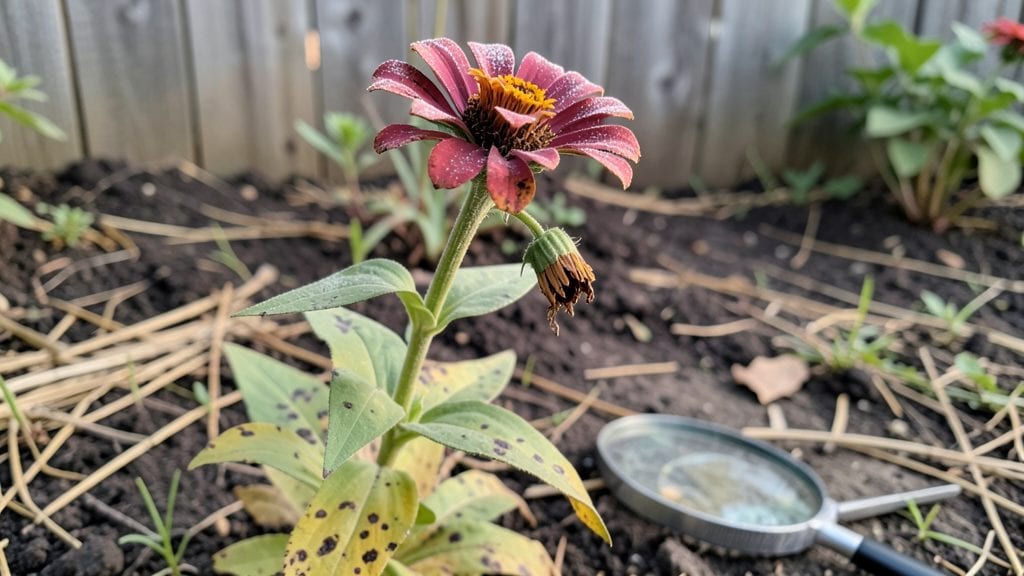
Zinnia plant diseases strike fast—spotting them early means saving your whole garden before the powdery white dust of mildew or the rusty orange spots take over. 🌱 I’ve lost entire beds to fungal infections, but now I recognize the warning signs within days, not weeks.
The key is acting before the leaves curl or stems weaken, because once those symptoms hit, your zinnias can go from vibrant to wilted in just a few days.
Most problems start with too much moisture or crowded plants, creating the perfect damp conditions fungi love. Powdery mildew leaves a chalky coating, rust shows up as orange pustules, and bacterial wilt causes sudden wilting—none of them give much warning.
But here’s the good news: organic sprays like neem oil or baking soda mixtures can stop them in their tracks if you catch them early, and proper spacing keeps air flowing so diseases can’t spread.
You’ll see your zinnias bounce back to their usual bold colors within a week if you treat them right—just prune infected leaves immediately and water at the base, not overhead.
Prevention is even easier: choose disease-resistant varieties, rotate crops yearly, and deadhead spent blooms to keep energy flowing to healthy growth instead of fighting off infections. The payoff? A summer of nonstop blooms without the panic of sudden collapse.
Works for container gardens, raised beds, or in-ground plantings—just adjust your spacing and watering habits. Once you know what to watch for, these diseases become manageable, not garden-ruining disasters. Let’s get those zinnias thriving again.
Root Causes Of Zinnia Struggles
Zinnia plants may seem low-maintenance, but they’re not immune to trouble—especially when it comes to fungal diseases. Understanding why these issues arise is half the battle in prevention. Below, we break down the key triggers that turn your vibrant zinnias into a battleground for pathogens.
Zinnias thrive in good air circulation, but when plants grow too close together, moisture lingers on leaves and stems. This damp, stagnant environment is a fungal buffet—pathogens like Alternaria and powdery mildew love the humidity and poor airflow.
- Why it happens:
- Stunted airflow traps moisture, creating ideal conditions for spores to germinate.
- Overwatering (especially overhead) exacerbates the problem by keeping foliage wet for extended periods.
- Thick foliage blocks sunlight, weakening plants and making them more susceptible to stress-related infections.
💡 Pro Tip: Space zinnias 12–18 inches apart and avoid mulching too heavily around stems—this keeps air moving and reduces humidity at the base.
Fungal diseases like root rot (Phytophthora or Pythium) thrive when zinnias sit in waterlogged soil. Heavy clay soils or containers without drainage holes trap excess moisture, suffocating roots and creating the perfect breeding ground for soil-borne pathogens.
- Why it happens:
- Compacted soil prevents water from draining, leading to anaerobic conditions (lack of oxygen) that weaken roots.
- Overwatering (even with well-draining soil) can still cause issues if the plant isn’t given time to dry out between waterings.
- Cool, wet springs delay soil warming, slowing microbial activity that would otherwise suppress fungal growth.
🌡️ Key Fix: Test your soil’s drainage—if water pools after 30 minutes, amend with perlite, sand, or compost to improve aeration. Elevate pots to ensure excess water escapes.
Zinnias are heat-loving annuals, but extreme temperature swings—whether scorching heat or chilly nights—stress plants, making them vulnerable to fungal attacks. Weakened immunity means pathogens like downy mildew (Peronospora) can take hold faster.
- Why it happens:
- Heat stress (above 90°F) causes transpiration stress, drying out leaves and creating tiny cracks where spores can enter.
- Cold snaps (below 50°F at night) slow metabolic processes, reducing the plant’s ability to fight off infections.
- Sudden temperature shifts (e.g., hot days + cool nights) create condensation on leaves, promoting fungal spores.
✨ Smart Move: Choose heat-tolerant zinnia varieties (like ‘Benary’s Giant’) and mulch lightly to regulate soil temperature. Avoid late-season planting in regions with early frosts.
Even if your current zinnias look healthy, old fungal spores can lurk in garden tools, compost, or reused soil. Diseases like gray mold (Botrytis) or rust (Puccinia) often hitchhike on contaminated equipment or infested plant debris.
- Why it happens:
- Pruning shears or gloves can transfer pathogens from infected plants to healthy ones.
- Compost made from diseased plants can reintroduce fungi into your garden.
🔥 Prevention Step: Sterilize tools with 70% isopropyl alcohol or a 10% bleach solution (1 part bleach to 9 parts water). Replace old soil with fresh, disease-free potting mix or solarize soil in summer to kill pathogens.
Zinnias need balanced nutrition, but excess nitrogen (from over-fertilizing) leads to soft, lush growth—a fungal magnet. Meanwhile, deficiencies in phosphorus or potassium weaken cell walls, making plants easier targets.
- Why it happens:
- Low potassium = poor disease resistance; potassium strengthens cell membranes.
- Over-fertilizing can also burn roots, stressing plants and reducing their ability to fight infections.
📊 Fix It: Use a balanced fertilizer (10-10-10 or 5-10-10) and side-dress with compost for slow-release nutrients. Avoid high-nitrogen feeds like lawn fertilizer.
Fungal diseases start small—yellow spots, white powder, or wilting leaves—but many gardeners dismiss them as "just stress." By the time symptoms spread (e.g., black stem rot or leaf blight), the plant is often beyond saving.
- Why it happens:
- Delayed action allows spores to multiply exponentially, jumping to nearby plants.
- Mistaking symptoms for pests (e.g., powdery mildew vs. spider mites) leads to wrong treatments.
- Removing infected leaves too late leaves behind spores that reinfect the plant.
🎯 Action Plan: Inspect zinnias weekly—look for discoloration, spots, or unusual growths. Isolate and remove infected plants immediately (don’t compost them—bag and discard).
Final Note: Most zinnia diseases are environmentally triggered, not random. By addressing crowding, moisture, stress, and hygiene, you can dramatically reduce fungal outbreaks before they start. 🚀
Quick fixes for zinnia troubles
Zinnia plants can be stunning garden stars, but when diseases strike, they need swift action to bounce back. Below are practical, step-by-step solutions for the most common fungal foes, along with prevention tips to keep your zinnias thriving. Let’s tackle these issues head-on—before they spread!
Cause: Fuzzy white coating on leaves (usually from poor airflow or humidity).
How to Fix It: 🔥 Remove Infected Leaves – Snip off heavily affected foliage with clean pruners and dispose of it in the trash (not compost). 🍳 Neem Oil Spray – Mix 1 tbsp neem oil + 1 tsp mild soap in 1 quart of water. Spray both sides of leaves every 7–10 days until symptoms fade. 👨🍳 Baking Soda Remedy – For mild cases, spray a solution of 1 tsp baking soda + 1 quart water + a drop of dish soap. Reapply every 2 weeks. ⏰ Prevention Tip: Space plants 12–18 inches apart for airflow and water at the base (not overhead).
Cause: Orange pustules on undersides of leaves (spores spread via wind/rain).
How to Fix It: 🔥 Prune Aggressively – Cut off all rust-spotted leaves and sterilize tools with rubbing alcohol. 🍳 Copper Fungicide – Apply a fixed copper fungicide (like Bonide Copper Fungicide) every 2 weeks until new growth is rust-free. 👨🍳 Reflective Mulch – Lay aluminum foil or reflective mulch around plants to reduce spore splash from soil. ✨ Prevention Tip: Avoid overhead watering and remove fallen leaves promptly to break the spore cycle.
Cause: Dark, concentric spots with yellow halos (thrives in wet, warm conditions).
How to Fix It: 🔥 Deadhead & Disinfect – Remove all spotted leaves and sterilize pruners with 70% isopropyl alcohol. 🍳 Fungicidal Spray – Use a chlorothalonil-based fungicide (like Daconil) every 10–14 days for 3 weeks. 👨🍳 Soil Solarization – For severe cases, cover soil with clear plastic for 4–6 weeks to kill fungal spores in the ground. 🌡️ Prevention Tip: Rotate crops—don’t plant zinnias in the same spot next year (fungi linger in soil).
Cause: Gray fuzzy growth on stems/flowers (loves damp, crowded conditions).
How to Fix It: 🔥 Thin Out Plants – Space zinnias wider to improve airflow (aim for 12+ inches between stems). 🍳 Hydrogen Peroxide Spray – Mix 1 tbsp 3% hydrogen peroxide per quart of water and spray every 5 days until symptoms stop. 👨🍳 Deadhead Daily – Remove wilted or dying flowers immediately to prevent spore spread. 🎯 Prevention Tip: Water early in the morning so foliage dries by evening.
Cause: Brown, target-like spots on lower leaves (common in humid climates).
How to Fix It: 🔥 Bottom-Up Pruning – Snip off the lowest 2–3 inches of stems where spores cluster. 🍳 Copper Soap Spray – Combine 1 tbsp copper sulfate + 1 tsp castile soap per gallon of water. Spray weekly. 👨🍳 Straw Mulch Barrier – Apply a 2-inch layer of straw around plants to block soil splashes onto leaves. 🔪 Prevention Tip: Rotate planting locations yearly and avoid nighttime watering.
- 🌡️ Heat Lovers: Zinnias thrive in full sun (6+ hours/day)—shady spots invite fungal growth.
- 🌧️ Rainy Season? Use a fungicide preventative (like Serenade Garden) every 2 weeks as insurance.
- 🔄 Compost Smart: Never compost diseased plant debris—burn or trash it instead.
- 🌱 Start Strong: Buy disease-resistant zinnia varieties (like ‘Benary’s Giant’ or ‘Crystal’) for built-in protection.
Remember: The key is early action—catch fungal issues before they blanket your zinnias! With these fixes, your blooms will stay vibrant and disease-free. 🌸💪
Frequently asked questions about zinnia plant diseases
What's the first sign of powdery mildew on zinnias?
Look for a chalky white coating on the upper leaf surfaces, often starting on older leaves. Unlike dust, it won't wipe off easily and may spread to stems. Early action with neem oil spray stops it before it covers entire plants.
Can I save zinnias with rust disease?
Yes, but act fast! Remove all infected leaves immediately and apply copper fungicide. The key is preventing spores from spreading to healthy foliage—sterilize tools between cuts to avoid cross-contamination.
Why do my zinnias get black spots even with proper care?
Those could be Alternaria leaf spot—common in humid weather. Prune affected areas and improve airflow by spacing plants 12-18 inches apart. Rotate planting locations yearly to break the disease cycle in soil.
Is baking soda really effective against zinnia diseases?
Absolutely for mild cases! Mix 1 teaspoon baking soda + 1 quart water + 1 drop dish soap and spray leaves. It raises the pH slightly, making it harder for fungi to thrive. Reapply every 2 weeks during humid conditions.
How do I prevent diseases in container-grown zinnias?
Ensure pots have drainage holes and use sterilized potting mix each season. Water at the base only and avoid overhead irrigation. Elevate containers to prevent water pooling below.