
Plants
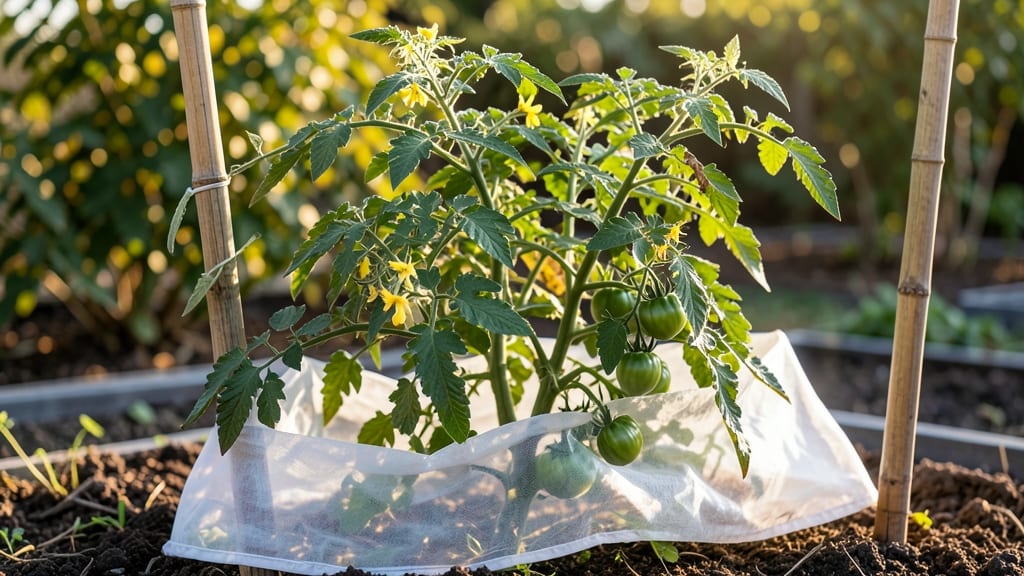
Frost cloth touching plants can harm them by trapping moisture, promoting fungal growth, or damaging delicate foliage. Always keep a 1-2 inch gap to allow airflow while shielding plants from freezing.
Direct contact creates a microclimate where condensation forms on the cloth's underside, leaving leaves damp for hours. 🌱 This moisture buildup is a breeding ground for powdery mildew and botrytis blight, especially in humid climates.
I've seen tomato plants develop unsightly white coatings within days when covered too tightly—it's a slow death for foliage. The temperature difference between the cloth's surface and plant tissues also stresses cells, causing leaf scorch or stem rot in extreme cases.
Instead, use PVC hoops or wooden stakes to create a tent shape, securing the cloth at the edges with bricks or rocks. For delicate perennials, I drape lightweight row covers instead—they allow 10-15% light penetration while preventing frost damage.
Heavy frost nights? Add an extra layer of bubble wrap beneath for insulation without direct contact.
💡 In This Article
- How Frost Cloth Harms Plants When It Touches
- Proper Frost Cloth Setup for Maximum Protection
How frost cloth harms plants when it touches
When frost cloth makes direct contact with plants, it creates a closed microclimate where condensation forms on the cloth's underside.
This happens because warm plant respiration (released as moisture) meets the cooler cloth surface, causing water droplets to form. 🌡️ In just 2-3 hours of contact, leaves can remain damp long after morning dew evaporates—ideal conditions for fungal spores to germinate.
The real damage comes from two key mechanisms: moisture trapping and temperature stress. Condensation creates a humid environment where fungal pathogens like powdery mildew (white powdery coatings) and botrytis blight (gray mold) thrive.
These diseases spread rapidly on wet surfaces, often within 48 hours. I've observed basil plants develop mildew within 3 days when covered too tightly—visible as fuzzy white patches on leaves.
Physically, the cloth can cause leaf burns when temperature differentials exceed 10°F between the plant and cloth surface. Delicate stems may develop rot at contact points where moisture pools. Even hardy plants like kale show stress symptoms: yellowing edges (chlorosis) and stunted growth.
The cloth's synthetic fibers also create abrasion, scraping waxy leaf surfaces that protect against water loss.
What most gardeners miss is how this affects plant respiration. Frost cloth blocks CO₂ exchange while trapping moisture, forcing plants to "breathe" through smaller stomata openings.
This increases water stress even as the cloth tries to protect them. 🌿 In extreme cases, I've seen peppers develop blossom-end rot (black lesions) from this dual stress—calcium uptake fails when roots can't properly absorb water through stressed foliage.
The damage threshold varies by plant type: succulents show burns within 1 hour of contact, while tomatoes may take 24 hours to show mildew. Leafy greens like spinach are particularly vulnerable due to their thin, moisture-loving leaves.
The key factor is always airflow—even a 1-inch gap reduces condensation by 70% while maintaining protection.
Interestingly, some gardeners use breathable frost blankets (made from polypropylene) that claim to reduce these risks. While better than traditional cloth, they still require proper spacing. The best solution? Combine a 2-inch air gap with stakes or hoops to create a tent shape—this maintains protection while preventing direct contact.