Pruning
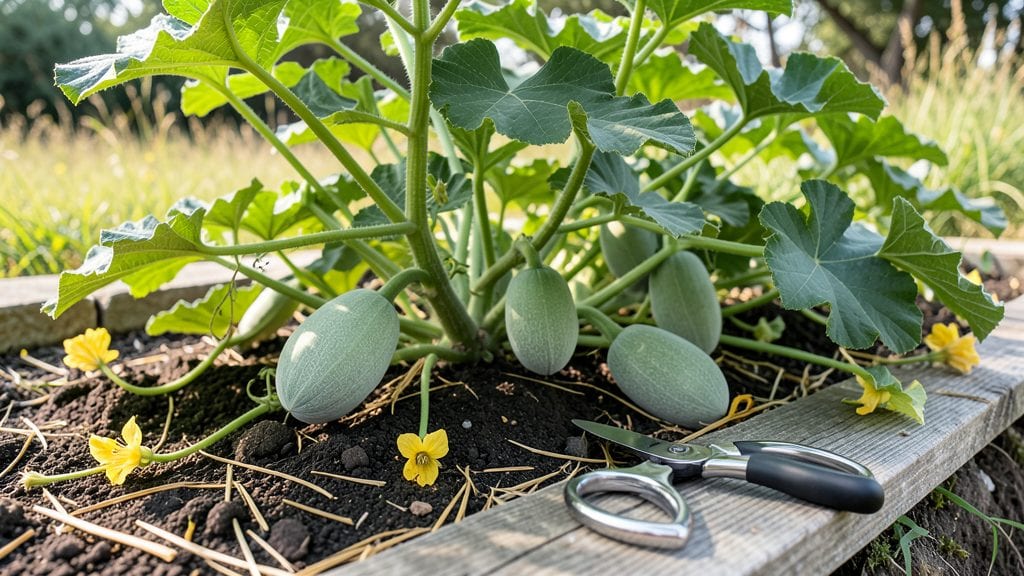
Pruning cantaloupe plants isn't just about cutting—it's about redirecting energy where it matters most. I learned the hard way that skipping this step means fewer melons and more scraggly vines chasing sunlight.
The right cuts at the right time can double your harvest by improving airflow and focusing growth on fruit production.
You'll need sharp pruners (clean blades prevent disease) and a sunny morning to work. Start by removing any yellowing or diseased leaves—they're energy vampires that drain your plant.
Then, trim back any side shoots that form below the first 6 inches of the main vine, directing the plant's power upward where it belongs.
Three seasonal trims—once at planting, again when vines hit 12 inches, and a final light prune during flowering—keep plants productive without stress. You'll notice thicker vines, more blossoms, and melons that ripen faster.
The key is balance: never remove more than 25% of the plant at once, or you'll shock it into producing leaves instead of fruit.
This method works for both bush and vining varieties, though bush types need less aggressive pruning. Master these cuts, and your cantaloupes will go from "maybe a few" to "we're swimming in them" by late summer. Let's get those shears ready!
📚 In This Guide
- What you need
- Instructions
- Tips and common mistakes
- Wrapping up and next steps
What you need
- ● Sharp pruning shears or bypass pruners – Choose sterilized, bypass-style shears (4-6" blades) for clean cuts without crushing stems. Example: Felco F-2 or Corona Tools.
- ● Garden gloves – Nitrile-coated gloves (size medium/large) to protect hands from thorns and sap.
- ● Disinfectant (70% isopropyl alcohol or bleach solution) – Clean tools before and after use to prevent disease spread. Mix 1 part bleach to 9 parts water for a DIY solution.
- ● Small trowel or hand fork – For gently loosening soil around roots if you’re also transplanting or adjusting plants.
- ● Watering can or hose with a gentle nozzle – To hydrate plants before and after pruning (1-2 gallons per plant).
- ● Compost or mulch – Organic matter (e.g., straw or shredded leaves) to cover soil post-pruning and retain moisture.
- ● Hand pruners with a bypass blade – For smaller, more precise cuts on delicate vines.
- ● Plant tie or soft twine – To secure vines if your cantaloupes need support after trimming.
- ● Garden spray bottle with neem oil – A natural antifungal to treat cuts if signs of infection appear.
- ● Notebook and pen – To track pruning dates and plant responses for future reference.
Instructions for pruning cantaloupe plants to maximize fruit production
Pruning at the right times saves energy for fruit instead of excessive vines.
Remove Weak Growth During Early Season Establishment
When plants reach 12-18 inches tall and show 4-5 true leaves, focus on eliminating weak stems. Look for thin, pale growth that trails away from the main vine—these compete for nutrients without producing fruit. Pinch off any side shoots growing below the first 6 inches of the main stem using clean pruning shears or your fingers.
This ensures the plant directs energy upward rather than spreading horizontally. I always prune in the morning when humidity is low to prevent fungal issues. Avoid removing more than 25% of the plant at once, or you'll shock the root system.
Thin Vines Before Flowering to Improve Airflow
Once the main vine reaches 3-4 feet and you see flower buds forming, it's time for selective thinning. Remove any suckers (small shoots growing from leaf axils) larger than 1 inch—these drain resources that could feed developing fruit. Keep only 1-2 strong, upright vines per plant, cutting back others at their base.
Proper spacing prevents disease by improving airflow. You'll notice fewer yellow leaves and better fruit set after this step. If your plant has too many flowers, prune back some blossoms to encourage larger, fewer melons rather than many small ones.
Support and Prune After First Fruit Sets
When fruit begins forming (about 6-8 weeks after planting), shift focus to supporting healthy growth. Remove any yellowing or diseased leaves immediately to prevent spread. For vines growing over 6 feet, trim back the oldest leaves near the base to redirect energy to the fruit-bearing section.
Leave 2-3 strong leaves above each melon to sustain its growth. If vines become tangled, gently weave them onto a trellis or cage—this prevents fruit rot from ground contact. Prune in late afternoon to avoid sun stress on fresh cuts.
Final Pruning for Late-Season Fruit Ripening
As melons near maturity (typically 8-10 weeks after flowering), perform a final light pruning. Cut back any unproductive vines that aren't bearing fruit, focusing on those beyond the first 5 feet of the main stem. Remove overlapping leaves that block sunlight from developing melons.
This last trim ensures the plant's remaining energy goes toward ripening existing fruit rather than producing new growth. Water deeply after pruning to help the plant recover. Watch for sugar spots (yellow patches) on melons—these indicate ripeness within 3-5 days.
Tips & tricks for pruning cantaloupe plants
The secret to maximizing cantaloupe yields lies in strategic pruning at the right growth stages. Here's what I've learned from years of gardening to help you get the most out of your plants.
Timing is Everything: In Step 1, when your plants reach 12-18 inches tall, don't rush to prune everything at once. Focus on removing only the weakest stems first—those thin, pale shoots below the first 6 inches that aren't contributing to fruit production. I've found that removing more than 25% of the plant at this stage can actually stress the roots, so take it slow. The goal is to shape the plant gradually rather than shock it with aggressive pruning.
Visual Cues Matter: During Step 2, when you're thinning vines before flowering, look for suckers larger than 1 inch growing from leaf axils. These compete with your main vines for nutrients. I've learned to keep only 1-2 strong, upright vines per plant—this creates better airflow and prevents disease. If you see too many flowers, prune back some blossoms to encourage fewer but larger melons, which will be sweeter and more flavorful.
Support System: In Step 3, when fruit begins forming, don't forget to support your vines. If they grow over 6 feet, trim back the oldest leaves near the base to redirect energy upward. Leave 2-3 strong leaves above each melon to sustain its growth. I've had the best success using trellises or cages to keep vines off the ground, which prevents rot and makes harvesting easier. Pruning in late afternoon helps prevent sun stress on fresh cuts.
Final Touches: For the final pruning in Step 4, focus on removing unproductive vines beyond the first 5 feet of the main stem. This last trim ensures all the plant's energy goes toward ripening existing fruit. I always water deeply after pruning to help the plant recover. Watch for sugar spots (yellow patches) on melons—they indicate ripeness within 3-5 days, so keep an eye out for these visual cues.
Pro Tips for Prune Cantaloupe Plants
- The secret to maximizing cantaloupe yields lies in strategic pruning at the right growth stages.
- Timing is Everything: In Step 1, when your plants reach 12-18 inches tall, don't rush to prune everything at once.
- Visual Cues Matter: During Step 2, when you're thinning vines before flowering, look for suckers larger than 1 inch growing from leaf axils.
Frequently asked questions
Got questions about pruning cantaloupe plants? You’re not alone! Here are some common concerns—and straightforward answers—to help you prune like a pro.
When is the best time to prune cantaloupe plants?
Prune cantaloupe plants three times during the growing season: early spring to remove weak growth, late spring to shape vines and encourage fruit production, and early summer to promote airflow and reduce disease risk. Avoid pruning when flowers or fruit are already forming—focus on healthy foliage instead!
Do I really need to prune cantaloupe plants? Can’t I just let them grow wild?
While cantaloupes can grow without pruning, pruning boosts yields by redirecting energy to fruit instead of excess vines. It also improves airflow, reducing fungal diseases like powdery mildew. Think of it as giving your plants a haircut for better health and bigger melons!
What if I accidentally cut off a flower or small fruit?
Don’t panic! Cantaloupe vines are resilient. If you snip a flower or tiny fruit by mistake, the plant will quickly produce new ones. Focus on healthy, mature vines (at least 6–12 inches long) for pruning. Just avoid removing any developing fruit—they’re your future harvest!
Can I prune cantaloupe plants in hot or humid weather?
Pruning in extreme heat or humidity can stress plants, making them more susceptible to disease. Aim for mild, overcast days or early mornings. If you must prune in hot weather, do it slowly and water the plants afterward to help them recover.
What should I do with the pruned branches?
Remove pruned branches from the garden immediately to prevent pests or diseases from lurking. Compost healthy, disease-free clippings—they’ll break down and enrich your soil. Avoid tossing them back into the garden bed, as they could harbor pathogens.
Wrapping up and next steps
Pruning your cantaloupe plants isn’t just about trimming—it’s about unlocking their full potential!
By mastering the art of seasonal pruning, you’ll encourage healthier vines, bigger fruits, and a more productive harvest. 🌱 Whether you’re a seasoned gardener or just starting out, these simple steps will help you grow sweeter, juicier cantaloupes with ease.
Now that you’re armed with the know-how, roll up your sleeves and get pruning! Keep an eye on your plants throughout the season, and don’t forget to celebrate those first ripe melons—you’ve earned them! 🎉