
Companion Plants
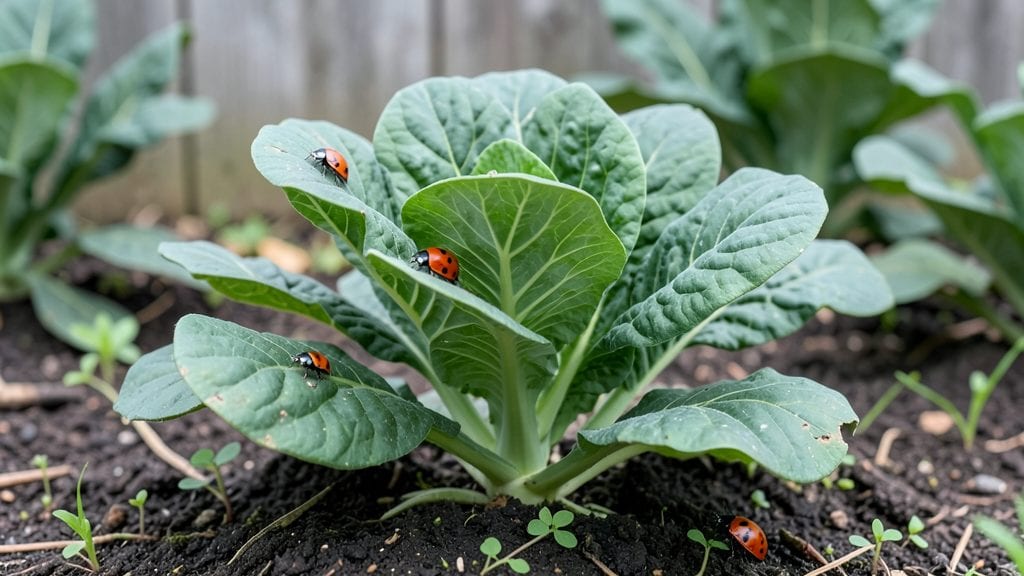
Using ladybugs for plants provides organic pest control by targeting aphids, mites, and other garden pests, cutting down on chemical treatments while enhancing your garden's natural balance. For best results, release them during early morning or evening hours and provide water sources like misting or shallow dishes.
These tiny predators aren't just cute—they're voracious hunters that can eat up to 5,000 pests in their lifetime, including mealybugs and soft-bodied insects. 🔥 Their secret weapon? A specialized digestive system that lets them process prey much larger than their own size.
Unlike some beneficial insects, ladybugs also help pollinate flowers while they patrol your garden, making them a two-for-one solution for plant lovers who want to avoid harsh chemicals.
Here's the kicker: ladybugs thrive in gardens with partial shade and moderate humidity, so if your yard gets too hot or dry, they might not stick around.
I always check for their telltale yellow eggs on undersides of leaves—a sure sign they've set up shop and are working overtime to protect your plants.
💡 In This Article
- How Ladybugs Hunt and Conserve Plant Health
- Buying and Releasing Ladybugs for Maximum Garden Benefits
How ladybugs hunt and conserve plant health
Ladybugs are nature's tiny pest control specialists, equipped with a hunting strategy that combines speed and precision. Their diet consists primarily of aphids, mites, and soft-bodied insects, which they locate using both sight and chemical cues.
A single ladybug can consume 50-100 aphids per day during its adult stage, with some species like the Hippodamia convergens consuming up to 5,000 pests in their lifetime.
Their mandibles are strong enough to pierce the tough exoskeletons of many pests, while their saliva contains enzymes that begin breaking down prey externally before ingestion.
Their digestive system is uniquely adapted to handle prey much larger than their own body weight. When a ladybug captures an aphid, it injects digestive enzymes that liquefy the internal organs, allowing the ladybug to suck out the nutrient-rich slurry.
This process is so efficient that they can consume prey three times their body weight in a single meal. 🔥 Unlike generalist predators, ladybugs focus on pests that are harmful to plants, avoiding beneficial insects like bees or butterflies.
Their target selection is driven by both hunger and the availability of vulnerable prey.
Beyond pest control, ladybugs play a surprising role in pollination. While they're not as efficient as bees, they do transfer pollen between flowers as they move from plant to plant in search of prey.
Studies show that ladybugs can visit up to 100 flowers per hour, contributing to plant reproduction in gardens where bee populations are low. This dual role makes them one of the most valuable insects for organic gardeners seeking both pest management and pollination support.
What sets ladybugs apart from other beneficial insects like lacewings or hoverflies is their rapid reproductive cycle. A female can lay 500-1,000 eggs in her lifetime, with eggs hatching in just 3-7 days under ideal conditions. This rapid turnover allows them to establish populations quickly in new environments.
However, unlike lacewings (which prefer leaf-miners) or hoverflies (which target whiteflies), ladybugs specialize in soft-bodied pests, making them particularly effective against aphid infestations that can devastate crops within weeks.
Here's what most gardeners don't realize: ladybugs have a preference for certain plant environments. They thrive in areas with moderate humidity (40-60%) and partial shade, which helps them conserve moisture.
Too much direct sunlight or drought conditions can stress them, causing them to leave your garden in search of better conditions. Their sensitivity to environmental factors explains why some gardeners see immediate results while others need to create more hospitable conditions first.
Their hunting behavior also includes a fascinating social aspect. Ladybugs will often aggregate in groups when food sources are abundant, creating visible clusters on plants.
This communal feeding not only increases their pest control efficiency but also makes them easier to spot as they work. 💫 For gardeners, this means checking for these clusters is one way to verify they're actively patrolling your plants rather than just passing through.