
Watering
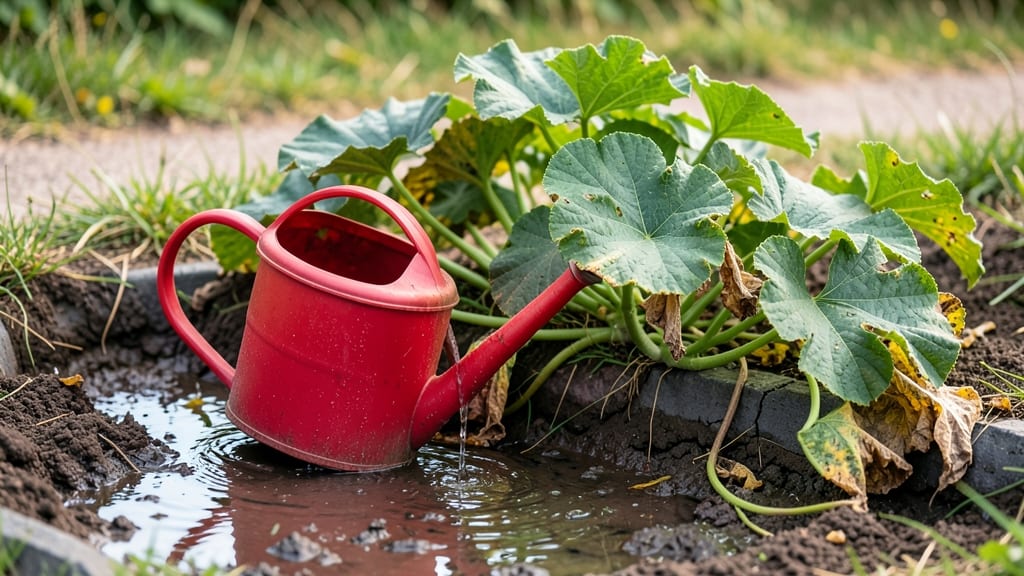
When your squash vines look more like sad noodles than productive plants, overwatering is usually the culprit. 🌱 I’ve nursed back more than a few soggy squash patches by addressing the root of the problem—literally.
The yellowing leaves and wilting stems aren’t just a sign of too much water; they’re screaming for air and drainage.
Here’s the fix: stop watering until the soil is bone-dry 2-3 inches down, then let the plants tell you when they’re thirsty. Pair that with a quick soil check—if water pools on the surface or the roots smell funky, you’ve got drainage issues.
A simple fork or trowel can loosen compacted soil around the roots, letting oxygen flow back where it belongs.
Within a week, you’ll see new green leaves pushing through, and those vines will start climbing again. The key is consistency: water deeply but infrequently, and always in the morning so foliage dries before nightfall. Soon, your squash will be thriving instead of drowning.
This method works for both bush and vining squash, whether you’re growing zucchini, pumpkins, or butternuts. The secret? Patience and paying attention to what the soil—and the plants—are actually telling you.
Root Zone Overload Explained
Overwatering squash plants is like drowning their roots in a swamp—too much moisture suffocates them, blocking the very air and nutrients they need to thrive. 🌱💦 While squash plants love consistent hydration, their roots are sensitive to prolonged saturation, which disrupts critical biological processes.
Below, we break down the root causes of this common problem, so you can diagnose and fix it before your vines turn into a sad, soggy mess.
Squash plants hate "wet feet"—when water pools around their roots instead of draining away. This happens when:
- Soil composition is too dense: Clay-heavy or compacted soil repels water, creating waterlogged pockets. Test it: Grab a handful of damp soil—if it clumps tightly when squeezed, drainage is poor.
- Containers lack drainage holes: Pots without exit points act like bathtubs, trapping excess water. Even "self-watering" containers can fail if overfilled.
- No slope or mulch barriers: Flat garden beds or missing mulch (like straw or wood chips) let water pool at the base of plants.
Science behind it: Oxygen is essential for root respiration—the process that fuels growth. When soil is saturated, oxygen levels drop to hypoxic (low-oxygen) conditions, forcing roots to "drown." Within 24–48 hours, roots start dying back, and the plant signals distress by wilting or developing yellowing leaves.
Squash plants thrive on consistency, not feast-or-famine cycles. Sudden deep waterings after dry spells can:
- Overwhelm root systems: Roots expand to absorb water, but if the soil can’t drain, they suffocate. Think of it like a sponge—if you squeeze it too hard after drying it out, it won’t recover.
- Trigger fungal infections: Prolonged moisture on leaves (from overhead watering) or soil creates a breeding ground for Phytophthora or Pythium, pathogens that rot roots.
- Disrupt nutrient uptake: Too much water flushes away essential minerals like nitrogen and potassium, leaving roots starved even if the soil is wet.
Pro tip: Water at the base in the morning (before 10 AM) to let foliage dry quickly. Use a soaker hose or drip irrigation to deliver water slowly and evenly.
Mother Nature doesn’t always cooperate, and squash plants can’t control the chaos. Common environmental triggers include:
| Factor | How It Causes Overwatering | Fix It |
|---|---|---|
| 🌧️ Heavy or frequent rain | Soil stays saturated for days, especially in low-lying areas. Roots can’t "breathe" until the ground dries. | Raise beds slightly or install French drains (gravel trenches) to redirect excess water. |
| ☀️💧 High humidity + heat | Evaporation slows, keeping soil damp longer. Combined with poor airflow, it’s a recipe for root rot. | Space plants 3–5 feet apart for airflow and water early to reduce fungal risk. |
| 🏡 Shade from structures | Damp, shaded soil stays wetter longer. Squash needs 6–8 hours of sun to dry out properly. | Prune nearby trees/shrubs or move containers to sunnier spots. |
Even well-meaning gardeners can overdo it. Here’s how:
- Checking soil with fingers (not tools): Wet soil can feel dry on the surface but still be soggy 2 inches down. Always check 2–3 inches deep—if it’s damp, wait.
- Using the "thumb rule" blindly: The "stick your thumb in the soil" method is outdated. Modern squash varieties have deeper roots and need 1–2 inches of dry soil before watering.
- Ignoring plant signals: Drooping leaves or yellowing only at the base are red flags. Wilting in the morning (not evening) often means roots are drowning.
Quick test: Gently tug on a vine—if it pulls away easily, roots are rotting from overwatering. Healthy roots resist slightly.
Revive Your Squash Plants Now
Overwatering can turn your thriving squash vines into sad, drooping messes—but don’t panic! With the right steps, you can nurse them back to health and prevent future soggy soil disasters.
Below, we’ve mapped out practical fixes based on the most common causes of overwatering, plus pro tips to keep your plants happy and productive.
Cause: Too much water suffocates roots, starving them of oxygen and nutrients. Solution:
- Stop Watering Immediately 🚰
- Let the top 2–3 inches of soil dry out before watering again. Stick your finger in—if it’s damp, wait!
- Improve Drainage Fast 🏗️
- Mix coarse sand or perlite into the soil around the base (but avoid direct contact with stems).
- If in containers, add drainage holes or repot into a larger container with fresh, well-draining potting mix.
- Prune Damaged Foliage ✂️
- Snip off yellow or mushy leaves to redirect energy to healthy growth. Sterilize scissors with rubbing alcohol first!
Prevention Tip: 💡 Use a moisture meter or the "squeeze test"—gently press soil; if it holds shape, it’s too wet. Aim for 1 inch of water per week (including rain).
Cause: Root rot from prolonged sogginess cuts off water uptake, causing stems to collapse. Solution:
- Trim the Damage ⚰️
- Cut away black, soft, or hollow stems at the base with clean shears. Healthy stems should be firm and green.
- Dry Out the Roots 🌞
- Gently lift the plant and pat roots dry with a paper towel. Place it in shady, dry conditions for 24–48 hours to let roots recover.
- Repot in Fresh Soil 🏡
- If root rot is severe, transplant into a new pot with sterile, well-draining soil. Add a handful of compost for nutrients.
Pro Tip: ✨ Hydrogen peroxide spray (1 tbsp in 1 gallon of water) can disinfect roots and boost oxygen. Apply lightly to the soil after repotting.
Cause: Overwatering + calcium deficiency = weak cell walls in squash. Solution:
- Adjust Watering Schedule ⏰
- Water deeply 2–3 times per week (early morning) instead of daily shallow doses. Let soil dry between sessions.
- Boost Calcium Quickly 🧀
- Sprinkle crushed eggshells or crushed oyster shell around the base (or use a calcium nitrate fertilizer per package instructions).
- Mulch to Regulate Moisture 🌿
- Apply 2–3 inches of straw or shredded leaves to retain even moisture and block weeds.
Prevention Tip: 🎯 Avoid wetting leaves when watering—direct soil irrigation reduces rot risk. Use a soaker hose or drip system for precision.
- Test Your Soil 📊 - A soil test kit ($10–$20) reveals drainage issues. Amend clay soil with compost + sand.
- Upgrade Containers 🏺 - Terracotta pots dry faster than plastic.
If using plastic, poke drainage holes and elevate pots on bricks. 3. Monitor Weather ☁️ - Adjust watering during rainy spells or high humidity. A rain gauge helps track input.
Emergency Hack: 💡 If roots are completely rotten, propagate from a healthy vine by taking a 4–6 inch cutting with leaves, dipping in rooting hormone, and planting in dry soil.
Remember: Squash plants are tough—with the right care, they’ll bounce back! Focus on drainage, balance, and patience, and you’ll be harvesting plump, happy squash in no time. 🎉
Frequently asked questions about soggy squash plants
Why do my squash leaves turn yellow when overwatered?
Yellowing leaves (especially at the base) signal oxygen deprivation in the roots. Overwatering creates anaerobic conditions, forcing the plant to shed leaves to conserve energy. Check soil moisture 2-3 inches deep—if it's damp, withhold water until it dries completely.
How often should I water squash plants to avoid drowning them?
Squash thrives on deep but infrequent watering—aim for 1 inch per week (including rain). Water at the base in the morning, and only when the top 1-2 inches of soil feel dry. Use a moisture meter for accuracy.
Can I save a squash plant with root rot from overwatering?
Yes, but act fast! Trim black/mushy roots, repot in fresh, well-draining soil, and let roots dry for 24 hours. For severe cases, propagate from healthy vines using rooting hormone. Prevent recurrence by ensuring containers have drainage holes and soil stays loose.
What's the best soil mix to prevent waterlogged squash roots?
Use a blend of 60% potting soil, 30% perlite, and 10% compost. This improves aeration while retaining moisture. For garden beds, amend clay soil with coarse sand or coconut coir to break up compaction.
Why does my squash wilt in the morning after overwatering?
Morning wilting indicates roots can't absorb water due to oxygen starvation. The plant collapses overnight when transpiration exceeds uptake. Solution: Stop watering until soil dries, then water deeply only when the plant shows signs of recovery (firm stems).