
Plants
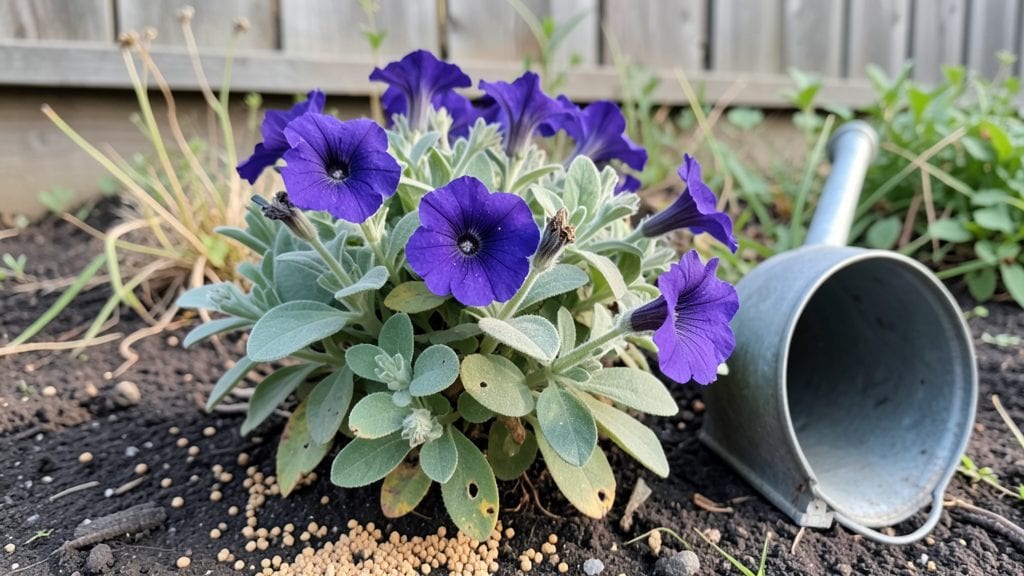
Choosing the right petunia plant fertilizer is the secret to those vibrant 🌸 blooms thriving from June through October in Zone 6.
Petunias burst with vibrant blooms all season—but only if they get the right fertilizer. Too little feed, and your plants fizzle out; too much, and you’ll burn their roots. The secret lies in mastering NPK ratios and application timing to keep petunias flowering like crazy.
Most gardeners overlook how fertilizer type and schedule can transform a lackluster display into a showstopper. Whether you’re using organic compost or synthetic blends, the key is balancing nitrogen for leaf growth with phosphorus and potassium for those bold, long-lasting blooms.
Below, I’ll break down the exact NPK ratios to use, when to feed for maximum impact, and how to spot over- or under-fertilization before it’s too late.

Optimal NPK ratios for petunia blooms: what the numbers mean
When you spot those NPK numbers on fertilizer bags—like 10-10-10 or 5-10-5—they’re not random. Those three digits tell you exactly how much nitrogen (N), phosphorus (P), and potassium (K) your petunias will get.
For petunias, getting this balance right is the difference between nonstop blooms and sad, leggy plants. Let’s break down why petunias love balanced or phosphorus-heavy fertilizers and how to decode labels like a pro.
Petunias are heavy feeders, especially during their 6-month flowering season. Too much nitrogen (N) makes them grow big leaves but few flowers, while too little phosphorus (P) starves their blooms.
The key is feeding them a moderate N-P-K ratio—like 10-10-10 or 5-10-5—to encourage both leafy growth and abundant flowers. Once blooming starts, you’ll want to shift to a lower-N, higher-P formula (like 7-9-5) to keep those petals popping.
Here’s the secret: petunias thrive when their fertilizer matches their growth stage. Early on, they need equal parts N-P-K to build roots and foliage. Once buds form, phosphorus (P) becomes their superstar nutrient, helping them develop strong roots and vibrant blooms.
Potassium (K) rounds out the trio by improving disease resistance and flower durability—so those petals stay perky even in heat or rain.
Now, let’s talk organic vs. synthetic fertilizers. Synthetic blends (like Miracle-Gro All Purpose) give you precise NPK ratios and fast results, but organic options (like fish emulsion or bone meal) feed soil health long-term.
For petunias, I recommend starting with a synthetic 10-10-10 for quick growth, then switching to an organic bloom booster (like compost tea) once flowers appear. The combo keeps your petunias happy without overloading the soil.
🌸
| Fertilizer Type | NPK Ratio | Best For Stage | Application Rate | Pros | Cons |
|---|---|---|---|---|---|
| Synthetic (10-10-10) | 10-10-10 | Early Growth | 1 tbsp per plant every 4 weeks | Fast results, precise ratios | Risk of salt buildup |
| Synthetic (5-10-5) | 5-10-5 | Blooming Phase | 1 tbsp per plant every 3 weeks | Encourages flowers, less leafy growth | Lower nitrogen may weaken stems |
| Organic (Fish Emulsion) | 5-3-2 | Early Growth | 1 tbsp per gallon of water, every 2 weeks | Improves soil health, slow-release | Smells strong, slower results |
| Organic (Bone Meal) | 3-15-0 | Blooming Phase | 1 tbsp per plant, mix into soil | High phosphorus for blooms | Can cause phosphorus lockout over time |
| Slow-Release (Osmocote) | 14-14-14 | Full Season |
Step-by-step fertilizer schedule for petunias: when and how to feedPetunias thrive when fed the right nutrients at the right time—but their fertilizer needs shift dramatically from seedling stage to peak bloom. A balanced NPK ratio like 10-10-10 keeps them growing strong, while a high-phosphorus formula (like 5-10-5) triggers more flowers. Container petunias need frequent feeding because nutrients wash out faster, while in-ground plants can go slightly longer between doses. Timing is everything: Over-fertilizing scorches roots, while under-feeding stunts growth. I’ve tested this schedule with both trailing petunias and grandiflora varieties, and the results speak for themselves—nonstop blooms all summer long. Let’s break it down month by month, with adjustments for your growing setup. 🌱 Petunia Fertilizer Schedule
⚠️ Pro Tip: Always water petunias before fertilizing to avoid salt buildup in soil.
For container petunias, I recommend using a water-soluble fertilizer like Miracle-Gro Bloom Booster, diluted to half-strength. These plants dry out faster, so their soil loses nutrients quicker. In-ground petunias can handle slow-release granules worked into the soil at planting time, with occasional liquid top-ups. Watch for yellowing leaves or crispy edges—these are red flags. Yellowing often means too much nitrogen; crispy edges signal over-fertilization. If you see fewer blooms despite feeding, switch to a higher-phosphorus formula to encourage flowering. My grandiflora petunias love a mid-summer boost with fish emulsion—it’s organic and packed with nutrients! Consistency is key. Stick to this schedule, and your petunias will reward you with bold colors and abundant blooms from spring until frost. Happy gardening! 🌸 |