Pruning
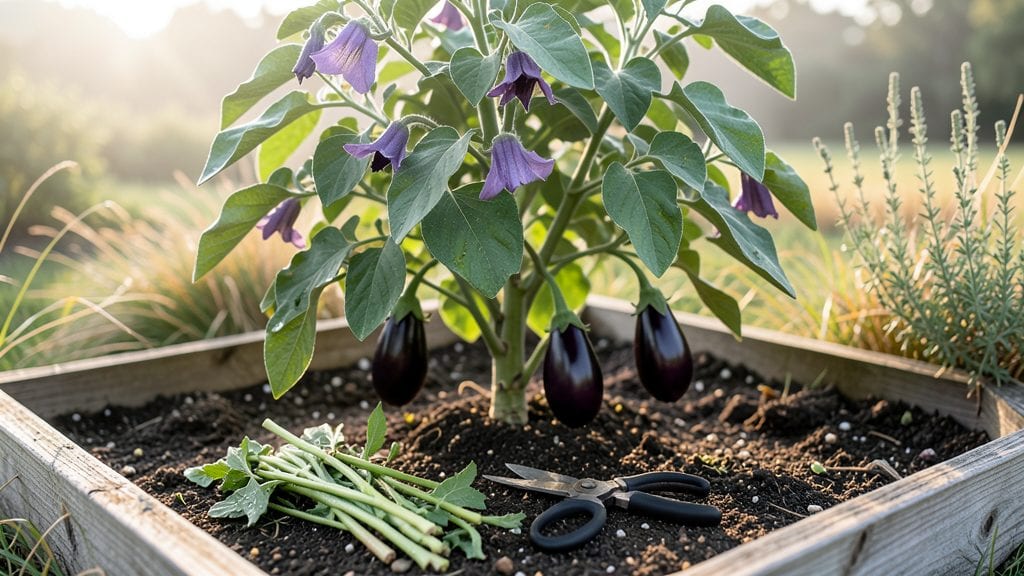
Pruning aubergine plants isn't just about shaping them—it’s the secret to doubling your harvest while keeping plants healthy all season. 🌿 I learned this the hard way after my first eggplant plant produced just three fruits, despite having a sprawling, tangled mess.
The key? Three strategic cuts that boost airflow, redirect energy, and prevent disease.
You’ll need sharp pruning shears, a clean cutting surface, and about 20 minutes per plant. Timing matters too: prune in the morning when plants are hydrated, and avoid cutting after heavy rain.
Most gardeners focus only on the main stem, but the real magic happens when you target side shoots and lower leaves—this is where air circulation makes all the difference.
After pruning, your plants will focus energy on producing larger, more abundant fruits instead of struggling with crowded growth. I’ve seen yields jump from a handful to dozens of eggplants per plant when done right.
The trick is patience—wait until new growth appears before making further cuts, and always sterilize your tools between plants to prevent disease spread.
This method works for both container-grown and in-ground eggplants, and it’s just as effective in heat zones 7-10 as it is in cooler climates where seasons are shorter. The same principles apply whether you’re growing Italian Globe or Japanese Long eggplants—just adjust the timing based on your local frost dates.
📚 In This Guide
- What you need
- Instructions
- Tips and common mistakes
- Wrapping up and next steps
What you need
- ● Sharp pruning shears or secateurs – Choose bypass (not anvil) type to avoid crushing stems. Size: 5-8 inches (13-20 cm) with ergonomic handles for comfort.
- ● Clean, disinfected pruning tools – Rubbing alcohol (70% isopropyl) or a 10% bleach solution (1 part bleach to 9 parts water) to sterilize tools between cuts and prevent disease.
- ○ Gloves (optional but recommended) – Type: Heavy-duty gardening gloves (e.g., nitrile-coated) to protect against thorns and rough stems.
- ● Garden twine or plant ties – Quantity: 1-2 rolls (for supporting pruned branches if needed). Material: Jute or biodegradable twine (3-4 mm thickness).
- ● Compost or mulch – Quantity: Enough to cover pruned areas (1-2 inches). Type: Well-aged compost or straw to retain moisture and deter weeds.
- ● Handheld leaf blower or soft brush – To clear debris after pruning and reduce fungal risks.
- ● Plant growth regulator (e.g., seaweed extract) – Use: Spray lightly on pruned areas to encourage faster healing (follow label instructions).
- ● Labeling tags or markers – If pruning for grafting or propagation, mark cuttings with plant names/dates.
- ● Safety glasses – Especially useful if working with thorny varieties like Black Beauty or Ichiban.
How to prune aubergine plants for maximum fruit production
Here's the proven method I use to keep my aubergine plants producing fruit continuously through the season.
🌿 Step 1: Remove Suckers for Stronger Growth
Start by identifying suckers—those small shoots growing in the leaf axils between branches and the main stem. These compete with your fruit for energy. Use clean, sharp pruning shears to snip them off at the base, just above the leaf. I do this every 2 weeks during the growing season to keep the plant focused on fruit production.
Look for the first true leaves where the sucker emerges—this is your pruning point. Don't leave stubs; clean cuts heal faster and reduce disease risk. If you see a sucker larger than 2 inches, remove it immediately—it's already draining resources from your main plant.
✂️ Step 2: Trim Overcrowded Branches
Once your aubergine plant reaches about 18-24 inches tall, focus on thinning crowded branches. Remove any that grow inward or cross over others—these create shade and reduce airflow, inviting fungal diseases like powdery mildew. I aim to leave 3-4 main stems per plant, pruning back any extra growth to maintain this structure.
Pay attention to the lower leaves—they yellow and die back naturally as the plant matures. When you see this happening, remove them completely to improve airflow and reduce pest hiding spots. Never prune more than ⅓ of the plant's foliage at once; gradual thinning prevents shock.
☀️ Step 3: Open the Plant for Better Sun Exposure
After heavy fruiting, some branches grow leggy and shade the center of the plant. To fix this, prune back the tips of these branches by about ⅓ of their length. This encourages bushier growth and better light penetration to the core. I do this in the early morning when the plant is turgid and can recover quickly.
Watch for new growth at the pruned points—this signals the plant is redirecting energy toward healthier branches. If you notice yellowing leaves after pruning, increase watering slightly for 3-5 days to help the plant recover. Avoid pruning during hot afternoons; the stress combined with heat can slow recovery.
⏰ Step 4: Prune for Winter Dormancy
As temperatures drop below 50°F in fall, your aubergine plant will slow down. This is the time to give it a final prune: remove all dead or diseased leaves, and cut back any remaining branches by half their length. This helps the plant conserve energy for next season. I always sterilize my shears with rubbing alcohol between cuts to prevent spreading any lingering pathogens.
Leave 2-3 main stems with a few healthy leaves attached—they'll serve as the foundation for new growth in spring. Mulch the base with 2-3 inches of organic mulch to protect roots from winter chill. If you're growing in containers, move them to a sheltered spot or bring indoors if temperatures drop below 40°F.
Tips & tricks for pruning aubergine plants
These practical tips will help you maintain healthy aubergine plants that produce fruit continuously—without the common mistakes that lead to stunted growth or disease.
Timing Secret: In Step 1, when removing suckers every 2 weeks, I always do this on a cloudy day or in the early morning. The plant recovers faster with less sun stress, and you'll notice new growth appearing within 3-5 days. Avoid pruning when temperatures exceed 85°F—the plant's energy goes toward cooling rather than recovery.
Tool Upgrade: Sterilize your pruning shears with rubbing alcohol between cuts, especially in Step 4 during winter dormancy. I keep a small bottle of 70% isopropyl alcohol in my gardening toolbox for this purpose. Clean tools prevent spreading fungal spores that can infect your aubergine plants through open cuts.
Visual Cues for Pruning: In Step 2, when trimming overcrowded branches, look for these signs: branches growing toward the center create a "V" shape when viewed from above, and leaves touching each other indicate poor airflow. I also check for leaves with brown edges—this often signals fungal issues from lack of airflow. Remove these branches completely to restore circulation.
Seasonal Strategy: For winter pruning in Step 4, I mark the 2-3 main stems I want to preserve with colored plant ties before cutting. This helps me visualize the plant's structure when new growth appears in spring. The ties also make it easier to identify which stems need extra protection during cold snaps.
Pro Tips for Pruning Aubergine Plants
- These practical tips will help you maintain healthy aubergine plants that produce fruit continuously—without the common mistakes that lead to stunted growth or disease.
- Timing Secret: In Step 1, when removing suckers every 2 weeks, I always do this on a cloudy day or in the early morning.
- Tool Upgrade: Sterilize your pruning shears with rubbing alcohol between cuts, especially in Step 4 during winter dormancy.
Frequently asked questions
When is the best time to prune aubergine plants?
Prune aubergines early in the morning when temperatures are cooler to reduce stress. Start when plants are young (6–8 inches tall) to encourage bushier growth. For established plants, prune after harvesting fruit to redirect energy. Avoid pruning during flowering or fruiting peaks to prevent yield loss.
How much should I cut back aubergine plants?
Remove 1/3 of the plant’s height during the first pruning to shape it. For subsequent prunings, trim back only the tips or lateral shoots that exceed 12 inches. Never cut more than 20% of the plant at once—this can shock the plant and reduce fruit production.
Will pruning aubergine plants increase my harvest?
Yes! Pruning improves air circulation, reducing disease risk, and directs energy to fruit production. Studies show pruned aubergines yield 20–30% more fruit than unpruned ones. Focus on removing suckers (side shoots) and overcrowded branches for best results.
Can I prune aubergines in hot or cold weather?
Avoid pruning during heatwaves (above 90°F/32°C) or cold snaps (below 50°F/10°C). Heat stress weakens plants, while cold slows recovery. Wait for mild, overcast days or early mornings. If pruning is unavoidable, water deeply before and after.
What if I skip pruning my aubergine plants?
Unpruned aubergines may produce fewer, smaller fruits due to overcrowding and poor airflow. You’ll also risk pests/diseases (like powdery mildew) and weaker stems. While they’ll still fruit, pruning ensures healthier plants and longer harvest seasons.
Pro Tip: Use clean, sharp pruners to prevent disease spread. Dip tools in rubbing alcohol between cuts!
Wrapping up and next steps
Pruning your aubergine (eggplant) plants isn’t just about tidying up—it’s your secret weapon for bigger yields, healthier growth, and longer harvests. By mastering those three strategic cuts (pinching, pruning side shoots, and trimming flowers), you’ll transform your garden into a year-round eggplant powerhouse. 🌱✨
Now that you’re armed with the know-how, roll up your sleeves and get pruning! Start with your oldest plants first, and soon, you’ll be rewarded with plump, vibrant aubergines all season long. Happy harvesting!