
Watering
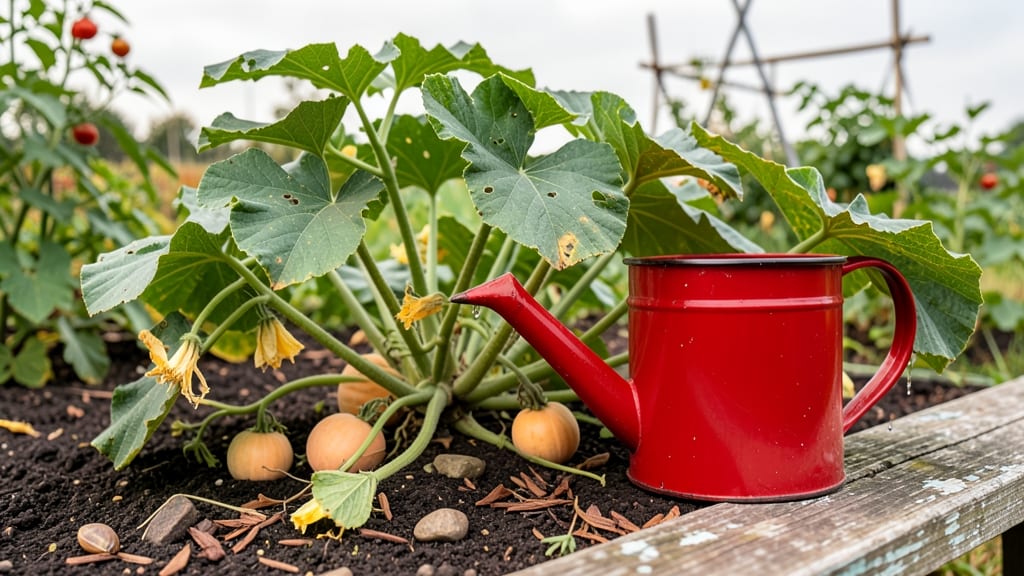
An underwatered pumpkin plant flops like overcooked noodles, but don’t panic—it’s often just a thirsty vine waiting for a drink. 🌱 I’ve nursed back more wilting pumpkin plants than I’d like to admit, and the fix comes down to three... precise actions that stop the spiral within hours.
The key? Watering right—not just dumping gallons at once, but getting moisture where the roots actually need it.
First, check the soil: stick your finger 2-3 inches deep. If it feels drier than a desert, that’s your problem. Pumpkins need 1-2 inches of water per week, but they hate soggy roots just as much as thirst.
I use a soaker hose buried at the base of the vines—it delivers water slowly where the roots drink, not where it runs off. For a quick fix, water deeply once in the morning, then again in the evening if the top inch feels dry.
Within 24-48 hours, you’ll see the vines perk up like they’ve had a cold shower. The leaves will plump back out, and new growth will signal you’re on the right track.
Mulch afterward to lock in moisture—2-3 inches of straw keeps the soil damp longer and cuts down on future watering headaches. The best part? This method works for squash, cucumbers, and melons too.
Now, here’s the secret no one tells you: overwatering is just as deadly as underwatering. Watch for yellowing leaves after the plant revives—that’s a sign of root rot creeping in. Adjust your watering based on the weather, and you’ll have pumpkins thriving instead of struggling by harvest time.
Root Causes Of Wilting Pumpkins
Understanding why your pumpkin plants are underwatered starts with uncovering the hidden factors draining their moisture reserves. Pumpkins, like all plants, rely on a delicate balance of water, soil, and environmental conditions.
When this balance tips, the results can be dramatic—drooping vines, yellowing leaves, and stunted growth. Let’s break down the key culprits behind underwatered pumpkin plants, so you can address them with precision.
Pumpkins thrive in deep, consistent moisture, especially during their rapid growth phases. Unfortunately, many gardeners make critical mistakes when watering:
- Superficial watering: Light sprinkles or short hoses sessions only wet the top inch of soil, leaving deeper roots thirsty.
Pumpkin roots can extend 3–4 feet deep—surface watering fails to reach them. - Irregular timing: Skipping watering days or relying on memory instead of soil checks leads to cycles of stress.
Pumpkins need 1–2 inches of water per week, more in extreme heat. - Morning vs. evening myths: While watering in the early morning (before 10 AM) is ideal to reduce evaporation, some gardeners avoid it due to misconceptions. The real issue? Underwatering entirely—not the time of day.
💡 Pro Tip: Use a moisture meter or the "dry finger test" (stick your finger 2 inches into the soil—if it’s dry, water deeply).
Even with frequent watering, pumpkins suffer if their roots can’t access moisture efficiently. Compacted or clay-heavy soils act like a sponge that squeezes out water, leaving roots gasping for air—and hydration.
- Clay soil: Holds water but strangles roots by limiting oxygen flow. Pumpkins in clay may show signs of underwatering even when the soil feels damp. - Sandy soil: Drains too quickly, offering no moisture reserve for roots.
Water runs through like a sieve, leaving plants parched hours after watering. - Compaction: From foot traffic, machinery, or heavy rains, compacted soil creates waterlogged pockets near the surface while deeper roots remain dry.
🔥 Fix It: Amend soil with compost or organic matter (like coconut coir or peat moss) to improve aeration and water retention. For clay, mix in perlite or coarse sand; for sand, add hydrating gels or mulch heavily.
Pumpkins don’t just lose water through their leaves—they’re also battling hidden moisture thieves in their environment. Heat, wind, and even pests can accelerate dehydration.
- High temperatures: Pumpkins transpire (lose water) faster in heat (up to 2–3x more on sunny days). Without enough water, leaves wilt as the plant prioritizes survival over fruit growth. - Strong winds: Dry out soil surfaces and increase evaporation from leaves.
Windburned pumpkin foliage loses moisture rapidly. - Pests and diseases: Squash vine borers, aphids, or powdery mildew weaken plants, reducing their ability to absorb and retain water. A stressed plant can’t regulate moisture efficiently.
✨ Solution: Mulch heavily (straw or wood chips) to retain soil moisture, water at the base (not overhead), and use shade cloth in extreme heat to reduce transpiration.
Rain is a gardener’s free water source—but it’s unreliable and often uneven. Counting on rainfall alone is a gamble, especially for pumpkins with large, thirsty vines and heavy fruits.
- Uneven distribution: Rain might soak one side of your garden while leaving another bone-dry. Pumpkins spread widely, so spotty watering creates weak patches. - Runoff: Sloped or sandy soils cause rainwater to flow away before roots absorb it.
What looks like a "good rain" might leave your plants parched. - Drought cycles: Even in rainy seasons, heatwaves or dry spells can dehydrate pumpkins overnight. A single missed rain isn’t enough to sustain them.
🌡️ Action Step: Install a drip irrigation system or soaker hoses to deliver consistent, deep watering—especially during dry spells. Pair it with rain gauges to track actual moisture input.
If your pumpkin’s roots are injured, diseased, or stunted, they can’t absorb water efficiently—even when it’s available.
- Physical damage: Tilling too deeply, weed pullers, or even aggressive pruning can sever roots, reducing the plant’s water-uptake capacity. - Root rot or disease: Fungal infections (like Pythium) or overwatering (which causes suffocation) can kill roots, leaving the plant unable to hydrate properly. - Container limitations: Pumpkins in pots outgrow their space quickly.
Roots become root-bound, circling and struggling to access water at the edges of the container.
🔪 Recovery Tip: If roots are damaged, prune affected areas (sterilize tools with rubbing alcohol) and fertilize with compost tea to encourage regrowth. For container pumpkins, upgrade to a 20+ gallon pot with drainage holes.
Crowded pumpkin plants compete for water, soil nutrients, and sunlight—leading to underwatering symptoms even in well-watered beds.
- Overplanted vines: Pumpkins need 3–5 feet of space per plant. When vines tangle, shallow roots form, struggling to reach deep moisture. - Weed competition: Weeds steal water and nutrients, leaving pumpkins dehydrated.
A weed-free zone within 12 inches of the vine is critical. - Poor airflow: Dense plantings trap humidity, promoting diseases that weaken the plant’s ability to hydrate properly.
🎯 Spacing Rule: Give pumpkins at least 4 feet between plants and thin seedlings to avoid future water wars. Mulch between rows to suppress weeds.
Reviving Your Pumpkin Plant Fast
If your pumpkin plant is looking wilted, crispy, or just plain sad, don’t panic—it’s often a simple fix. The key is identifying the root cause (literally!) and taking action immediately.
Below, we break down the most common reasons pumpkin plants get underwatered and how to turn things around—plus tips to keep your vines thriving long-term. 🌱💦
If your pumpkin plant is thirsty, a shallow sip won’t cut it. These heavy feeders need water to reach their deep roots. Signs: Wilting leaves, dry soil 1-2 inches down, or a dull, crispy texture on the vines.
🍳 Step-by-Step Deep Watering
- 🌊 Check the Soil First
- Stick your finger 2-3 inches into the soil. If it’s dry, it’s time to water. If it’s damp, wait 1-2 days before checking again.
- 👨🍳 Water Slow and Deep
- Use a soaker hose or a watering can with a long spout to deliver water directly to the base of the plant.
- Water until you see moisture seeping out the bottom of the pot (or 6-8 inches into the ground for in-ground plants).
- Pro Tip: Water in the early morning (before 10 AM) to reduce evaporation and fungal risks. 🌞
- 🥘 Mulch to Lock in Moisture
- Spread 2-3 inches of organic mulch (straw, grass clippings, or wood chips) around the base (but not touching the stem).
- This keeps soil cool, retains moisture, and discourages weeds.
- ⏰ Monitor for 3-5 Days
- After deep watering, check the soil daily. If leaves perk up within 24-48 hours, you’re on the right track. If not, repeat the process.
Pumpkins hate inconsistency—too little water stresses them, but too much can drown their roots. Signs of over/under-watering: Yellowing leaves (overwatered), brown edges (underwatered), or a mushy stem (root rot).
💡 Watering Schedule Cheat Sheet
| Plant Stage | Watering Needs | Frequency |
|---|---|---|
| Seedlings | Keep soil evenly moist (not soggy) | Every 1-2 days |
| Vining Stage | Deep water 1-2x per week | Adjust for heat/wind |
| Flowering/Fruiting | 1-2 inches of water per week | More in extreme heat (daily if soil is bone-dry) |
| Mature Plants | 2-3 inches of water per week | Reduce slightly before harvest |
- 🔥 Hot Weather Hack: If temps hit 90°F+, water daily in the morning and evening to prevent heat stress.
- ❄️ Cool Weather Tip: Reduce watering slightly—pumpkins need less when it’s chilly.
Compacted, sandy, or clay-heavy soil can strangle your pumpkin’s roots, making it impossible to absorb water. Signs: Water pooling on top, slow drainage, or roots growing outward instead of down.
✨ Soil Fixes That Work
- 🔪 Improve Drainage
- For potted pumpkins: Add a layer of perlite or coarse sand to the bottom of the pot before replanting.
- For in-ground plants: Mix compost or aged manure into the top 6 inches of soil to loosen it up.
- 🌱 Boost Soil Retention
- Amend heavy clay soil with peat moss or coconut coir to help it hold moisture without becoming waterlogged.
- For sandy soil, add compost or leaf mold to improve water retention.
- 💧 Test Your Soil
- Do the squeeze test: Grab a handful of moist soil. If it crumbles easily, it’s ideal. If it sticks together, it’s too clay-heavy. If it falls apart, it’s too sandy.
Once your pumpkin plant is back in bloom, keep these habits to avoid future underwatering:
- 💡 Install a Rain Gauge: Track rainfall so you know how much to supplement.
- 🌡️ Use Drip Irrigation: Slow, consistent watering at the roots reduces stress and evaporation.
- 🌱 Choose the Right Spot: Pumpkins need 6-8 hours of sun and soil that drains well but retains moisture.
- 🍂 Rotate Crops: Avoid planting pumpkins in the same spot yearly to prevent soil depletion.
With these fixes, your pumpkin plant should bounce back within a week—just give it time, patience, and the right amount of H2O. 🎃💦 And remember: When in doubt, check the soil!
Frequently asked questions
How do I tell if my pumpkin plant is truly underwatered vs. just wilting from heat?
Check the soil first—stick your finger 2-3 inches deep. If it's dry, that's your issue. For heat wilting, leaves often droop during the day but recover at night. Underwatered plants stay wilted even after dark. Also, feel the stem: if it's brittle and dry, it's thirsty.
Can I use a regular hose to fix an underwatered pumpkin plant?
Not effectively! A regular hose creates runoff that doesn't reach deep roots. Use a soaker hose or watering can instead. Water until you see moisture 6-8 inches deep in the soil. For potted pumpkins, water until it drains from the bottom.
How long does it take to revive an underwatered pumpkin plant?
With proper deep watering, you'll see improvement within 24-48 hours. For severely stressed plants, it may take up to 5-7 days to fully recover. Monitor daily and adjust watering based on soil moisture. Mulching helps speed up recovery by locking in moisture.
What's the best mulch to use for pumpkins to prevent underwatering?
Use 2-3 inches of organic mulch like straw, wood chips, or grass clippings. Avoid fresh wood chips as they can draw moisture away. Mulch keeps soil cool, reduces evaporation, and suppresses weeds that compete for water. Apply it around the base but keep it 2 inches away from the stem.
Can I save a pumpkin plant if the leaves are already crispy and brown?
It depends on how deep the roots are still healthy. If the stems are still firm and the soil is moist below 2 inches, there's hope. Trim any crispy leaves and give it deep watering daily for 3 days. If the stems are mushy, the plant is likely beyond saving. Prevention is key—check soil moisture regularly!