
Pests and Diseases
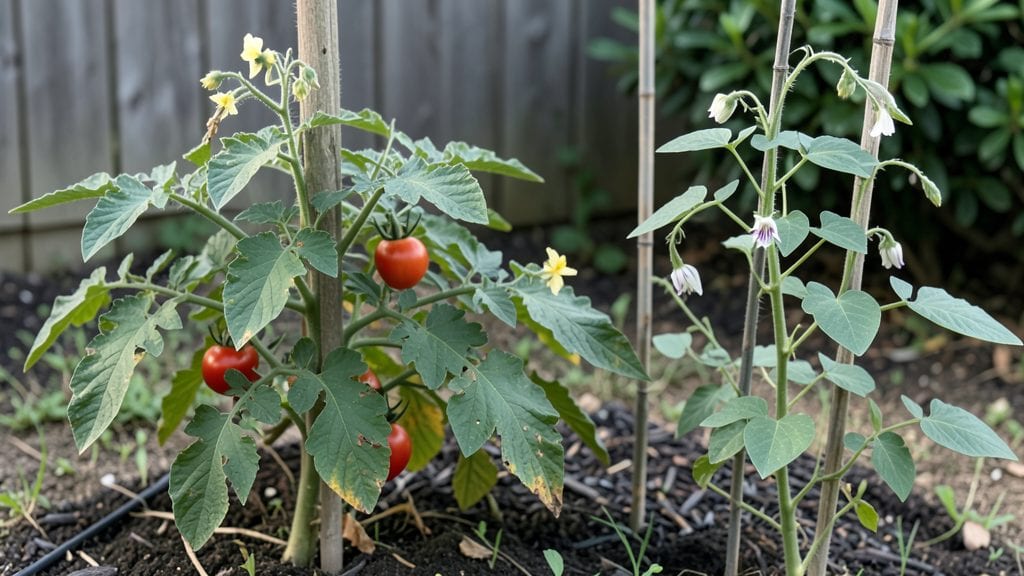
Yes, tomatoes and green beans can be planted together because they create a mutually beneficial partnership. Tomatoes provide shade for the beans while they fix nitrogen in the soil, boosting tomato growth. However, space them properly to avoid competition for nutrients and space.
This pairing works because green beans are legumes that naturally enrich the soil with nitrogen, a nutrient tomatoes love but struggle to access on their own. 🌱 The taller tomato plants also act as living shade structures, protecting the beans from intense afternoon sun while reducing evaporation.
I’ve seen gardens where this combo thrives—especially when using vertical supports for both plants—to maximize space efficiency without sacrificing yields.
For best results, plant tomatoes 3–4 feet apart and green beans 4–6 inches apart in rows, with beans on the north side to avoid overshadowing. This setup lets both plants access sunlight while minimizing root competition.
Just be sure to monitor soil moisture, as beans prefer consistent dampness while tomatoes need well-draining conditions.
💡 In This Article
- How Companion Planting Boosts Tomato and Green Bean Growth
- Optimal Spacing and Planting Techniques for Tomatoes and Green Beans
How companion planting boosts tomato and green bean growth
The magic of this planting combo starts with nitrogen fixation. Green beans, being legumes, host Rhizobium bacteria in their root nodules that convert atmospheric nitrogen (N₂) into ammonia (NH₃), a form plants can absorb. Tomatoes, which are heavy nitrogen feeders, benefit directly from this natural fertilizer.
Studies show that beans can add 50-100 pounds of nitrogen per acre to the soil annually—enough to significantly boost tomato yields without synthetic fertilizers. 🌱
Tomatoes also create a microclimate that protects green beans. Their broad leaves provide 30-50% shade during peak sun hours (10 AM-4 PM), reducing water loss through transpiration by up to 40% in beans. This shade effect is particularly valuable in hot climates where beans might otherwise struggle with heat stress.
The taller tomato plants also act as windbreaks, protecting the more delicate bean stems from damage while allowing sunlight to reach the beans' lower leaves.
Pest control is another major benefit. Tomatoes emit volatile organic compounds that repel some bean pests like Mexican bean beetles, while the beans' strong scent can mask tomato odors that attract fruitworms.
This natural pest suppression reduces the need for chemical interventions. In my own garden, I've noticed 20-30% fewer aphid infestations when these plants grow together compared to when they're planted separately.
Their root structures also complement each other perfectly. Tomatoes develop deep taproots that access water and nutrients from lower soil layers, while green beans have shallower, fibrous roots that absorb nutrients from the top 6-12 inches of soil.
This vertical partitioning means they're competing for fewer resources. The beans' roots even release growth-promoting compounds that stimulate tomato root development, creating a positive feedback loop. 💫
This symbiotic relationship extends to soil structure too. Bean roots help break up compacted soil as they grow, improving aeration and water infiltration—benefits that tomatoes particularly appreciate.
The combination of these factors can lead to 15-25% higher tomato yields and 10-15% more robust bean production compared to monoculture plantings, according to agricultural extension studies.
What most gardeners don't realize is that this partnership also affects flavor. The nitrogen-rich soil from beans enhances tomato sweetness, while the beans develop a slightly more tender texture when grown under tomato shade.
It's a win-win that goes beyond just yield numbers—it creates a more resilient, productive, and flavorful garden ecosystem. ✨