Diseases
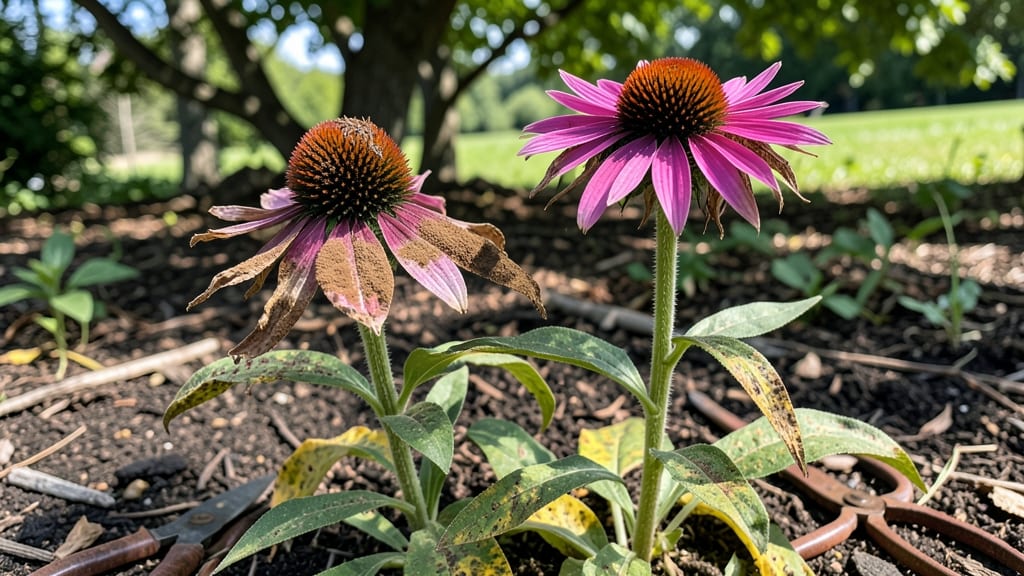
Echinacea plant diseases like powdery mildew, rust fungus, and bacterial leaf spot weaken stems and turn foliage yellow. Early detection—through pruning infected leaves and improving airflow—stops spread and helps plants recover.
Echinacea plants are tough but not invincible—these common diseases thrive in damp, crowded conditions. Powdery mildew appears as white, powdery patches, while rust fungus shows up as orange spots on leaves, both weakening the plant's ability to photosynthesize.
Bacterial leaf spot causes dark, water-soaked lesions that can spread rapidly in humid weather. 🌿 The good news? Catching these early with regular inspections and maintaining proper spacing between plants can make all the difference in saving your echinacea.
For prevention, focus on airflow and soil health. Neem oil sprays work wonders against fungal issues, while copper-based treatments tackle bacterial infections. I’ve found that removing affected leaves immediately and sterilizing pruners between cuts helps prevent cross-contamination.
If the disease has already taken hold, sometimes the best move is to isolate or remove the worst-affected plants to protect the rest of your garden.
💡 In This Article
- Identifying Echinacea Fungal and Bacterial Symptoms
- Organic Disease Prevention and Treatment Guide
Identifying echinacea fungal and bacterial symptoms
Powdery mildew is the most recognizable echinacea disease, appearing as a white, powdery coating on leaves and stems. This fungal infection thrives in humidity levels above 70% and poor airflow, creating ideal conditions for spores to spread.
The mildew blocks sunlight, causing leaves to yellow and curl—similar to how a thin veil would dim a room's light. 🌬️ What makes it tricky is that symptoms often start on the undersides of leaves, where gardeners might miss them during casual inspections.
Rust fungus shows up as bright orange, rust-colored pustules on leaf surfaces, typically appearing in late spring to early summer when temperatures hover between 60-75°F. These pustules eventually rupture, releasing spores that can travel up to 20 feet on wind currents.
The fungus weakens leaf structure, causing premature leaf drop—much like how rust corrodes metal over time. If left unchecked, rust can reduce a plant's flowering capacity by up to 40%, making it harder to enjoy those iconic purple blooms.
Bacterial leaf spot presents as dark, water-soaked lesions with yellow halos, often appearing after heavy rain or overhead watering. These spots can merge into larger necrotic areas, creating a "shotgun blast" pattern on leaves.
The bacteria thrive in wet foliage conditions, which is why morning watering (rather than evening) is crucial. 💧 Unlike fungal diseases, bacterial infections spread rapidly through contaminated water and tools, making sanitation a top priority when pruning infected plants.
Here's how to diagnose these issues accurately: First, examine both leaf surfaces using a 10x magnifying glass—powdery mildew will appear fuzzy, rust will show pustules, and bacterial spots will look wet and irregular. Next, check the plant's growing conditions: Overcrowding, dense foliage, and poor drainage create perfect disease incubators.
A simple airflow test—wave your hand through the plant—will reveal if air circulates poorly, a key indicator of disease risk.
Seasonal timing matters too. Powdery mildew often appears in late summer when nights stay warm, while rust peaks in spring during wet periods. Bacterial leaf spot can strike anytime but spreads fastest in humid summers.
Keep a garden journal noting when symptoms appear—this helps track patterns and adjust care routines accordingly. 📝 The earlier you catch these issues, the easier they are to manage before they compromise your echinacea's health.
One common mistake gardeners make is mistaking aphid damage for bacterial leaf spot—they both create small holes in leaves. The key difference? Aphids leave sticky residue (honeydew), while bacterial spots have those distinctive yellow halos.
Always check for pests first by gently shaking plants over a white sheet—aphids will reveal themselves immediately. This simple step saves time and prevents unnecessary treatment with fungicides.