Diseases
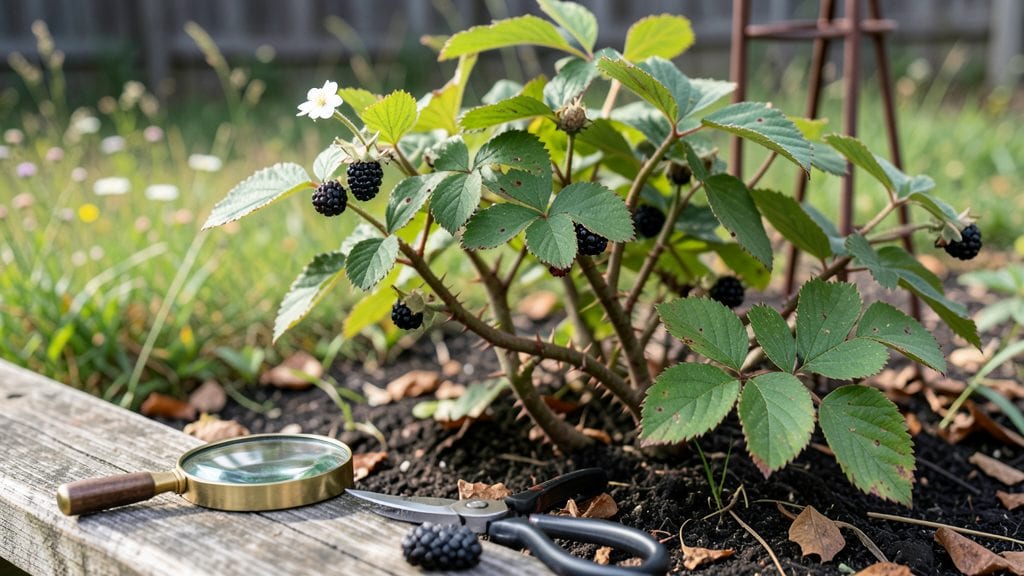
Blackberry plant diseases can turn your thriving bramble into a shadow of its former self—unless you catch them early. I’ve watched anthracnose, rust, and botrytis turn lush canes into sad, spotted messes, but there’s a way to fight back before it’s too late.
The key is knowing what to look for: dark spots on leaves, orange pustules, or fuzzy gray mold clinging to fruit.
Most fungal diseases thrive when blackberries get crowded, stay wet too long, or lack airflow. Pruning out dead wood in late winter, spacing plants properly, and watering at the base (not overhead) cuts down on problems before they start.
I’ve saved entire patches just by adjusting these simple habits—no fancy sprays needed.
When you spot trouble, act fast: remove infected leaves, apply copper fungicide for organic control, or spray neem oil for prevention. The goal isn’t perfection—it’s keeping your plants productive enough to bear fruit. With the right moves, you’ll still harvest sweet berries even after a rough season.
This works for both home gardens and small farms, whether you’re growing thornless varieties or tough old-fashioned brambles. Let’s get those canes healthy again—your next harvest depends on it.
Root Causes Of Blackberry Ailments
Blackberry plants may look resilient, but they’re vulnerable to a variety of fungal threats—each with a distinct trigger. Understanding why these diseases strike is the first step to protecting your berry patch. Below, we break down the most common culprits behind blackberry plant diseases, from environmental stressors to cultural mistakes.
Fungi thrive in wet, stagnant conditions, and blackberries are no exception. When soil stays soggy for too long—whether from overwatering, heavy clay, or improper mulching—pathogens like Botrytis cinerea (gray mold) and Phytophthora (root rot) get the perfect breeding ground.
- How it happens: Excess moisture weakens plant cell walls, making them easier targets for fungal spores.
- Key signs: Wilting, yellowing leaves, and mushy stems (especially in low-lying areas).
- Actionable fix:
- Test soil drainage—dig a hole, fill it with water, and time how long it takes to drain (ideal: <4 hours).
- Raise beds or amend soil with compost/sand to improve aeration.
- Avoid watering at night or overhead; use drip irrigation instead.
Fungal diseases often spread via contaminated pruners, trellises, or even bird droppings. If you’ve used the same shears on an infected plant—or worse, a neighbor’s—you’ve likely transferred spores to your blackberries. Anthracnose and Rust are notorious hitchhikers this way.
- How it happens: Spores land on cuts or wounds (like pruning sites) and germinate when conditions are humid.
- Key signs: Dark, sunken lesions on canes or leaves; orange rust pustules.
- Actionable fix:
- Sterilize tools between uses with 70% rubbing alcohol or a 10% bleach solution.
- Remove and dispose of infected canes (don’t compost them!).
- Space plants 3–4 feet apart to reduce airbornes spore spread.
Blackberries are hardy, but sudden shifts—like frost followed by warm, humid days—stress plants and invite fungal invaders. Powdery mildew and Botrytis love this chaotic weather because stressed plants can’t defend themselves as effectively.
- How it happens: Cold snaps damage cell membranes, while heat and humidity create the ideal 80–90°F range for spore germination.
- Key signs: White powdery coatings (mildew), blackened fruit (Botrytis), or curled leaves.
- Actionable fix:
- Choose disease-resistant varieties like ‘Natchez’ or ‘Triple Crown’ for your climate.
- Use shade cloth (30–50%) during peak heat to reduce stress.
- Water deeply in the morning to let foliage dry before nightfall.
Blackberries need a balanced diet, but too little (or too much) of certain nutrients can weaken their immune system. For example, low calcium makes plants prone to Botrytis, while excess nitrogen promotes lush, disease-susceptible growth.
| Nutrient Issue | Disease Risk | Symptoms |
|---|---|---|
| Low calcium | Botrytis, blossom end rot | Blossom drop, brown lesions on fruit |
| High nitrogen | Powdery mildew, anthracnose | Excessive leaf growth, yellowing, weak canes |
| Low phosphorus | Root rot, poor cane strength | Purple stems, stunted growth |
Actionable fix: Test soil pH (ideal: 5.5–6.5) and amend with:
- Crushed eggshells or lime for calcium.
- Bone meal or rock phosphate for phosphorus.
- Avoid synthetic fertilizers; opt for balanced organic options (e.g., 5-5-5 NPK).
Birds, insects, and even deer can spread fungal spores across your garden. For instance, Rust fungi often hitch rides on aphids, while birds may drop infected berries near healthy plants, introducing Botrytis.
- How it happens: Spores cling to feathers, insect bodies, or fruit, then land on new hosts.
- Key signs: Unexplained outbreaks in isolated areas; chewed leaves or fruit.
- Actionable fix:
- Install bird netting over ripe fruit to block droppings.
- Use neem oil or insecticidal soap to deter aphids and mites.
- Fence out deer with 8-foot tall fencing (they love blackberry canes!).
Quick Fixes for Blackberry Fungal Foes
When your blackberry plants start showing signs of distress—spotted leaves, moldy canes, or wilting berries—it’s time to act fast. Fungal diseases can spread like wildfire if left unchecked, but with the right tools and techniques, you can revive your plants and protect future harvests.
Below, we’ve mapped out practical solutions for each common fungal threat, along with prevention tips to keep your blackberries thriving. Think of this as your blackberry plant’s emergency first-aid kit!
If your blackberry leaves are dotted with target-like brown spots or canes are oozing dark, sunken lesions, anthracnose is likely the culprit. Here’s how to treat and prevent it:
🔥 Step 1: Prune the Problem Areas
- Remove infected leaves, canes, and fruit immediately—don’t compost them! Toss them in the trash or burn them to prevent spores from lingering.
- Use sterilized pruners (wipe with rubbing alcohol between cuts) to avoid spreading the fungus.
🍳 Step 2: Apply Fungicidal Sprays
- Copper-based fungicides (like copper sulfate or Bordeaux mixture) are highly effective against anthracnose. Spray before symptoms appear if your area is prone to this disease.
- Organic option: A mix of 1 tablespoon baking soda + 1 teaspoon dish soap + 1 gallon water can help as a preventive spray.
🌡️ Step 3: Improve Airflow and Sanitation
- Thin out canes to reduce humidity and improve airflow—fungi love damp, crowded spaces!
- Water at the base (avoid overhead sprinkling) and remove mulch 6 inches from the plant to speed up drying.
💡 Prevention Pro Tips:
- Plant resistant varieties like ‘Triple Crown’ or ‘Natchez’ if anthracnose is recurrent in your region.
- Clean up debris in fall—this disease survives on old plant material.
- Avoid overhead irrigation during rainy seasons.
Seeing bright orange pustules on the undersides of leaves? That’s rust, a fungal disease that weakens plants by stealing nutrients. Here’s how to tackle it head-on:
👨🍳 Step 1: Remove and Destroy Infected Foliage
- Snip off and dispose of all rust-infected leaves. Do not leave them on the ground—they’ll release spores.
- Rake up fallen leaves regularly to break the fungus’s life cycle.
🥘 Step 2: Boost Plant Health with Fungicides
- Neem oil (1 tablespoon per quart of water + a drop of soap) is a natural fungicide that works well for mild cases.
- For severe infections, use a sulfur-based fungicide (follow label instructions carefully—sulfur can burn plants if overused).
⏰ Step 3: Adjust Your Watering Habits
- Water in the early morning so leaves dry quickly. Wet foliage at night = rust party time.
- Space plants 3–4 feet apart to reduce humidity and improve airflow.
✨ Prevention Pro Tips:
- Rotate crops—don’t plant blackberries in the same spot year after year.
- Avoid nitrogen-heavy fertilizers, which make plants more susceptible to rust.
- Plant in full sun—rust thrives in shady, damp conditions.
If your blackberries are covered in gray, fuzzy mold or the fruit is rotting before ripening, botrytis blight is likely the villain. This one’s tricky because it attacks both leaves and fruit. Here’s how to stop it in its tracks:
🔪 Step 1: Prune for Light and Air
- Remove all infected berries and canes—don’t let them linger on the plant.
- Thin out dense canes to allow sunlight to penetrate and dry out the plant faster.
🍅 Step 2: Use Fungicides Strategically
- Apply a fungicide with active ingredients like myclobutanil or iprodione (e.g., Immunox or Botry-Zen) before flowering begins.
- For organic growers, a hydrogen peroxide spray (1 tablespoon per quart of water) can help as a preventive.
🌡️ Step 3: Control Moisture Like a Pro
- Avoid overhead watering—use drip irrigation or soaker hoses.
- Harvest berries promptly—don’t let them overripe on the plant.
- Space mulch away from canes to prevent moisture buildup.
🎯 Prevention Pro Tips:
- Plant in well-draining soil—botrytis loves soggy conditions.
- Remove volunteer canes (suckers) that pop up around the plant—they can harbor spores.
- Sanitize tools between pruning sessions to avoid cross-contamination.
An ounce of prevention is worth a pound of cure! Here’s how to build a fungal-resistant blackberry patch for the long haul:
- 🌱 Choose disease-resistant varieties—ask your local nursery for recommendations tailored to your climate.
- 🌡️ Monitor soil moisture—fungi love dampness. Aim for consistent but not soggy soil.
- 🍂 Clean up in fall—remove all debris, prune dead canes, and sterilize tools.
- 🌿 Mulch wisely—use straw or wood chips, but keep it away from the base of canes.
- 💪 Boost plant health—feed with a balanced fertilizer (high in potassium) to strengthen natural defenses.
With these targeted fixes and proactive habits, your blackberry plants will bounce back stronger—and you’ll be enjoying juicy, disease-free berries in no time! 🍇✨
Frequently asked questions
Why do my blackberry leaves keep turning yellow?
Yellowing leaves often signal nutrient deficiencies (like low nitrogen or magnesium) or root rot from overwatering. Check soil moisture—blackberries need well-draining soil. For quick fixes, apply a balanced organic fertilizer (5-5-5 NPK) or compost. If roots smell foul, improve drainage by raising beds or adding sand.
Can I still harvest berries if my plants have fungal spots?
Only pick berries from healthy-looking canes—never harvest from plants with visible disease. Fungal spores can contaminate fruit, making them unsafe to eat. Remove infected canes immediately and sterilize your hands/tools after harvesting. For severe outbreaks, wait until next season to harvest from treated plants.
How often should I spray fungicide on blackberries?
Preventive sprays work best: apply every 2-3 weeks during growing season (spring to fall). For organic growers, use neem oil or copper fungicide in early morning when bees aren't active. Stop sprays 2 weeks before harvest to avoid residue. Focus on undersides of leaves where spores hide.
Will pruning help prevent blackberry diseases?
Prune in late winter to remove dead/diseased canes (cut at ground level). Thin out crowded growth to improve airflow—fungi thrive in damp, shaded areas. Always sterilize pruners with 70% rubbing alcohol between cuts. Remove fallen leaves/debris regularly to break disease cycles.
Can I save my blackberry plants if they're completely covered in mold?
For severe cases, prune back 75% of infected growth and apply a strong fungicide (like sulfur or copper). Replace heavily infested soil with fresh compost. Monitor closely—some plants may recover, but others may need replacement. Choose disease-resistant varieties like 'Chester' or 'Arapaho' for next season.