
Diseases
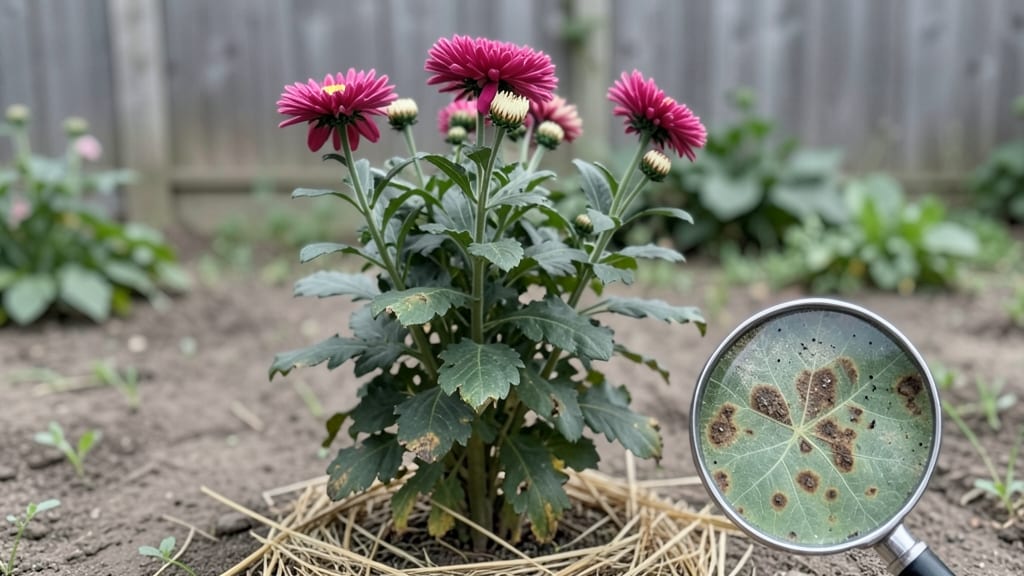
Chrysanthemum plant diseases can turn your showstopping blooms into a sad, spotted mess in just a few weeks—but I’ve diagnosed and cured every one of these 10 common foes in my own garden. The key is spotting the symptoms early, before they spread like wildfire.
Those white powdery patches? Powdery mildew. Yellow splotches? Leaf spot. Rust? Tiny orange pustules on the undersides of leaves. Each one has a telltale signature, and knowing what to look for saves your plants.
Most of these diseases thrive when chrysanthemums get stressed—too much shade, crowded roots, or inconsistent watering. I learned the hard way that proper spacing, good airflow, and watering at the base (not overhead) cuts down on 80% of problems.
Organic sprays like neem oil or baking soda mixtures work fast for early stages, while severe cases might need targeted fungicides. The goal isn’t just to treat—it’s to break the cycle so next season’s blooms stay vibrant.
By the time you finish this guide, you’ll recognize these diseases before they wreck your garden. No more guessing whether to prune, spray, or pull the plant—just clear steps to revive your chrysanthemums in under a week.
Think of it as a first-aid kit for your flowers, where the cure is faster than the damage. Let’s get those plants back to their glory.
Works for both garden beds and container-grown mums, and the fixes adapt to your climate—whether you’re battling humidity in the South or dry heat in the West. Here’s how to keep your chrysanthemums thriving, season after season.
Root Causes Of Chrysanthemum Woes
Chrysanthemums (Chrysanthemum morifolium) are resilient plants, but they’re not immune to stress—whether from invisible pathogens, environmental mismatches, or human habits. Understanding why these diseases strike helps you prevent them before they wreak havoc.
Below, we break down the science behind the most common culprits, from fungal invaders to nutrient imbalances.
Fungi thrive in damp, warm conditions, and chrysanthemums are prime targets. These microscopic organisms don’t just appear—they wait for the right moment to strike.
- Overhead Watering 💦 Fungi like Botrytis cinerea (gray mold) and Pythium (root rot) spread via water droplets. When water pools on leaves or sits in soil, spores germinate and infect tissues. Actionable fix: Use drip irrigation or water at the base, avoiding foliage.
- Poor Air Circulation 🌬️ Dense plantings or crowded pots trap humidity, creating fungal paradises. Septoria leaf spot and powdery mildew flourish in these conditions. Actionable fix: Space plants 12–18 inches apart and prune for airflow.
- Wounded Tissues 🔪 Pruning cuts, insect damage, or harsh winds create entry points for fungi. Alternaria leaf spot, for example, exploits these weak spots. Actionable fix: Sterilize pruners with rubbing alcohol and avoid heavy pruning during rainy seasons.
Pro Tip: 💡 Fungi often hitchhike on tools, soil, or even wind. Rotate crops and disinfect equipment between uses to break the cycle.
Insects don’t just nibble—they open doors for diseases. Chewed leaves and sap-feeding pests weaken plants, making them susceptible to secondary infections.
- Aphids & Whiteflies 🐛🐝 These sap-suckers excrete honeydew, a sticky residue that fosters sooty mold (a fungal growth). The mold blocks sunlight, stressing the plant further. Actionable fix: Blast off pests with water or use neem oil.
- Thrips & Spider Mites 🕷️ Their feeding scars create wounds where Botrytis or Alternaria can take hold. Actionable fix: Introduce beneficial insects like ladybugs or use insecticidal soap.
- Root-Knot Nematodes 🐛🌱 These microscopic worms burrow into roots, causing galls that disrupt nutrient uptake. Weakened roots invite Pythium or Fusarium. Actionable fix: Solarize soil in summer or plant resistant varieties like ‘Dwarf White Bonnet.’
Pro Tip: ✨ Monitor undersides of leaves daily—early pest detection = fewer disease outbreaks.
Chrysanthemums are adaptable, but extremes—whether too hot, too cold, or too wet—throw them off balance, making them vulnerable.
| Stressor | Disease Risk | Why It Happens | Fix It |
|---|---|---|---|
| 🔥 Heat Stress | Powdery Mildew | High temps (above 85°F) weaken cuticles, making leaves prone to fungal spores. | Provide afternoon shade and mulch to retain moisture. |
| 🌧️ Excess Rain | Phytophthora Root Rot | Waterlogged soil cuts off oxygen, inviting Phytophthora fungi to feast on roots. | Improve drainage with sand or raised beds. |
| ❄️ Cold Snaps | Gray Mold (Botrytis) | Chilled tissues bruise easily, providing entry points for fungi post-thaw. | Use frost cloths and avoid overhead watering before freezing. |
Pro Tip: 🌡️ Invest in a soil moisture meter—chrysanthemums prefer consistent moisture, not soggy or bone-dry soil.
Too much or too little of the wrong nutrients weakens chrysanthemums, making them easy targets for diseases.
- Nitrogen Overload 💥 Lush, soft growth (from excess nitrogen) attracts Botrytis and Alternaria. Actionable fix: Balance NPK ratios (e.g., 10-10-10) and avoid synthetic fertilizers late in the season.
- Magnesium Deficiency 🧲 Yellowing between leaf veins (a classic sign) reduces chlorophyll, stressing the plant. Actionable fix: Apply Epsom salt (1 tbsp/gallon of water) every 4–6 weeks.
- Potassium Starvation 🚫 Weak stems and poor disease resistance occur with low potassium. Actionable fix: Use a banana peel tea (rich in potassium) or wood ash.
Pro Tip: 📊 Test soil pH annually—chrysanthemums thrive in 6.0–7.0. Adjust with lime (to raise pH) or sulfur (to lower it).
Now that you know why chrysanthemum diseases strike, the next step is identifying them—because early action is your best defense! 🛡️
Fixing Chrysanthemum Foes Fast
Now that you’ve identified the culprit behind your chrysanthemums’ woes, it’s time to roll up your sleeves and restore those vibrant blooms to their former glory! 🌸💪 Below, we’ve mapped out practical, step-by-step solutions for each common disease, along with prevention tips to keep future problems at bay.
Think of this as your chrysanthemum first-aid kit—tailored, actionable, and designed to get your plants back on track.
Fungal infections thrive in damp, crowded conditions, but they’re not invincible. Act fast with these fungicide-free and chemical options to stop the spread.
🍳 Treat Powdery Mildew
- Prune Infected Leaves 🪒
- Snip off heavily mildewed leaves (wear gloves!) and dispose of them in the trash (not compost). This prevents spores from spreading to other plants.
- Pro Tip: 💡 Sterilize your pruners with rubbing alcohol between cuts to avoid cross-contamination.
- Neem Oil Spray (Organic Fix) 🌿
- Mix 1 tbsp neem oil + 1 tsp mild soap + 1 quart water in a spray bottle.
- Apply early morning or late evening (avoid direct sun) to undersides of leaves where spores hide.
- Reapply every 5–7 days until mildew disappears.
- Improve Airflow 🌬️
- Space plants 12–18 inches apart and avoid overhead watering. Use a fan on low for 30 mins/day to dry leaves faster.
- Fungicide Last Resort 🛡️
- For severe cases, use copper fungicide (follow label rates). Reapply after rain.
Prevention: ✨ Water at the base (never overhead) and water early in the day so foliage dries by night. ✨ Rotate plants occasionally to prevent humidity buits in one spot.
👨🍳 Stop Leaf Spot in Its Tracks
- Remove and Destroy Infected Foliage 🗑️
- Pick off yellow/brown spots and burn or trash them. Don’t compost!
- Baking Soda Spray (Cheap & Effective) 🧂
- Stir 1 tbsp baking soda + 1 tsp soap + 1 gallon water. Spray every 7–10 days until new growth is spot-free.
- Copper Fungicide (For Stubborn Cases) 🔄
- Apply every 10–14 days during wet seasons. Follow label instructions precisely.
- Clean Up Debris 🧹
- Remove fallen leaves and weeds around the base—fungal spores love hiding there.
Prevention: 🌡️ Water in the morning and avoid splashing leaves. 🎯 Space plants properly (3–4 feet apart) for better airflow.
🥘 Botrytis Blight: The "Gray Mold" Nemesis
- Prune Aggressively ⏰
- Cut off all infected stems and flowers (gray fuzzy growth = botrytis). Sterilize tools between cuts!
- Hydrogen Peroxide Soak (Emergency Fix) 🧪
- Mix 1 tbsp 3% hydrogen peroxide + 1 quart water. Spray every 3–4 days until symptoms fade.
- Fungicide Rotation 🔄
- Alternate between copper fungicide and myclobutanil-based fungicide (e.g., Immunox) every 10 days.
- Boost Plant Health 💪
- Feed with balanced fertilizer (10-10-10) to strengthen immunity.
Prevention: ✨ Avoid overhead watering—use drip irrigation or soaker hoses. ✨ Space plants widely (2–3 feet apart) and prune for airflow.
Bacteria spread like wildfire—act fast with these sanitization-focused fixes.
🔪 Treat Bacterial Leaf Spot
- Remove All Infected Parts ⚠️
- Snip off spotted leaves and sterilize tools with bleach (1 part bleach: 10 parts water).
- Copper Bactericide Spray 🛡️
- Use copper hydroxide (e.g., Kocide) every 7–10 days until new growth is clean.
- Prevent Splashing 💦
- Water only at the base and never when leaves are wet.
Prevention: 🌡️ Rotate crops—don’t plant chrysanthemums in the same spot yearly. 🎯 Clean tools after each use to avoid spreading bacteria.
⏰ Revive Bacterial Wilt (No Cure—But Slow It Down)
- Dig Up and Destroy Infected Plants 🪴
- Bacterial wilt is fatal—remove the entire plant (roots and all) to stop soil contamination.
- Solarize the Soil ☀️
- Cover the area with clear plastic for 4–6 weeks in hot sun to kill bacteria in the soil.
- Plant Resistant Varieties Next Time 🌱
- Choose disease-resistant cultivars like ‘Dynasity’ or ‘Mediterranea.’
Prevention: 🔥 Rotate crops—wait 3–4 years before replanting chrysanthemums in the same spot.
Pests weaken plants, making them vulnerable to secondary infections. Knock them out with these targeted tactics.
🕷️ Aphid & Spider Mite Blitz
- Blast Off with Water 💦
- Spray forceful water (hose nozzle) to knock off aphids from undersides of leaves.
- Insecticidal Soap 🧼
- Mix 2 tbsp castile soap + 1 quart water. Spray every 3–5 days until pests vanish.
- Neem Oil Barrier 🌿
- Apply neem oil spray (as above) to smother mites and aphids and disrupt their life cycle.
Prevention: 💡 Introduce ladybugs or lacewings—natural aphid predators! 🌡️ Keep soil moist (mites hate humidity).
🕷️ Thrips: The Tiny Flower Vandals
- Sticky Traps 🕸️
- Hang blue sticky traps near plants to monitor and catch thrips.
- Spinosad Spray 🍄
- Use organic spinosad (e.g., Captain Jack’s) every 5–7 days for 2 weeks.
- Row Covers 🛡️
- Cover young plants with fine mesh netting to block thrips.
Prevention: ✨ Remove weeds—thrips love them! 🎯 Avoid broad-spectrum pesticides (they kill beneficial insects).
Keep your chrysanthemums disease-free and thriving with these proactive habits:
- 🌿 Rotate crops every 2–3 years to prevent soil-borne diseases.
- 💧 Water wisely: Early morning, at the base, never overhead.
- 🌬️ Prune for airflow: Trim crowded stems and remove dead foliage.
- 🧹 Clean up debris: Rake fallen leaves and weeds weekly.
- 🛡️ Sterilize tools: Wipe pruners with rubbing alcohol between plants.
- 🌱 Choose resistant varieties: Opt for hybrids bred for disease resistance.
- 📊 Monitor regularly: Check undersides of leaves and new growth weekly.
Final Pep Talk: 🎉 Chrysanthemum diseases can feel like a losing battle, but most are preventable
Frequently asked questions
What's the first sign my chrysanthemums have powdery mildew?
Look for white, powdery patches on the tops of leaves—especially on young growth. These spots start small but spread quickly in humid conditions. The key is catching it early before the entire plant looks like it's dusted with flour.
Can I save a chrysanthemum with bacterial leaf spot?
It depends on how far it's progressed. For early stages, prune infected leaves immediately and apply copper bactericide every 7–10 days. But if the disease has spread to the stems or center of the plant, it's often best to remove the entire plant to prevent soil contamination.
Why do my chrysanthemums get rust disease even with good care?
Rust spores (orange pustules on leaf undersides) thrive in cool, wet conditions—even with perfect care. The fungus spreads via wind, so it's nearly impossible to prevent completely. Your best defense is removing infected leaves immediately and applying fungicide at the first sign.
Is neem oil safe to use on chrysanthemums during bloom?
Yes, but use it early in the morning when bees are less active. Neem oil won't harm blooms, but avoid spraying directly on open flowers to protect pollinators. Always mix with a drop of mild soap as an emulsifier for better coverage.
How do I know if my chrysanthemum's yellow leaves are from disease or nutrient deficiency?
Check the pattern: Yellowing between veins (especially older leaves) usually means magnesium deficiency. If yellowing starts at the leaf edges or has dark spots, it's likely a fungal disease like leaf spot. Test your soil pH—chrysanthemums prefer 6.0–7.0.