
Diseases
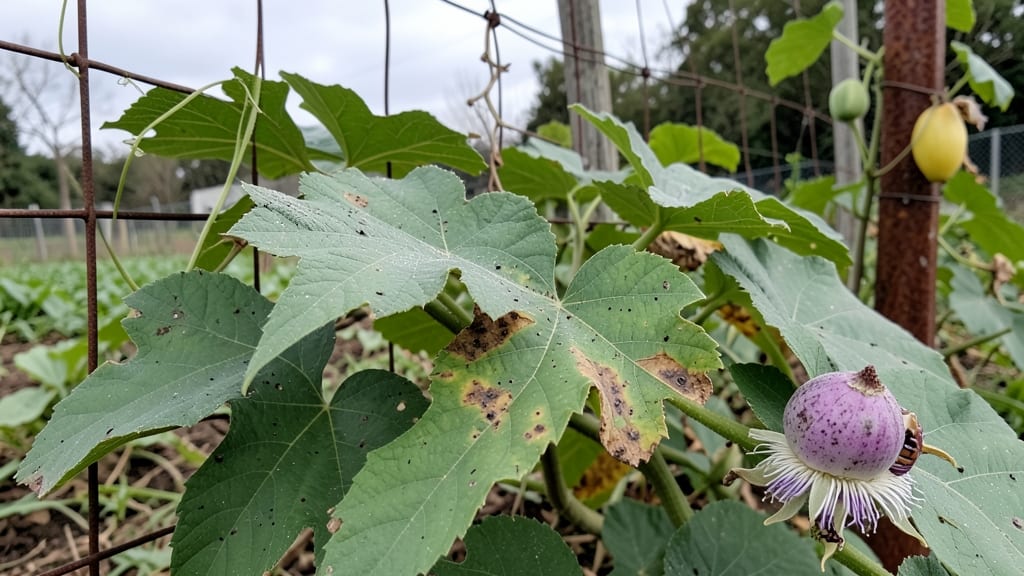
Spotting passion fruit plant diseases early could save your entire harvest before the vines even show symptoms. 🌿 I’ve watched bacterial blight turn lush vines into skeletal remains in just two weeks—so I know how fast these threats move.
The key is catching discoloration, wilting, or strange spots before they spread, because once they do, organic fixes won’t cut it.
Most diseases start with moisture—overwatering, poor drainage, or humidity trapped against leaves. Woodiness virus (the silent killer) spreads through contaminated tools or infected cuttings, while fungal infections love warm, damp conditions. My biggest mistake?
Ignoring the tiny yellow specks until they covered every leaf—don’t make that error. A quick inspection of new growth and undersides of leaves every week keeps problems in check.
You’ll learn to prune infected areas before they spread, use copper sprays as a shield against bacterial blight, and even revive wilted vines with a simple baking soda solution.
The goal isn’t just to treat—it’s to create an environment where diseases can’t take hold in the first place. Think of it as armor for your vines.
Works for both backyard growers and commercial setups, whether you’re dealing with purple passion fruit or yellow varieties. The strategies here cut down on chemical use while keeping your plants productive for years. Let’s get those vines fighting back.
Root Causes Of Passion Fruit Ailments
Passion fruit plants, while resilient, are vulnerable to fungal and bacterial diseases due to a mix of environmental, biological, and cultural factors. Understanding why these issues arise helps you take proactive steps to protect your crop.
Below, we break down the key triggers—from soil conditions to human habits—that invite trouble into your garden.
Fungal pathogens like Fusarium and Phytophthora thrive in soggy, nutrient-poor soil. When passion fruit plants sit in waterlogged conditions, their roots suffocate, creating entry points for disease.
- Compacted or clay-heavy soil traps excess moisture, preventing roots from breathing. This slows nutrient uptake and weakens the plant’s immune response. - Lack of organic matter (like compost or aged manure) reduces soil porosity, making it harder for water to drain.
Over time, this creates a breeding ground for root-rotting fungi. - Improper pH levels (below 6.0 or above 7.5) stress plants, making them more susceptible to infections. Passion fruit prefers a slightly acidic to neutral soil (pH 6.0–7.0).
Actionable Fix: Test your soil’s pH and drainage. Amend with perlite, sand, or organic compost to improve aeration. Avoid overwatering—let the top 2 inches of soil dry out between waterings.
Passion fruit vines need consistent moisture, but too much water—especially on leaves—creates the perfect storm for fungal diseases like anthracnose (Colletotrichum) and powdery mildew.
- Fungal spores (e.g., Erysiphe for powdery mildew) spread rapidly in damp conditions. Overhead irrigation or morning dew lingering on leaves provides a moist film that spores need to germinate. - Stagnant water in containers or around the base of plants encourages root rot.
Even well-draining soil can become problematic if water pools after heavy rain. - High humidity (above 80%) without airflow restricts the plant’s ability to dry quickly, prolonging moisture on surfaces where pathogens latch on.
Actionable Fix: Water at the base of the plant in the early morning. Use drip irrigation or soaker hoses to avoid wetting foliage. Prune for better airflow and consider a fan in greenhouses to reduce humidity.
Diseases often hitch a ride on dirty pruners, gloves, or even your shoes. Bacterial infections like bacterial blight (Xanthomonas) and fungal spreaders like Phytophthora can be unknowingly transported from plant to plant.
- Reusing tools without sterilizing them between cuts can transfer pathogens from infected to healthy plants.
Even a small nick in the vine’s bark provides an entry point. - Cross-contamination from compost or mulch made from diseased plant material introduces spores or bacteria into the soil. - Improper wound care after pruning leaves cuts exposed to moisture, accelerating infection.
Passion fruit vines are particularly sensitive to bacterial entry through open wounds.
Actionable Fix: Sterilize pruners with 70% rubbing alcohol or a 10% bleach solution between uses. Remove infected leaves immediately and dispose of them in sealed bags. Avoid walking through wet gardens to prevent spreading soilborne pathogens.
Passion fruit plants struggle when temperatures dip below 50°F (10°C) or soar above 95°F (35°C) for prolonged periods. These shifts weaken the plant’s defenses, making it easier for diseases to take hold.
- Cold stress slows metabolic processes, reducing the plant’s ability to produce protective compounds like phytoalexins, which fight off pathogens.
- Heat stress (especially with high humidity) causes sunscald on leaves, creating wounds where fungi like Alternaria can invade.
- Rapid temperature changes (e.g., nighttime frost followed by daytime heat) shock the plant, making it more vulnerable to secondary infections.
Actionable Fix: Use row covers in early spring to protect young plants from cold snaps. Provide shade cloth (30–50%) during peak summer heat. Mulch around the base to regulate soil temperature.
Insects like thrips, aphids, and mites don’t just feed on passion fruit—they also create wounds and excrete honeydew, a sticky substance that attracts sooty mold (Capnodium).
- Sap-sucking pests (e.g., aphids) inject toxins that weaken plant tissue, making it easier for fungi to colonize.
- Mechanical damage from chewing insects (like fruit borers) opens doors for bacterial infections to enter the plant’s vascular system.
- Honeydew buildup provides a food source for mold spores, leading to sooty mold, which blocks sunlight and further stresses the plant.
Actionable Fix: Monitor plants weekly for pests. Use neem oil or insecticidal soap for early infestations. Introduce beneficial insects (e.g., ladybugs) to control aphids naturally. Remove heavily infested leaves promptly.
A passion fruit plant that’s malnourished or under stress is like an open invitation for disease. Common deficiencies—especially potassium (K) and calcium (Ca)—compromise cell wall integrity, making plants more susceptible to infections.
- Low potassium reduces the plant’s ability to regulate water and fight off pathogens.
Symptoms include yellowing leaf edges and weak stems. - Calcium deficiency leads to blossom end rot in fruit and weak cell walls, allowing bacteria like Erwinia to invade. - Nitrogen excess (while greening leaves) can make plants soft and prone to fungal infections by overstimulating growth without strengthening structural defenses.
Actionable Fix: Conduct a soil test to identify deficiencies. Apply balanced fertilizer (e.g., 10-10-10) at planting, then switch to a low-nitrogen, high-potassium formula (e.g., 5-10-15) during fruiting. Use calcium-rich amendments like crushed eggshells or gypsum if needed.
Heavy rains and prolonged wet periods are a disease delivery system for passion fruit. Rain splashes spores from soil to leaves, and wind carries them between plants.
- Fungal spores (Phytophthora, Fusarium) are waterborne.
A single downpour can spread them across your entire garden. - Wind-driven rain strips away the cuticle (the plant’s protective waxy layer), making leaves vulnerable to infections like leaf spot. - Flooding drowns roots, cutting off oxygen and triggering anaerobic conditions that promote rot.
Actionable Fix: Plant passion fruit on elevated beds or mounds to improve drainage. Use mulch (straw or wood chips) to prevent soil splash. After heavy rain, inspect plants for early signs of disease and treat promptly with copper fungicide (for bacterial/fungal prevention).
Pro Tip: 💡 The best defense is offense—rotate crops annually to disrupt disease cycles, and avoid planting passion fruit in the same spot where tomatoes or other nightshades grew (they share some pathogens).
Quick Fixes for Common Passion Fruit Ailments
When your passion fruit plants show signs of distress, acting fast can save your harvest—and your sanity! Below are practical, step-by-step solutions tailored to the most common fungal and bacterial threats, plus prevention tips to keep your vines thriving.
Think of this as your emergency repair kit for ailing passion fruit plants.
🔥 Powdery Mildew: Scrub and Shield
Powdery mildew turns leaves into white, dusty messes, but it’s beatable with soapy water and sulfur-based sprays.
- Step 1: Prune the Problem 🔪 Remove heavily infected leaves (gloves recommended!) and dispose of them in a sealed trash bag—not the compost pile. Fungal spores love hanging around in organic matter.
- Step 2: Cleanse with Neem Oil or Baking Soda 🧼 Mix 1 tsp baking soda + 1 tbsp vegetable oil + 1 tsp dish soap per quart of water. Spray early in the morning (avoid direct sunlight to prevent leaf burn). Repeat every 5–7 days until symptoms fade.
- Step 3: Boost Airflow 🌬️ Thin out crowded vines and stake them properly to reduce humidity near leaves. A fan on low speed near the plants can also help dry moisture quickly.
💡 Pro Tip: Apply sulfur dust (follow package rates) in the evening for stubborn cases. Avoid sulfur if temps exceed 90°F (32°C)—it can burn leaves!
🍄 Wood Rot: Salvage the Roots
Wood rot (often caused by Phytophthora or Fusarium) attacks the stems and roots, turning them mushy. Act fast—this one’s sneaky!
- Step 1: Dig and Inspect 🕵️♂️ Gently dig around the base of the plant. If the stem feels soft or blackened, you’re dealing with rot. Cut away all infected tissue with a sterilized pruner (wipe with rubbing alcohol between cuts).
- Step 2: Fungicide Rescue 💊 Soak the roots in a 1:10 water-to-hydrogen peroxide solution (3%) for 10 minutes to kill spores. Then, drench the soil with copper fungicide (like Copper Sulfate) or a biological fungicide (e.g., Trichoderma strains).
- Step 3: Revive the Soil 🌱 Replace the top 6 inches of infected soil with a mix of sterilized potting soil + perlite + compost. Add mycorrhizal fungi (available at garden centers) to help roots recover.
✨ Prevention: Always plant in well-draining soil and avoid overhead watering. If your garden floods often, consider raising beds.
🍒 Bacterial Blight: Copper and Caution
Bacterial blight causes water-soaked spots that ooze and spread like wildfire. Copper-based treatments are your best defense.
- Step 1: Sterilize Tools 🧹 Before touching the plant, wash pruners with bleach (1 part bleach to 9 parts water). Bacterial spores hitchhike on tools!
- Step 2: Prune and Burn 🔥 Cut off all infected leaves and stems (including 1 inch below the lesion). Burn or bag the debris—do not compost.
- Step 3: Spray Copper Fungicide 🛡️ Use Bordeaux mixture or copper hydroxide (like Kocide). Apply every 7–10 days until new growth appears. Wear gloves—copper can irritate skin.
🌡️ Warning: Stop copper sprays if temps exceed 85°F (29°C)—it can harm leaves.
🥬 Crown Gall: Surgery and Sanitation
Crown gall (Agrobacterium tumefaciens) creates lumpy, cancerous growths at the stem base. Remove the galls and sterilize everything!
- Step 1: Excise the Galls ⚔️ Use a sterilized knife to cut out the galls completely, including a ½-inch margin of healthy tissue. If the plant is young, you might need to remove the entire vine.
- Step 2: Treat with Hydrogen Peroxide 🧪 Soak the cut area in 3% hydrogen peroxide for 2 minutes to kill bacteria. Then, dust with cinnamon powder (natural antibacterial) or copper fungicide.
- Step 3: Prevent Reinfection 🚫 Disinfect pruners between cuts and avoid wounding plants during high-risk periods (wet weather). If the plant survives, monitor closely—new galls can form.
🎯 Long-Term Fix: Plant resistant varieties like ‘Panama Sweet’ if crown gall is rampant in your area.
No matter the disease, these habits keep passion fruit plants healthy:
✅ Rotate crops – Don’t plant passion fruit in the same spot for 3+ years. ✅ Water at the base – Avoid wetting leaves (use drip irrigation). ✅ Space plants properly – 6–8 feet apart for airflow. ✅ Clean up debris – Remove fallen leaves weekly to stop spores. ✅ Test soil pH – Aim for 6.0–6.5 (too acidic = more fungal risks). ✅ Use disease-free cuttings – Buy from reputable nurseries or propagate from healthy vines.
Final Thought: Most passion fruit diseases are manageable with early action and smart prevention. Stay vigilant, and your vines will reward you with juicy, disease-free fruit in no time! 🍈✨
Frequently asked questions
How do I tell if my passion fruit vine has a fungal infection vs. bacterial disease?
Fungal infections often show as powdery white patches (like powdery mildew) or dark, circular spots with fuzzy edges (anthracnose). Bacterial diseases appear as water-soaked, yellowing lesions that ooze when pressed. Check leaf undersides first—fungal spores love damp surfaces. If spots spread rapidly and feel slimy, it’s likely bacterial.
Can I save a passion fruit plant with root rot? What’s the first step?
Yes, but act fast! First, sterilize your pruners with rubbing alcohol, then cut away all mushy, blackened roots. Soak remaining roots in 3% hydrogen peroxide for 10 minutes to kill spores. Repot in fresh, well-draining soil with perlite and avoid overhead watering. Early intervention gives your plant a fighting chance.
Why does my passion fruit plant keep getting powdery mildew even after treatment?
Powdery mildew thrives in high humidity + poor airflow. If it keeps returning, check these:
- Prune crowded vines to improve circulation,
- Water only at the base (never overhead), and
- Use sulfur sprays in the evening (avoid if temps exceed 90°F). A small fan near the plant can also dry moisture quickly.
Is it safe to compost passion fruit leaves with disease spots?
No—never compost infected plant material. Fungal spores and bacterial pathogens survive composting and can reinfect your garden. Instead, seal infected leaves in a trash bag and dispose of them in yard waste. This prevents spreading diseases to other plants.
How often should I inspect my passion fruit vines for early disease signs?
Check your vines weekly, focusing on new growth and leaf undersides—that’s where diseases often start. After rain or high humidity, inspect daily for 2–3 days to catch issues before they spread. Early detection is key! A quick 5-minute scan can save your entire harvest.