Container Gardens
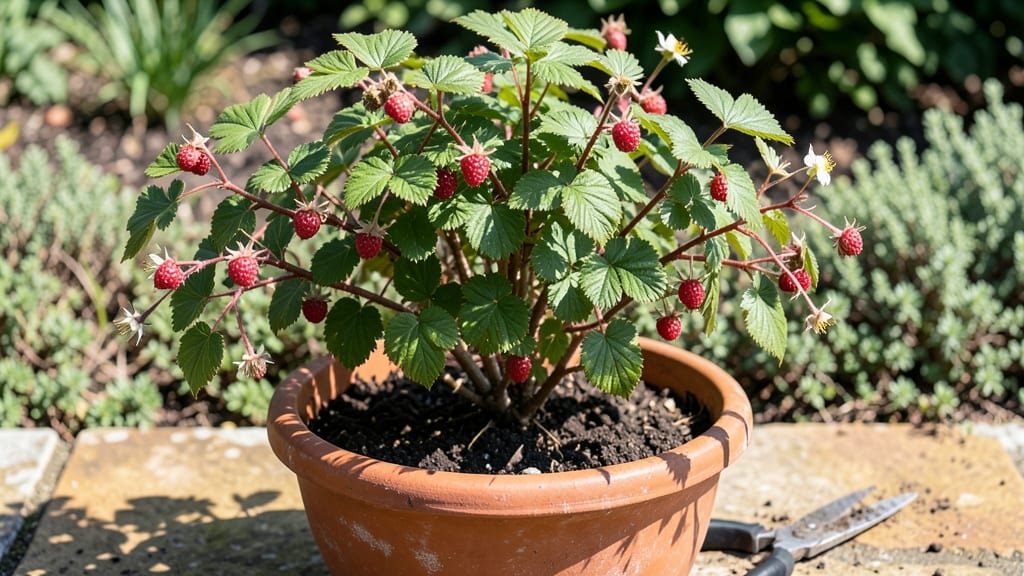
These potted raspberry plants thrive in containers, offering sweet berries without the hassle of a traditional garden—just the right pot and a few key tricks. 🌱 I’ve grown these fruiting canes for years, and the secret to their success isn’t just the right pot—it’s knowing when and how to prune them.
The difference between scraggly canes and a productive harvest comes down to three simple cuts made at the right time.
The beauty of potted raspberries is their adaptability—no need for a backyard. A 5-gallon container per plant gives roots room to spread while keeping the fruit within easy reach. Use well-draining soil mixed with compost, and place your pots where they’ll get 6-8 hours of sun daily.
The first year focuses on establishing strong canes, so hold off on heavy pruning until you see new growth in spring.
By summer, you’ll be rewarded with sweet, plump berries that ripen in clusters, far exceeding what store-bought raspberries can offer. The pruning secrets I’ve perfected ensure your plants stay compact, productive, and free of disease. With the right care, your potted raspberries will outperform their in-ground counterparts—no garden required.
This method works for summer-bearing and fall-bearing varieties, though fall types need extra attention in winter. Whether you’re on a balcony or a patio, these pruning tricks will turn your containers into a berry bonanza. Let’s get those canes thriving!
📚 In This Guide
- What you need
- Instructions
- Tips and common mistakes
- Wrapping up and next steps
What you need
- ● Potted raspberry plants: 1–3 bare-root or container-grown canes (choose hermoneutral varieties like 'Heritage' or 'Caroline' for best results in pots).
- ● Containers: 5–10 gallon pots (at least 18" deep) with drainage holes. Terracotta or fabric grow bags work best.
- ● Potting mix: 1 bag of well-draining, acidic mix (pH 5.5–6.5). Mix equal parts peat moss, perlite, and compost for DIY blends.
- ● Slow-release fertilizer: 1 lb of balanced 10-10-10 or organic options like fish emulsion (follow package rates).
- ● Support system: 1–2 6-foot bamboo stakes or trellis (or a spiral raspberry support for easier pruning).
- ● Mulch: 2–3 inches of straw or wood chips to retain moisture and suppress weeds.
- ● Pruning tools: 1 pair of bypass pruners (sharp and clean!).
- ● 1 hand saw (for thicker canes).
- ● Container saucers or trays to catch runoff.
- ● pH test kit to monitor soil acidity.
- ● Organic compost tea for a nutrient boost.
- ● Drip irrigation system for consistent watering.
- ● Garden gloves to protect your hands during pruning.
Step-by-Step instructions for growing thriving potted raspberry canes
Here's the method I use to keep raspberries productive in containers—pruning included.
🪴 Step 1: Choose the Right Containers and Soil Mix
Select containers that are at least 18 inches deep and 12 inches wide for each plant—raspberries need room for their extensive root systems. I use fabric grow bags because they allow excess moisture to evaporate while still providing structure. Fill each container with a mix of 50% premium potting soil, 30% compost, and 20% perlite for excellent drainage and aeration.
Raspberries hate soggy roots, so add a 2-inch layer of gravel at the bottom of each container before filling with soil. This prevents waterlogging and mimics the natural drainage they'd get in the ground. Tap the container gently after filling to settle the mix without compacting it too much.
🌱 Step 2: Plant Bare-Root Canes Correctly
Soak the bare-root canes in lukewarm water for 2-3 hours before planting to rehydrate the roots. Dig a hole deep enough to bury the roots 6 inches below the soil line, but leave the crown (where the roots meet the cane) just above the soil surface. Planting too deep suffocates the crown and causes rot.
Space multiple canes 12 inches apart in the container. I like to fan out the roots slightly as I place them in the hole—this encourages faster establishment. After planting, water deeply until the soil is evenly moist but not saturated. You'll see new growth within 7-10 days if the roots are happy.
☀️ Step 3: Provide Full Sun and Consistent Watering
Raspberries need 6-8 hours of direct sunlight daily to produce sweet, flavorful berries. Place your containers in a south-facing spot or under a grow light if natural light is limited. Without enough light, canes grow leggy and produce fewer fruits.
Water when the top 2 inches of soil feel dry—usually 2-3 times per week in warm weather. I use a drip irrigation system to keep moisture consistent, but hand-watering at the base works too. Avoid wetting the leaves to prevent fungal diseases like cane blight, which thrives in damp foliage.
✂️ Step 4: Prune for Maximum Yield and Health
Start pruning in late winter or early spring before new growth begins. Remove dead, diseased, or weak canes at the base with clean, sharp pruners. Then, cut back the remaining canes by one-third to encourage bushier growth and better air circulation.
For summer-bearing varieties, prune again after harvest by removing last year's canes (they're now woody and unproductive) and thinning the current season's growth to 4-6 strong canes per plant. This keeps the plant focused on producing new fruit rather than maintaining old canes. Always sterilize your pruners with rubbing alcohol between cuts to prevent spreading disease.
🌿 Step 5: Fertilize and Mulch for Long-Term Success
Feed your potted raspberries with a balanced, slow-release fertilizer (10-10-10) once in early spring and again after harvest. I mix in 1 cup of compost around the base of each plant to replenish nutrients. Over-fertilizing leads to lush foliage but few berries—raspberries need a balance of nutrients.
Apply a 2-inch layer of organic mulch (like straw or wood chips) around the base of the plant to retain moisture and suppress weeds. Keep the mulch 2 inches away from the crown to prevent rot. With proper care, your potted raspberries will produce abundant fruit for years—even in containers!
Tips & tricks for thriving potted raspberry canes
These game-changing strategies will help you avoid common pitfalls and maximize your raspberry yield in containers.
Container Selection Tip: While fabric grow bags work wonderfully, you can also use 5-gallon buckets with drainage holes or wooden half-barrels for a rustic look. The key is ensuring the container is at least 18 inches deep—shallower containers restrict root growth and lead to stunted plants. I've seen raspberries thrive in repurposed whiskey barrels too, as long as they have proper drainage.
Root Health Strategy: The 2-inch gravel layer at the bottom is non-negotiable for preventing root rot, but here's a pro move: add a 1-inch layer of coconut coir above the gravel. This creates a natural moisture barrier while still allowing excess water to drain. In Step 1, when mixing your soil, consider adding 1 tablespoon of mycorrhizal fungi powder to the planting hole—this beneficial soil fungus helps roots absorb nutrients more efficiently.
Pruning Precision: When you're pruning in late winter (Step 4), focus on making cuts just above a bud that faces outward from the center of the plant. This encourages the cane to grow away from the center, improving air circulation and sunlight penetration. For summer-bearing varieties, remember that the 4-6 strong canes should be the most vigorous, upright canes—thin out any that lean or grow inward. Sterilizing your pruners between cuts is crucial, but I also like to wipe them with a vinegar-soaked cloth between plants to prevent cross-contamination.
Sunlight Optimization: The 6-8 hours of direct sunlight requirement is strict, but don't assume all sunlight is equal. If you're using grow lights, position them 6-12 inches above the plants and use full-spectrum LED bulbs that mimic natural sunlight. In Step 3, rotate your containers quarter-turn weekly to ensure even light exposure all around—this prevents lopsided growth. For balcony gardeners, south-facing windowsills get the most light, but west-facing spots can work too if you supplement with a grow light for 2-3 hours in the evening.
Pro Tips for Potted Raspberry Plants
- These game-changing strategies will help you avoid common pitfalls and maximize your raspberry yield in containers.
- Container Selection Tip: While fabric grow bags work wonderfully, you can also use 5-gallon buckets with drainage hol...
- Root Health Strategy: The 2-inch gravel layer at the bottom is non-negotiable for preventing root rot, but here's a p...
Frequently asked questions
Got questions about growing potted raspberry plants? You’re not alone! Here are answers to the most common queries to help you grow thriving canes with ease.
Can raspberries grow well in pots?
Raspberry canes thrive in containers as long as the pot is at least 18–24 inches deep and wide enough for good airflow. Choose a durable material like fabric or plastic, and ensure it has drainage holes to prevent root rot. Dwarf or remontant varieties (like ‘Heritage’ or ‘Boyne Gold’) are ideal for pots.
How long does it take for potted raspberries to bear fruit?
Potted raspberries typically take 1–2 years to produce fruit, depending on the variety and care. Summer-bearing types (like ‘Nova’ or ‘Willamette’) fruit once per year, while remontant varieties can produce multiple harvests. Patience and proper pruning (like the 3 key secrets) speed up fruiting!
What’s the best temperature for potted raspberries?
Raspberries love moderate climates—ideal temps range from 50–75°F (10–24°C). They tolerate light frosts but avoid extreme heat (above 90°F/32°C), which can stress plants. If you’re in a hot zone, use shade cloth during peak afternoon sun and keep soil consistently moist.
Can I overwinter potted raspberries?
Yes! Move pots to a protected, sheltered spot (like a garage or cold frame) before the first frost. Cut back canes by ⅔, wrap the pot in burlap, and cover with straw or mulch. In mild climates, leave pots outside but add extra insulation. Resume care in early spring with fresh soil and fertilizer.
Why aren’t my potted raspberries fruiting?
Common culprits include:
- Insufficient sunlight: Raspberries need 6–8 hours of sun daily. Move pots to a sunnier spot.
- Poor pruning: Overcrowded canes or lack of strategic cuts reduce fruit production.
- Nutrient deficiency: Feed with a balanced fertilizer (10-10-10) in early spring and mid-summer.
- Stress from pot size: Upgrade to a larger container if roots are circling.
Wrapping up and next steps
Growing potted raspberry plants is a rewarding way to enjoy fresh, sweet berries—even in small spaces! 🌱 By mastering the three key pruning secrets (primocanes, floricanes, and deadheading), you’ll keep your canes healthy, boost fruit production, and extend their lifespan.
With the right tools, timing, and care, your container garden can become a berry bonanza.
Ready to take the next step? Start small—plant your first potted raspberry this season and experiment with pruning techniques. Watch your canes thrive, and soon you’ll be harvesting juicy raspberries straight from your balcony or patio! 🍓✨