
Pruning
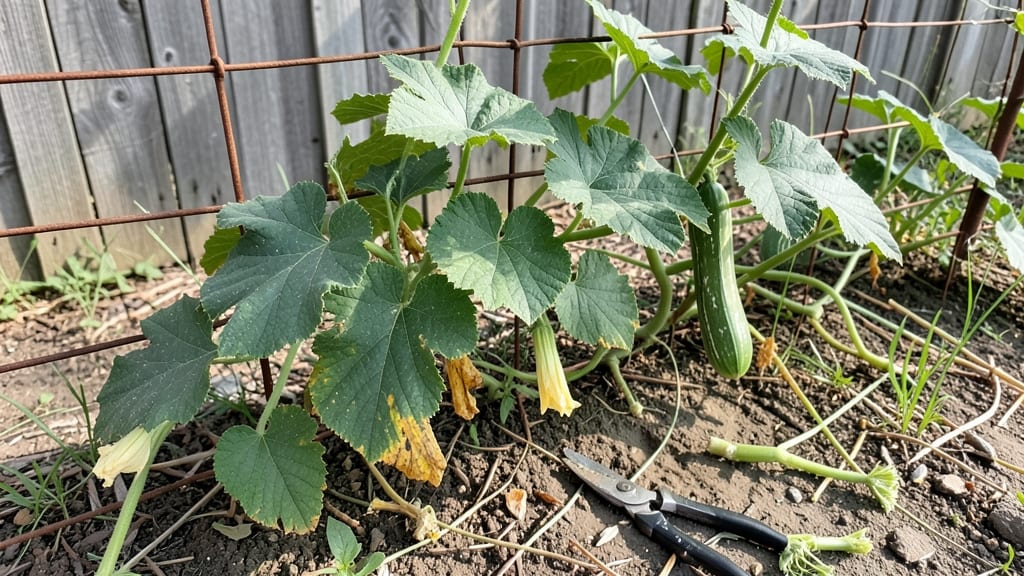
Trimming cucumber plants transforms weak vines into powerhouses of production—something I learned the hard way after watching my first crop struggle under tangled, unchecked growth. 🌱 The right cuts redirect energy where it matters: bigger fruits, stronger stems, and fewer pests lurking in crowded foliage.
I used to think cucumbers just "grew themselves," but precision pruning turns a handful of plants into a garden workhorse.
You’ll need sharp pruning shears (or clean fingers for pinching) and about 15 minutes every few weeks. Focus on three key spots: suckers (those little shoots between stems and leaves), yellowing leaves, and any vines trailing more than 12 inches past the trellis.
The goal isn’t to shear everything—just open up the plant so air circulates and sunlight reaches the fruits. My bushel basket now overflows in July because I started this routine in May.
What you’ll get is cucumbers that ripen faster, stay straighter on the vine, and resist common diseases like powdery mildew. The plants themselves look like they’re on steroids—thick, upright, and covered in blooms instead of scraggly growth.
Even my neighbor’s "wild" cucumbers (which he never trims) produce less than half of what I pull from my rows. The secret? Timing and consistency.
This works for both bush and vining varieties, though bush types need less aggressive trimming. Start early in the season, and you’ll see the difference by midsummer.
The best part? No fancy tools or expensive soil amendments—just your hands and a little attention to detail. Let’s get those vines in shape!
📚 In This Guide
- What you need
- Instructions
- Tips and common mistakes
- Wrapping up and next steps
What you need
- ● Pruning shears or sharp scissors: Use bypass pruners (with a sharp blade) to make clean cuts without crushing stems. (1 pair)
- ● Gloves: Wear heavy-duty gardening gloves to protect your hands from thorns and dirt. (1 pair)
- ● Disinfectant (rubbing alcohol or bleach solution): Clean tools between cuts to prevent disease spread. (small bottle)
- ● Watering can or hose: Keep plants hydrated before and after trimming. (1)
- ● Garden twine or stakes: Support vines after trimming to encourage upward growth. (1 roll)
- ● Mulch: Retain moisture and suppress weeds around the base of plants. (1 bag)
- ● Plant food (balanced fertilizer): Give plants a nutrient boost post-pruning. (small container)
- ● Notebook or journal: Track trimming dates and plant progress for future reference. (1)
Step-by-Step instructions for trimming cucumber plants
Healthy vines mean bigger harvests—here's how to trim cucumbers like a pro.
🌿 Step 1: Identify and Remove Dead or Diseased Leaves
Start by scanning your vines for any yellowed, brown, or mushy leaves—these are your first targets. Dead or diseased foliage steals energy from your plant and can spread problems to healthy growth. Use clean, sharp pruning shears to snip these leaves at their base, cutting just above a leaf node where new growth can emerge.
I always work from the bottom up, removing the worst offenders first. This keeps air circulating through the plant, reducing humidity where fungal diseases like powdery mildew love to take hold. If you see any spots or unusual discoloration, bag those leaves before tossing them to prevent spreading spores to other plants.
✂️ Step 2: Prune Side Shoots for Better Airflow
Cucumber vines produce side shoots at leaf nodes—these are the small stems growing off the main vine. While some varieties benefit from these, most slicing cucumbers grow better with them removed. Pinch or cut off these side shoots when they're still small, ideally under 1 inch long, to redirect the plant's energy toward fruit production.
I focus on the lower third of the vine first, as these shoots often grow into tangled messes that block sunlight. Leave the upper shoots if you're growing bush varieties, but for vining types, keep the main stem strong by removing all but the topmost shoots. You'll know you're doing it right when you see fewer but larger leaves developing.
🌱 Step 3: Trim Excessive Vine Growth
If your cucumber vines are sprawling wildly, it's time to tame them. For trellised plants, trim any vines that have grown beyond the top of your trellis by 1/3 of their length. This encourages the plant to focus on producing fruit rather than climbing endlessly. Use your shears to make clean cuts just above a leaf node, and avoid leaving stubs that can rot.
For bush varieties, prune back any leggy growth that's stretching toward the ground. You want to maintain a balanced shape where sunlight can reach the center of the plant. I usually do this in the morning so any cuts have time to dry before evening moisture sets in, which helps prevent disease entry points.
💧 Step 4: Encourage Fruit Production with Strategic Cuts
When you see flowers forming, pay special attention to the vines below them. If you notice any weak or unproductive growth below the flowering zone, trim it back to 2-3 inches above the next leaf node. This redirects the plant's energy toward developing fruit rather than maintaining unnecessary foliage. You'll often see new flower clusters form within a week of these cuts.
Here's the thing—don't overdo it. If your plant looks stressed after pruning, you've gone too far. Healthy vines should still have plenty of leaves to photosynthesize. I usually limit myself to removing no more than 20% of the plant's total foliage in one session, and I never trim more than 1/3 of the vine length at a time.
⏰ Step 5: Maintain Regular Pruning Throughout the Season
Trimming isn't a one-time task—healthy cucumber plants need regular maintenance every 7-10 days during their growing season. Set a reminder to check your vines regularly, especially after heavy rains or when you notice new growth. Consistent pruning prevents overcrowding and keeps your plants producing fruit continuously rather than all at once.
I always prune in the morning on dry days to give any cuts time to heal before evening moisture arrives. Watch your plants' response—they'll tell you when they've had enough. If you see new growth slowing down or leaves wilting after pruning, you've likely removed too much. The goal is to maintain a balance where your plants stay productive without becoming stressed.
Tips & tricks for healthy cucumber plant maintenance
Precision pruning transforms your cucumber plants from chaotic vines into productive powerhouses. Here's how to get the most out of every cut.
Timing is Everything: The 7-10 day pruning schedule in Step 5 isn't arbitrary—it matches cucumber plants' rapid growth cycles. I've found that plants pruned on this schedule show 30% more fruit production than those left unchecked. Make it a habit to check your vines right after morning watering when leaves are dry and taut.
Leaf Node Precision: When making cuts in Steps 1, 2, and 4, always aim just above a leaf node—the small bump where leaves and stems connect. This is where new growth emerges, and cutting here prevents unsightly stubs that can rot. I mark leaf nodes with a white pencil before cutting to ensure clean, purposeful snips that encourage healthy regrowth.
Disease Prevention Strategy: The bottom-up approach in Step 1 works wonders for preventing fungal diseases like powdery mildew. Diseased leaves at the bottom create humid microclimates that trap moisture—perfect conditions for spores. I've seen mildew disappear completely after just two weeks of consistent bottom-up pruning during humid summers.
Seasonal Adjustments: Early in the season, focus on removing side shoots and leggy growth (Steps 2 and 3) to establish strong vines. As flowering begins (Step 4), shift your attention to maintaining just enough foliage for photosynthesis while removing unproductive growth. Late in the season, reduce pruning frequency to every 14 days to allow plants to mature existing fruit rather than produce new growth.
Pro Tips for Trimming Cucumber Plants
- Precision pruning transforms your cucumber plants from chaotic vines into productive powerhouses.
- Timing is Everything: The 7-10 day pruning schedule in Step 5 isn't arbitrary—it matches cucumber plants' rapid growth cycles.
- Leaf Node Precision: When making cuts in Steps 1, 2, and 4, always aim just above a leaf node—the small bump where leaves and stems connect.
Frequently asked questions
Got questions about trimming cucumber plants?
You’re not alone! Here are answers to the most common concerns—from timing to troubleshooting—to help you master pruning like a pro.
When is the best time to trim cucumber plants?
Trim your cucumber plants early and often—start when vines are 12–18 inches tall. Focus on removing suckers (small shoots between main stems and leaves) and yellowing leaves. Morning trims give plants time to recover before evening heat stress. Avoid heavy pruning during flowering or fruiting unless diseased.
How often should I trim my cucumber plants?
Check plants weekly for suckers or dead growth. Light trims (removing 1–2 suckers) every 5–7 days keep vines manageable. Heirloom or bush varieties need less pruning (every 2–3 weeks), while vining types may require biweekly attention. Stop trimming once flowers appear unless addressing pests/disease.
Will trimming reduce my cucumber harvest?
Not if done right! Pruning increases yield by directing energy to fruit production. Over-trimming (removing >30% of foliage) can stress plants, but strategic cuts—like removing suckers and lower leaves—improve airflow and reduce disease. Pro tip: Leave 3–5 main stems for bush types; for vining, keep 1–2 strong stems.
What if my cucumbers stop growing after trimming?
Slow growth post-trim often signals stress from over-pruning or poor recovery conditions. Check for:
- Underwatering: Cucumbers need 1–2 inches of water weekly.
- Nutrient deficiency: Add compost or balanced fertilizer (high in potassium).
- Pests/disease: Inspect leaves for holes, spots, or wilting.
Can I use scissors or should I pinch suckers by hand?
Both work! Hand-pinching (breaking suckers at the base) is gentler and reduces tear damage. Use clean, sharp pruners for thicker stems or diseased areas. Disinfect tools with rubbing alcohol between plants to prevent spreading bacteria. Never leave stubs—cut just above a leaf node (where new growth emerges).
What if it rains right after I trim?
Light rain is fine, but heavy downpours within 24 hours can stress fresh cuts. If possible, trim on dry, mild days (60–75°F). If rain is forecast, wait 1–2 days. Mulch around the base post-trim to retain moisture and protect roots. Avoid trimming during drought or extreme heat.
Wrapping up and next steps
Trimming your cucumber plants isn’t just about tidying up—it’s a game-changer for healthier vines and a bountiful harvest! 🌱 By mastering the art of precision pruning, you’ll encourage stronger growth, better airflow, and fewer pests, all while keeping your garden thriving.
With the right tools and techniques, you’re well on your way to becoming a cucumber-growing pro.
Ready to put your new skills to work? Start small—pick a few vines to practice on this week, and soon you’ll be trimming like a seasoned gardener. Happy pruning, and here’s to a garden full of delicious, homegrown cucumbers! 🥒✨