Watering
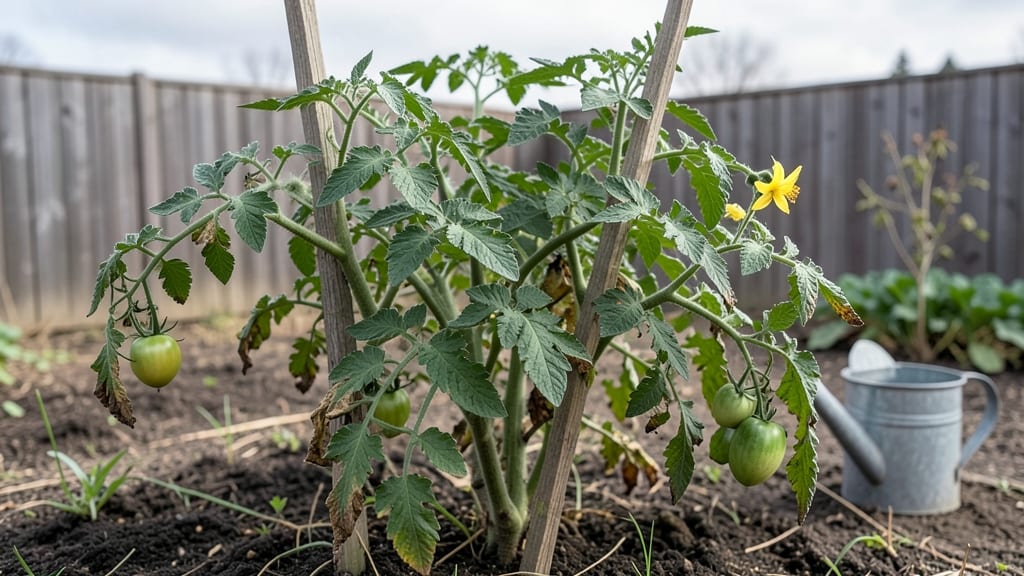
Your tomato plant’s drooping leaves and crispy edges scream "root rescue needed." I’ve nursed back more underwatered tomatoes than I’d like to admit, and the fix isn’t complicated—just strategic. The key is understanding how your plant’s thirst changes as it grows, from seedlings to fruit-heavy vines.
First, confirm the problem: stick your finger 2 inches into the soil. If it’s bone-dry, you’ve found your culprit. Tomatoes need 1-2 inches of water per week, but deeper roots mean they’ll drink more as they mature.
Mulching with straw keeps moisture locked in, while drip irrigation delivers water right to the roots without wetting the leaves—where fungus lurks.
Recovery starts with a deep soak—not just a quick splash. Water until it runs out the drainage holes, then wait until the top inch feels dry before watering again.
Within 3-5 days, you’ll see leaves perk up and new growth pushing out. The secret? Consistency beats guesswork every time.
Once you’ve revived it, adjust your routine: morning watering prevents evening fungal risks, and a 5-gallon bucket makes tracking weekly watering easier than eyeballing. Even my black thumb can’t kill these plants when I follow these three moves—trust the process.
Root Causes Of Thirsty Tomatoes
When your tomato plants start wilting despite your best efforts, the issue often boils down to water stress. But why does this happen? Let’s dig into the science behind an underwatered tomato plant and uncover the key culprits—so you can fix the problem at its source.
Tomatoes are heavy drinkers—they need consistent moisture to thrive. Unlike drought-resistant plants, tomatoes have shallow root systems that absorb water quickly. If you’re watering too infrequently (e.g., once a week instead of every 2–3 days in hot weather), the soil dries out faster than the roots can replenish moisture.
🔬 Why it matters: When soil moisture drops below 50% of field capacity, roots struggle to uptake water, leading to:
- Wilting leaves (especially in the afternoon heat)
- Blossom end rot (calcium deficiency triggered by uneven water absorption)
- Stunted growth (plants divert energy to survival instead of fruiting)
💡 Pro Tip: Stick your finger 2 inches deep into the soil—if it feels dry, it’s time to water. For containers, check the top inch; potted tomatoes dry out even faster than in-ground plants.
Even if you water regularly, clay-heavy or compacted soil can trap air pockets, preventing roots from accessing moisture efficiently. Overwatering in poorly draining soil (leading to soggy roots) is one issue, but underwatering in hardpan soil is just as damaging.
🔬 Why it matters:
- Compacted soil restricts root expansion, forcing roots to compete for limited water in a small zone.
- Clay soil holds water but also repels it when dry, creating a "hydrophobic" layer that roots can’t penetrate.
- Mulch issues: Too much organic mulch (like thick grass clippings) can smother roots, blocking water flow.
🌡️ Test Your Soil: Dig a small hole near your plant. If water pools instead of soaking in within 30 minutes, your soil is too dense. Amend with compost or perlite to improve structure.
Tomatoes don’t just lose water through thirst—they lose it to their surroundings. High temperatures, low humidity, and windy conditions accelerate transpiration (water loss through leaves), forcing plants to drink more than usual.
🔬 Why it matters:
- Hot sun + dry air = Leaves act like sponges, evaporating water faster than roots can replace it.
- Wind exposure increases transpiration by 20–30%, drying out plants quickly.
- Lack of shade in peak afternoon heat (12–4 PM) stresses plants, even if soil is moist.
✨ Quick Fixes:
- Water deeply in the morning (before 10 AM) to reduce evaporation.
- Use drip irrigation or soaker hoses to deliver water directly to roots.
- Add mulch (straw or wood chips) to retain soil moisture and cool roots.
If your tomato plant’s roots are injured, rotted, or infected, they can’t absorb water efficiently—even if the soil is moist. Common culprits include:
| Cause | Signs | Impact |
|---|---|---|
| Fungal root rot (e.g., Phytophthora) | Mushy, black roots; wilting despite wet soil | Roots suffocate, can’t uptake water |
| Root-knot nematodes | Gnarled, stunted roots; yellowing leaves | Reduces root surface area by up to 50% |
| Physical damage (e.g., digging, transplant shock) | Frayed roots; slow recovery after repotting | Limits new root growth for weeks |
💡 Prevention: Avoid overwatering (which fuels rot), rotate crops annually, and inspect roots when transplanting. If you suspect disease, treat with neem oil or copper fungicide.
Now that you know the real reasons your tomato plant is thirsty, the next step is action. The good news? Most of these issues are reversible with the right watering tweaks. Stay tuned for our 3-step rescue plan to revive your plants—fast!
Revive Your Tomato Plant Now
Your tomato plant is thirsty—but don’t panic! With the right watering strategy, you can bring it back to life and even boost future growth. Here’s how to diagnose the issue and fix it, fast.
If your plant is underwatered, the soil is likely dry and shallow. Roots need a deep drink to recover.
- 🔥 Step 1: Check Soil Moisture
- Stick your finger 2–3 inches into the soil. If it feels dry, it’s time to water.
- Pro tip: Use a moisture meter for accuracy—no guesswork!
- 🍳 Step 2: Water Slowly & Deeply
- Water until the top 6–8 inches of soil are moist (not soggy).
- Use a drip irrigation system or a slow pour to avoid runoff.
- 👨🍳 Step 3: Let Soil Absorb
- Wait 30 minutes before adding more water. Overwatering now can drown stressed roots.
Prevention is key! Once your plant recovers, keep it thriving with a smart routine.
- ⏰ Morning Watering Wins
- Water early in the day (6–9 AM) to reduce evaporation and fungal risks.
- 📊 Track Soil, Not Time
- Instead of a fixed schedule, water when the top 1–2 inches of soil feel dry.
- Pro tip: Mulch with straw or shredded leaves to retain moisture.
- 🌡️ Heat & Drought? Water More
- In extreme heat (above 90°F), check soil moisture twice daily.
Even well-meaning watering can backfire. Steer clear of these pitfalls:
- ❌ Shallow Watering → Only wets the surface. Roots need depth!
- ❌ Overwatering After Drought → Can suffocate roots. Ease back in.
- ❌ Ignoring Drainage → Yellow leaves? Ensure pots have drainage holes.
Once your tomato plant perks up, keep it happy with these habits:
- 💡 Use Self-Watering Containers → Great for vacations or forgetful gardeners.
- 🌿 Monitor Leaf Color → Wilting or graying? Act fast before roots suffer.
- 🍅 Prune for Airflow → Trim crowded branches to reduce humidity-related stress.
With these fixes, your tomato plant will bounce back—and next season, you’ll have juicy, vine-ripened tomatoes to show for it! 🍅🔥
Frequently asked questions
How do I tell if my tomato plant is truly underwatered vs. just wilting from heat?
Check the soil first—stick your finger 2 inches deep. If it's bone-dry, that's your issue. Heat wilting usually happens in the afternoon but recovers overnight, while underwatered plants stay wilted. Also look for crispy leaf edges or yellowing lower leaves—classic dehydration signs. Pro tip: Weigh your pot before/after watering to track moisture loss.
Can I revive a tomato plant that's been underwatered for over a week?
Yes, but act fast! Give it a deep soak (until water runs out drainage holes) and move it to partial shade for 2-3 days. Monitor closely—roots may be damaged. If leaves are completely brown and brittle, prune them back to encourage new growth. Most plants recover within 5-7 days with proper care.
Why does my potted tomato plant dry out faster than in-ground ones?
Containers lose moisture 3-5x faster than garden beds because they have less soil mass to retain water. Use self-watering pots or add 2 inches of mulch on top. Water deeply when the top 1 inch feels dry, and consider adding water-retaining crystals to the soil mix.
Will underwatering cause my tomato plant to stop producing fruit?
Absolutely—stressed plants focus on survival, not fruiting. You'll see fewer blossoms and smaller tomatoes. Worse, inconsistent watering triggers blossom end rot (black spots on fruit). Keep soil evenly moist during flowering/fruiting stages for best results.
How often should I water tomato plants in extreme heat (above 90°F)?
In scorching weather, check soil moisture twice daily—morning and late afternoon. Aim for 1-1.5 inches of water per week, delivered slowly at soil level. Use drip irrigation to avoid wetting leaves (which increases fungal risk). Mulch heavily to reduce evaporation.