
Watering
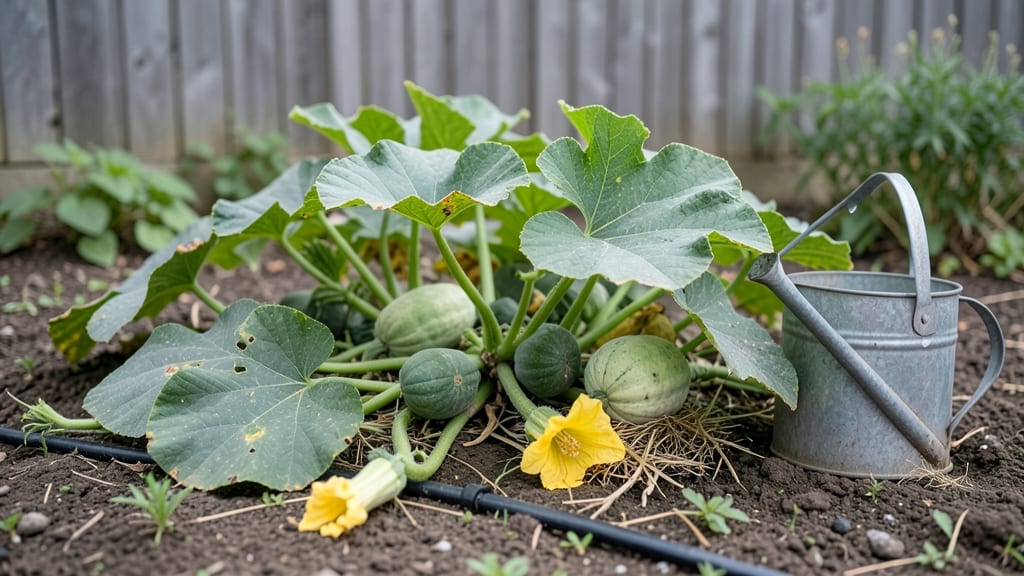
Watering squash plants the right way turns a handful of seeds into a jungle of lush vines and heavy fruit. ✨ I learned the hard way—my first squash plants wilted because I treated them like lettuce, giving them shallow sprinkles instead of deep drinks.
The secret isn’t just how much water you give, but how you deliver it.
Squash roots spread wide and shallow, so they need 1-2 inches of moisture per week, delivered straight to the soil—not the leaves. A soaker hose or drip irrigation keeps the water where it counts, while overhead watering leads to fungal diseases.
For seedlings, keep the soil damp but not soggy; mature plants can handle a little dryness between waterings, especially in hot climates.
You’ll know you’re doing it right when the vines stay deep green and sturdy, not yellow or limp. Heavy fruit means the plant is getting enough water to support its growth—no more shriveled zucchinis or bitter pumpkins.
The key is consistency: squash hates moisture swings, so stick to a routine once the plants are established.
Containers dry out faster than in-ground beds, so check the soil daily during heatwaves. Mulch helps retain moisture and keeps roots cool, while raised beds need slightly more frequent watering. Master this, and you’ll go from struggling with sad squash to harvesting bushels of vibrant, productive plants.
📚 In This Guide
- What you need
- Instructions
- Tips and common mistakes
- Wrapping up and next steps
What you need
- ● Water source: Hose with adjustable nozzle (or a watering can for smaller gardens) – ensure it delivers a steady, gentle stream.
- ○ Drip irrigation kit (optional but recommended): Soaker hoses or micro-sprinklers (10–15 ft per plant row) for efficient, deep watering.
- ● Watering schedule tracker: A notebook, phone app, or calendar to log watering times and soil moisture levels.
- ○ Soil moisture meter (optional): A simple probe-style meter to check moisture levels at 1–2 inches deep.
- ● Mulch: Straw, wood chips, or shredded leaves (2–3 inches thick) to retain moisture and suppress weeds.
- ● Organic fertilizer (balanced, 10-10-10 or similar): 1–2 tablespoons per plant every 3–4 weeks during fruiting season.
- ● A well-draining soil mix (amend with compost if needed) to prevent root rot.
- ● Access to early morning or late evening watering times to minimize evaporation.
- ● Knowledge of your squash variety’s water needs (e.g., butternut squash loves moisture, while zucchini is more drought-tolerant).
How to water squash plants for maximum yield and vine health
Here's the method I've used for years to grow squash with thick vines and heavy fruit—no guesswork, just consistent moisture.
💧 Step 1: Water Deeply at Planting to Establish Roots
Right after transplanting your squash seedlings, give them a thorough soaking—1-2 gallons per plant—to settle the soil and encourage roots to spread. You want the soil to be deeply moist down to 6 inches, not just damp at the surface. This initial watering prevents transplant shock and helps the roots establish quickly.
Use a watering wand or hose with a gentle spray to avoid displacing the soil around the roots. Watch for water pooling around the base—if it doesn't soak in within a minute, your soil may be too compacted. Squash plants are heavy feeders, so they need that deep moisture to support their rapid growth. After watering, let the top inch dry out before watering again.
🌿 Step 2: Maintain Consistent Moisture for Bushy Vines
Squash plants thrive when the soil stays evenly moist but never soggy. Aim to water 1-2 inches per week, adjusting for your climate—more in hot, dry weather, less in cooler or humid conditions. The key is consistency: let the top 1-2 inches of soil dry out between waterings.
I like to water in the morning so the leaves have time to dry before evening. Wet foliage at night invites fungal diseases like powdery mildew, which can devastate squash plants. You'll know you're nailing it when the vines stay sturdy and the leaves remain a deep, vibrant green. If the leaves start wilting or curling, it's a sign the soil is too dry.
☀️ Step 3: Adjust Watering During Flowering and Fruiting
When your squash plants start flowering and setting fruit, they need even more moisture—2-3 inches per week. This is when the vines are working hardest to produce heavy fruit, and consistent watering prevents blossom-end rot and fruit cracking. Water at the base of the plant, avoiding the leaves to keep diseases at bay.
Here's the thing—squash plants are sensitive to moisture fluctuations. If the soil dries out too much during fruiting, the fruit can develop bitter flavors or split open. To check moisture, stick your finger 2 inches into the soil. If it feels dry, it's time to water. If it's still damp, wait another day. This simple check saves you from over- or under-watering.
✂️ Step 4: Mulch to Retain Moisture and Reduce Weeds
Spread a 3-4 inch layer of organic mulch around your squash plants, keeping it 6 inches away from the stem to prevent rot. Mulch like straw or shredded leaves locks in moisture, reducing how often you need to water. It also keeps the soil temperature stable, which is crucial for squash plants that love warmth.
Replenish the mulch as it breaks down, especially in hot weather. You'll notice fewer weeds popping up and less moisture loss from evaporation. This step alone cuts my watering time in half while keeping the plants thriving. Just be sure to pull back the mulch slightly when watering to avoid creating a soggy layer against the stems.
🌱 Step 5: Troubleshoot Common Watering Issues
If your squash leaves start yellowing, it’s often a sign of overwatering or poor drainage. Let the soil dry out slightly and ensure your plants aren’t sitting in standing water. On the flip side, if the leaves wilt during the day but perk up at night, the soil is too dry. Increase your watering frequency gradually until the vines stay firm.
Real talk: squash plants are forgiving, but they do need attention. The moment you see fruit forming, ramp up the moisture. If you're growing in containers, you'll need to water more frequently—sometimes daily in hot weather—because pots dry out faster. Always water until you see moisture draining from the bottom, ensuring the roots get what they need.
Tips & tricks for perfect watering of squash plants
Here's what nobody tells you about keeping your squash thriving with the right moisture balance.
Timing Secret: In Step 1, that deep soaking of 1-2 gallons per plant is non-negotiable for root establishment. I've learned the hard way—skipping this means roots stay shallow, and your plants struggle when vines get heavy with fruit. Use a watering wand to direct the flow right at the base, not the leaves. This ensures the moisture goes where it matters most, down to those 6 inches deep where roots need to grow.
Soil Check Technique: The finger test in Step 3 is your best friend. Stick your finger 2 inches into the soil—if it feels dry, water immediately. If it's still damp, wait another day. I check this every morning before watering, especially during flowering when plants need 2-3 inches per week. This simple habit prevents the bitter flavors and cracked fruit that come from inconsistent moisture.
Mulch Matters: That 3-4 inch layer of organic mulch in Step 4 isn't just for looks—it's a game-changer. I've seen mulched plants use 30% less water while producing heavier fruit. Keep it 6 inches away from the stem to prevent rot, and replenish it as it breaks down. The mulch also moderates soil temperature, which is especially helpful during those hot afternoons when evaporation rates skyrocket.
Container Care: If you're growing squash in containers, you'll need to water daily in hot weather—pots dry out much faster than garden beds. Always water until you see moisture draining from the bottom to ensure the roots get fully hydrated. I use self-watering containers for my squash, which automatically delivers 1-2 inches of water per week without me having to remember. The key is consistency—never let container soil dry out completely between waterings.
Pro Tips for Watering Squash Plants
- Here's what nobody tells you about keeping your squash thriving with the right moisture balance.
- Timing Secret: In Step 1, that deep soaking of 1-2 gallons per plant is non-negotiable for root establishment.
- Soil Check Technique: The finger test in Step 3 is your best friend.
Frequently asked questions
Got questions about keeping your squash plants thriving with the perfect watering routine?
You’re not alone! Here are answers to the most common queries—so you can grow lush vines and bountiful harvests without the guesswork.
How often should I water squash plants?
Squash plants need consistent moisture—about 1 to 2 inches of water per week, especially during flowering and fruiting. Water deeply 2-3 times per week (or daily in extreme heat) rather than shallowly every day. Let the top inch of soil dry out between waterings to prevent fungal diseases like powdery mildew.
Can I water squash plants in the morning or evening?
Morning watering (between 6 AM and 10 AM) is ideal—it gives leaves time to dry, reducing disease risk. Evening watering is fine if you must, but avoid late-night sessions to prevent fungal growth. Never water in the heat of the day; it causes evaporation and burns leaves.
What’s the best way to water squash plants without overwatering?
Use drip irrigation or soaker hoses to deliver water directly to the soil, avoiding wet foliage. For smaller gardens, water at the base of the plant (not the leaves) with a gentle stream. Mulch with straw or grass clippings to retain moisture and reduce evaporation. Overwatering leads to root rot—so always check soil moisture first!
Why are my squash leaves turning yellow?
Yellow leaves often signal overwatering or poor drainage. If the soil feels soggy, cut back on watering and ensure pots or garden beds have drainage holes. Yellowing can also mean nutrient deficiency (like nitrogen) or pests). Test soil pH (aim for 6.0–7.0) and fertilize lightly if needed.
Can I use rainwater or tap water for squash plants?
Both work! Rainwater is ideal (no chemicals), but if using tap water, let it sit out for 24 hours to reduce chlorine. Avoid hard water with high salt content, which can harm roots over time. For container-grown squash, use filtered or distilled water to prevent buildup.
What if I forget to water my squash plants for a few days?
Squash plants are drought-tolerant but not drought-proof. If soil is dry but roots are intact, water deeply and mulch to recover. Wilting leaves may revive in a day. However, prolonged neglect can cause blossom-end rot (in fruits) or stress. Prevention is key—set a reminder or use a moisture meter!
Wrapping up and next steps
Mastering the art of watering squash plants is your secret weapon for a thriving garden! 🌱 By focusing on deep, consistent moisture—especially during critical growth stages—you’ll encourage robust vines and bountiful harvests.
Remember, morning watering and mulching are your best friends, while avoiding overhead sprinklers keeps those leaves (and pests!) in check.
Now that you’re armed with these tips, grab your watering can and put your newfound knowledge into action. Start small—try one or two plants this week—and watch your garden flourish. Happy growing! 🌿