
Propagation
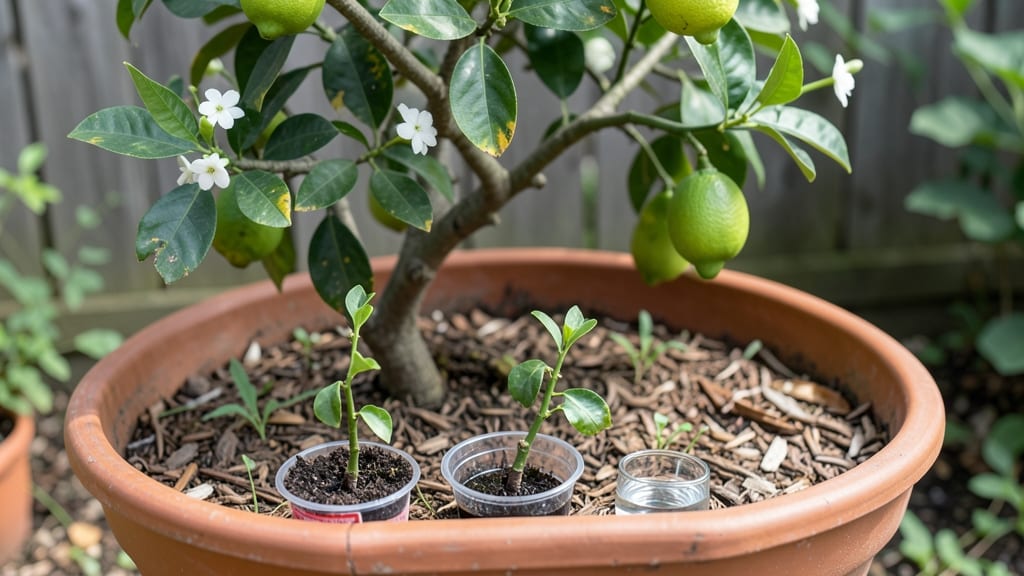
Mastering lemon plant propagation from cuttings is easier than you’d think—and the first citrus scent from your own plant will make it all worth it. I’ve rooted more lemon cuttings than I can count, and the simplest method (water propagation) works even for black thumbs.
The key is choosing the right stem, keeping conditions stable, and giving roots time to form before transplanting.
You’ll need sharp pruners, a clean glass of water, and a bright windowsill—or just a small pot and well-draining soil if you prefer soil propagation right away. Most people assume citrus is fussy, but lemon cuttings root reliably if you avoid overwatering and keep humidity steady.
Within 4-6 weeks, you’ll see roots forming, and by 3 months, you can move your cutting to soil permanently.
The best part? These propagated plants will eventually bear fruit—though it may take 2-3 years and the quality won’t match a mature tree. Still, the thrill of harvesting your first homegrown lemon from a cutting you rooted yourself is unmatched. The process builds confidence for tackling other citrus varieties too.
Fair warning: Overwatering is the #1 killer, and citrus roots rot faster than you’d expect. But once you master the basics, you’ll be growing lemon trees like a pro—no nursery tags required. Let’s get those cuttings growing!
📚 In This Guide
- What you need
- Instructions
- Tips and common mistakes
- Wrapping up and next steps
What you need
- ● Healthy lemon plant cuttings: 3–5 semi-hardwood cuttings (4–6 inches long, with 3–4 leaf nodes each).
- ● Pruning shears or sharp knife: Sterilized to prevent disease (rubbing alcohol works great!).
- ○ Rooting hormone (optional but recommended): Powder or gel to boost root growth (look for a 1% IBA formula).
- ○ Water propagation (optional): Clean glass or jar (wide-mouth for easy access).
- ● Room-temperature water (changed every 2–3 days).
- ● Soil propagation (required for transplanting): Well-draining potting mix (cactus/succulent blend or 50% perlite + 50% peat).
- ● Small pots or seed trays (3–4 inches in diameter, with drainage holes).
- ● Humidity dome or plastic bag: To retain moisture while roots establish (clear plastic wrap works in a pinch!).
- ● Spray bottle: For gentle watering (avoids disturbing cuttings).
- ○ Labeling tags: To track propagation dates (optional but helpful!).
- ● Patience: Rooting can take 2–8 weeks—consistency is key!
- ● Warm, bright location: 65–75°F (18–24°C) with indirect light (no harsh sun).
- ● Clean workspace: Disinfect tools and surfaces to avoid fungal/bacterial issues.
Step-by-Step instructions for lemon plant propagation
Here's the straightforward method I use to root lemon cuttings—works reliably in water or soil.
Select and Prepare Healthy Cuttings
Choose a mature stem from your lemon plant that's about 4-6 inches long with at least 3-4 leaf nodes. The best cuttings come from new growth near the tips—these are vigorous and root best. Use clean, sharp pruning shears to make a 45-degree angle cut just below a leaf node. This angled cut increases surface area for root development.
Remove the lower leaves, leaving only the top 2-3 leaves on each cutting. Too many leaves mean more moisture loss and less energy for rooting. If the leaves are large, trim them in half to reduce water demand. Dip the cut end in rooting hormone (optional but helpful) to encourage faster root growth. I always prepare 2-3 cuttings at once to improve success rates.
Root in Water or Soil
For water propagation, fill a clean glass with room-temperature water and place the cutting so the lower 1-2 nodes are submerged. Change the water every 3-4 days to prevent bacterial growth. Keep the glass in bright, indirect light—direct sun can overheat the water and stress the cutting. Roots should appear in 2-4 weeks, starting as tiny white bumps at the nodes.
For soil propagation, fill a small pot with well-draining potting mix and make a hole deep enough to bury half of the cutting. Gently pack the soil around the stem to hold it in place. Water lightly until moisture seeps from the bottom. Place the pot in a humid environment, like a plastic bag with small air holes or a propagator. Keep the soil evenly moist but not soggy—overwatering causes rot.
Monitor and Encourage Root Growth
Check your cuttings weekly for signs of rooting. In water, you’ll see roots ½ inch long before transplanting. In soil, gently tug the cutting—if it resists slightly, roots have formed. If leaves yellow or drop, the cutting is stressed. Adjust light or moisture immediately. I keep a small notebook to track progress—it’s satisfying to see the timeline unfold.
After 4-6 weeks, your cuttings should have a strong root system. For water-rooted cuttings, transplant into potting mix by placing the entire root ball into a hole and firming soil around it. For soil-rooted cuttings, gradually reduce humidity over 7-10 days to harden them off. Keep new plants in bright, indirect light for the first month to avoid shock.
Transition to Independent Growth
Once rooted, care for your new lemon plants like mature ones. Water when the top inch of soil feels dry, and fertilize lightly with a balanced liquid fertilizer every 4-6 weeks in spring and summer. Prune any leggy growth to encourage bushiness. With patience, your cuttings will thrive—some even produce fruit within 2-3 years. I’ve rooted over a dozen lemon plants this way, and they’re now flourishing in my kitchen garden.
Tips & tricks for perfect lemon plant propagation
Here's what I've learned after rooting dozens of lemon plants successfully—these small details make all the difference between success and disappointment.
Cutting Selection: In Step 1, focus on stems from the current season's growth—they're the most vigorous. I look for stems that are slightly thicker than a pencil, with at least 3-4 leaf nodes. Avoid stems that are too woody or have brown spots, as they won't root well. The best time to take cuttings is in late spring or early summer when the plant is actively growing.
Light Exposure: During Step 2, bright indirect light is crucial for both water and soil propagation. I place my water cuttings near an east-facing window where they get morning sun and afternoon shade. For soil cuttings, I use a grow light on a timer for 12 hours a day if natural light isn't sufficient. Too much direct sunlight can cause the leaves to scorch while too little light slows root development.
Rooting Hormone Alternative: While rooting hormone helps, you can achieve good results without it. For an alternative, mix equal parts honey and water (1 part honey to 1 part water) and dip your cuttings in this solution before planting. The natural sugars in honey encourage microbial activity that promotes root growth. This works particularly well for soil propagation where microbial activity is beneficial.
Transplanting Timing: In Step 3, wait until you see roots at least ½ inch long in water before transplanting. I've found that transplanting too early often results in root damage. For soil-rooted cuttings, the gradual reduction of humidity over 7-10 days is critical—this helps the plant adjust to normal air circulation without shock. I start by removing the plastic bag for 1-2 hours each day before removing it completely.
Pro Tips for Lemon Plant Propagation
- Here's what I've learned after rooting dozens of lemon plants successfully—these small details make all the difference between success and disappointment.
- Cutting Selection: In Step 1, focus on stems from the current season's growth—they're the most vigorous.
- Light Exposure: During Step 2, bright indirect light is crucial for both water and soil propagation.
Frequently asked questions
about lemon plant propagation can help clarify doubts and set you up for success. Here are some of the most common ones:When is the best time to propagate a lemon plant?
The ideal time is during the spring or early summer, when the plant is actively growing. This ensures your cuttings have enough energy to root successfully. Avoid winter propagation, as the plant’s growth slows down, making rooting difficult.
Can I propagate a lemon plant in water instead of soil?
Yes! Water propagation is a popular and effective method. Simply place a healthy cutting in a jar of water, ensuring the nodes (where leaves grow) are submerged. Change the water every few days to prevent bacterial growth. Once roots are 2-3 inches long, transplant to soil.
Why isn’t my lemon plant cutting rooting in water?
Several factors could be at play: low light, old or unhealthy cuttings, or impure water. Ensure your cutting gets bright, indirect light and use fresh, room-temperature water. If the cutting is weak, try taking a fresh one from a healthier part of the plant.
How long does it take for a lemon plant cutting to root?
Rooting time varies, but you can expect to see new roots in 2-4 weeks when propagating in water. In soil, it may take slightly longer—4-6 weeks. Be patient and keep the environment consistently moist (but not soggy) to encourage faster growth.
Can I propagate a lemon plant from a store-bought lemon?
Technically, yes—but it’s less reliable than using a healthy cutting from a mature plant. Store-bought lemons are often treated to prevent sprouting. For better results, try propagating from a citrus seedling or a cutting from a potted lemon tree instead.
Wrapping up and next steps
Propagating your own lemon plant is a rewarding journey that blends patience with the joy of nurturing life! Whether you choose water or soil for rooting, the key lies in selecting healthy cuttings, maintaining consistency, and providing the right conditions.
With a little care, you’ll soon be watching those roots grow—and before you know it, you’ll have a thriving citrus tree of your own. 🌱
Ready to take the next step? Experiment with different methods to see what works best for your space, and don’t forget to share your progress with fellow plant lovers. Happy growing!