
Pests and Diseases
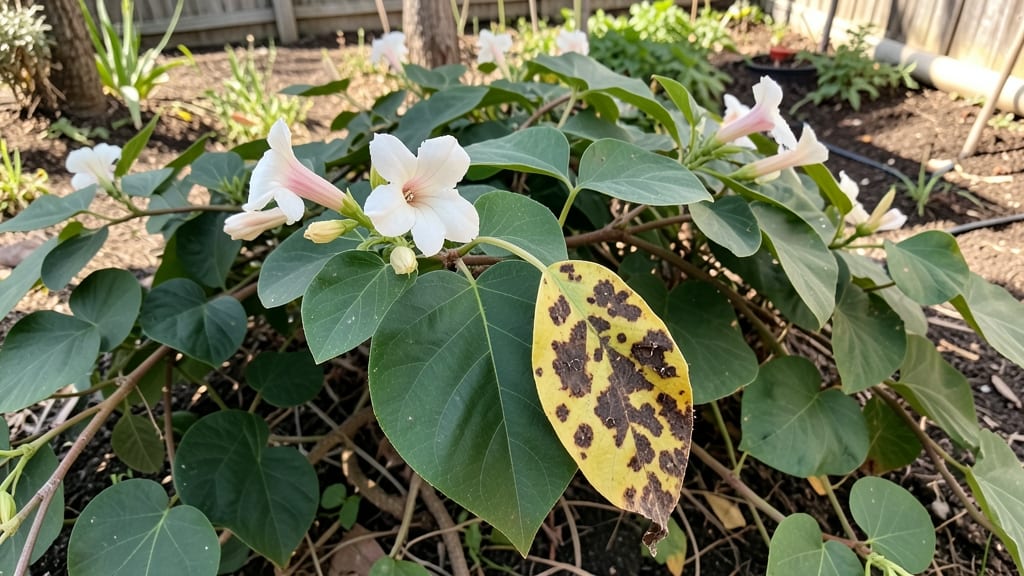
Mandevilla plant diseases can turn your vibrant tropical beauty into a sad, drooping mess if you don’t catch them early. 🌿 I’ve seen lush, blooming vines reduced to yellowing leaves and blackened stems—until I learned the warning signs and quick fixes that saved mine.
The key is spotting symptoms fast, like powdery white coatings or sticky sap, before the problem spreads beyond control.
Most issues start with poor airflow or overwatering, especially in humid climates where fungal spores thrive. My Mandevilla thrived after I swapped soggy soil for fast-draining mixes and pruned crowded stems to let light and air circulate.
The right care keeps these tropical plants fighting strong, even when pests or diseases show up unexpectedly.
You’ll learn to diagnose 12 common foes—from bacterial blight to viral spots—and how to treat them without harsh chemicals. Organic remedies like neem oil or copper fungicide work wonders when applied at the first sign of trouble.
With these fixes, your Mandevilla can bounce back to its showstopping self in weeks.
Whether you’re battling a sudden outbreak or just want to prevent future problems, this guide covers climate-specific risks and maintenance tweaks. Let’s get your vines back to their blooming best—and keep them that way all season long.
Root Causes of Mandevilla Struggles
Understanding why your Mandevilla (aka "rock candy flower") develops diseases starts with uncovering the hidden triggers lurking in its environment. These tropical beauties are resilient, but when conditions tip just slightly off-balance, fungal infections, bacterial rot, or pest invasions can take hold.
Let’s break down the real culprits behind their decline—so you can fix them before they spiral.
Mandevillas thrive in well-draining soil and hate soggy roots. When excess moisture lingers, it creates the perfect breeding ground for root rot (caused by Phytophthora or Fusarium fungi) and bacterial leaf spot. Here’s why it happens:
- Compacted or heavy soil traps water near the roots, suffocating them and inviting fungal growth. - Lack of drainage holes in pots forces water to pool, turning the root zone into a damp, disease-friendly zone. - Overzealous watering (especially in cool weather) prevents roots from drying between waterings.
Mandevillas need 60-70% well-draining mix—never let them sit in saucers of water.
Pro Tip: 💡 If your plant’s leaves yellow or wilt despite moist soil, dig down to check for mushy, black roots—a classic sign of rot.
Mandevillas love humidity, but too much (especially with poor airflow) turns their leaves into a fungal buffet.
Diseases like powdery mildew (Erysiphe spp.) and leaf spot (Alternaria or Septoria) thrive when: - Air doesn’t circulate (e.g., crowded pots, dense foliage, or indoor growing without fans). - Leaves stay wet overnight (from overhead watering or high humidity without airflow). - Temperatures hover in the 70–85°F range—ideal for fungal spores to germinate and spread.
Warning Signs: White powdery patches (mildew) or brown, crinkled spots (leaf spot) on upper leaves are red flags.
Aphids, spider mites, and scale insects don’t just steal sap—they create wounds that open doors for secondary infections.
Here’s how pests pave the way for disease: - Honeydew secretion (sticky residue from aphids) feeds sooty mold (Capnodium fungi), coating leaves and blocking sunlight. - Physical damage from chewing pests (like whiteflies) disrupts the leaf’s protective wax layer, making it vulnerable to bacterial or fungal invaders. - Stress from infestations weakens the plant’s immune response, leaving it defenseless against opportunistic pathogens.
Quick Fix: 🔥 Isolate infested plants and blast pests off with neem oil or insecticidal soap before diseases take hold.
Mandevillas are tropical escapees—they hate sudden temperature swings or insufficient light, which stress them into disease-prone states:
- Cold drafts (below 50°F) slow metabolism, making roots and leaves sluggish and prone to bacterial soft rot (Erwinia spp.).
- Low light (especially indoors) causes etiolation—long, weak stems that collapse under their own weight, creating entry points for infections.
- Direct afternoon sun (without acclimation) can scorch leaves, weakening their protective barriers.
Light Check: 🌞 If your Mandevilla’s new growth is pale or leggy, it’s begging for 6+ hours of bright, indirect light.
Old or reused potting mix can harbor dormant fungal spores or bacterial colonies that lie in wait until conditions are right.
Common triggers: - Replanting in infected soil without sterilization (e.g., from a previous diseased plant). - Using compost with high organic matter that breaks down too quickly, creating anaerobic (oxygen-deprived) zones where Pythium thrives. - Over-fertilizing with nitrogen (without balancing potassium) weakens cell walls, making tissues easier targets for pathogens.
Solution: 🔄 Always sterilize soil (bake at 200°F for 30 mins) or use fresh, cactus/succulent mix with perlite for Mandevillas.
While Mandevillas aren’t drought-tolerant, prolonged dry spells followed by sudden heavy rain can shock them into disease:
- Rapid rehydration after drought causes cellular stress, making leaves prone to cracking and fungal entry.
- Wind damage tears leaves, creating wounds for bacterial leaf spot to colonize.
- Poor air movement in rainy climates (e.g., monsoons) keeps foliage damp for days, accelerating powdery mildew.
Defense Strategy: 🌬️ If you’re in a rainy zone, elevate pots on saucers and prune for airflow to dry leaves faster.
Fixing Mandevilla Plant Ailments
Reviving your Mandevilla doesn’t have to be a guessing game—once you spot the issue, targeted action can bring it back to its vibrant best. Below are practical, step-by-step solutions tailored to each common disease, plus prevention tips to keep your plant thriving long-term.
🔥 Root Rot (Phytophthora, Pythium) If your Mandevilla’s leaves yellow, wilt, or the stems feel mushy at the base, root rot is likely the culprit. Fungal spores thrive in soggy soil, cutting off oxygen and suffocating roots.
🍳 Step 1: Emergency Rescue
- Remove the plant from its pot and gently rinse the roots with clean water to dislodge excess soil.
- Trim affected roots (dark, mushy, or black roots) with sterilized pruners (wipe with rubbing alcohol between cuts).
- Soak roots in fungicide (like copper fungicide or a hydrogen peroxide solution—1 part 3% H₂O₂ to 4 parts water) for 10 minutes to kill spores.
👨🍳 Step 2: Repot with Fresh Mix
- Use a well-draining potting mix (add perlite or orchid bark for aeration).
- Repot in a clean container—sterilize with bleach (1 part bleach to 9 parts water) if reusing.
- Skip watering for 3–5 days to let roots recover before lightly watering.
⏰ Step 3: Adjust Care Routine
- Water only when the top 1–2 inches of soil are dry (stick your finger in to check!).
- Ensure pots have drainage holes—no exceptions!
- Avoid overhead watering (use a drip irrigation system or water at the base).
💡 Prevention Tip: Mulch with orchid bark (not regular mulch) to improve airflow and reduce soil moisture retention.
That white, powdery film on leaves? It’s powdery mildew, a fungal disease that thrives in humid, shady conditions.
🔪 Step 1: Prune & Clean
- Snip off heavily infected leaves (sterilize pruners between cuts).
- Wipe remaining leaves with a neem oil solution (1 tsp neem oil + 1 tsp mild soap + 1 quart water).
🥘 Step 2: Boost Airflow & Light
- Move the plant to a sunnier spot (Mandevillas need 6+ hours of sunlight daily).
- Space plants apart (crowding traps humidity).
- Use a fan on low setting for 2–3 hours daily to improve airflow.
🌡️ Step 3: Fungal Spray Schedule
- Apply fungicide (like baking soda spray: 1 tbsp baking soda + 1 tsp soap + 1 gallon water) every 7–10 days until symptoms disappear.
- Avoid wetting leaves when watering—aim for the soil.
✨ Prevention Tip: Spray leaves with neem oil once a month as a preventative measure during humid seasons.
Bacterial infections (like Xanthomonas) cause water-soaked, brown spots that ooze when pressed. These spread fast—act quickly!
🔥 Step 1: Isolate & Prune
- Remove infected leaves immediately (don’t compost them—dispose in the trash).
- Wear gloves—bacterial spores can irritate skin.
🍳 Step 2: Copper-Based Treatment
- Spray with copper fungicide (follow label instructions) every 5–7 days for 2–3 weeks.
- Avoid overhead watering—use a drip system or water at the base.
💡 Prevention Tip: Sterilize pruners with rubbing alcohol before and after trimming to prevent cross-contamination.
Viruses (like Tobacco Mosaic Virus) are incurable—but you can contain and prevent them.
🔪 Step 1: Destroy Infected Plants
- Remove the entire plant (including roots) to stop spread.
- Do NOT compost—bag and trash it.
🌱 Step 2: Sterilize Tools & Soil
- Clean pots with bleach solution (1:9 bleach-water ratio).
- Replace soil (sterilize with heat or fresh potting mix).
🎯 Prevention Tip: Keep aphids and whiteflies (virus vectors) under control with insecticidal soap or ladybugs.
Not a disease, but environmental stress can mimic illness. Overheating or sunburn causes brown, papery leaves.
🍳 Step 1: Adjust Light Exposure
- Move to partial shade (morning sun + afternoon shade works well).
- Use shade cloth (30–50% coverage) if direct sun is unavoidable.
💡 Prevention Tip: Acclimate new Mandevillas to bright indirect light for 1–2 weeks before full sun exposure.
To keep your Mandevilla disease-free, follow this proactive care plan: ✅ Water wisely – Bottom-watering (place pot in a tray of water for 10 mins) reduces fungal risks. ✅ Prune regularly – Remove dead/dying leaves to improve airflow. ✅ Monitor humidity – Keep levels below 60% (use a dehumidifier if needed). ✅ Rotate pots – Ensures even sunlight exposure and prevents weak, disease-prone growth. ✅ Test soil pH – Aim for 6.0–7.0 (use a soil test kit).
🚀 Quick Fix Summary Table
| Disease | Immediate Action | Long-Term Fix |
|---|---|---|
| Root Rot | Trim roots, repot in dry mix | Water only when topsoil is dry |
| Powdery Mildew | Prune + neem oil spray | Improve airflow & sunlight |
| Bacterial Spot | Remove plant, copper spray | Sterilize tools, avoid overhead watering |
| Viral Infection | Destroy plant, sterilize soil | Prevent pests (aphids, whiteflies) |
| Sun Stress | Move to partial shade | Gradually acclimate to sunlight |
Frequently asked questions
Why do my Mandevilla leaves develop white powdery spots?
That’s likely powdery mildew, a fungal disease thriving in humid, shady conditions. The white coating blocks sunlight and weakens leaves. Boost airflow with a fan, move to brighter light, and spray with a neem oil solution (1 tsp neem + 1 tsp soap + 1 quart water) every 7 days until gone.
Can I save a Mandevilla with black, mushy stems?
That’s root rot—act fast! Trim blackened roots, repot in fresh, well-draining mix with perlite, and skip watering for 3–5 days to let roots recover. Use a copper fungicide to prevent recurrence, and never let soil stay soggy again.
How do I know if my Mandevilla has a bacterial infection?
Look for water-soaked, brown spots that ooze when touched—classic signs of bacterial blight. Isolate the plant immediately, remove infected leaves (don’t compost them!), and spray with copper fungicide every 5–7 days for 2–3 weeks.
Will neem oil prevent diseases in my Mandevilla?
Yes! Neem oil acts as a fungicide and insect repellent. Mix 1 tsp neem oil + 1 tsp mild soap + 1 quart water and spray leaves monthly during humid seasons. It disrupts fungal spores and deters pests like aphids, which spread viruses.
Can I reuse the same pot after my Mandevilla had root rot?
Only if you sterilize it first. Scrub with a bleach solution (1:9 bleach-water ratio), rinse well, and dry completely. Use fresh potting mix to avoid reintroducing fungal spores—root rot often returns if conditions aren’t fully corrected.